


Leaks & Service Repairs

757-399-3066 ext 3 (Leaks & Service Repairs)

Reroof Estimates & Inspections

757-399-3066 ext 1 (Reroof Estimates & Inspections)

Tag: high wind roof damage

Should You Make an Insurance Claim for Your Roof Damage?

In Southeast Virginia and the Hampton Roads region, roofs can take a serious beating.

Between strong coastal winds, heavy rain, tropical storm systems, and intense summer heat and humidity, it’s common for homeowners to discover roof damage and wonder if it’s just normal aging—or something that should be covered by insurance.

It’s a common homeowner question that we encounter: “Should I file an insurance claim for this?” Knowing the difference between everyday wear and tear and storm-related roof damage can help you avoid unnecessary claims, out-of-pocket expenses, and frustration with your insurance provider. Here’s how you can tell the difference—and what to do next.

Normal Roof Wear and Tear: What Insurance Typically Does Not Cover

Roofing materials naturally age over time, especially in the coastal climate of Southeast Virginia. Insurance companies generally do not cover damage caused by gradual, natural deterioration or lack of maintenance. Common examples of normal wear and tear include:

  • Aging or brittle shingles that are near the end of their lifespan
  • Granule loss on asphalt shingles, typically from age and long-term sun exposure
  • Faded or discolored roofing materials
  • Minor cracking or curling that are age-related/typical
  • Small leaks caused by age—not a specific weather event

If your roof is 20–30 years old and showing these signs, it’s usually considered a maintenance or replacement issue rather than an insurable loss. In these cases, planning a roof replacement before major leaks develop is often the smartest move.

When Roof Damage May Be Covered by Insurance

Insurance typically applies when roof damage is caused by a sudden, identifiable event, such as severe weather. In Hampton Roads, this often means wind, hail, or tropical systems.

Roof damage that may warrant an insurance claim includes:

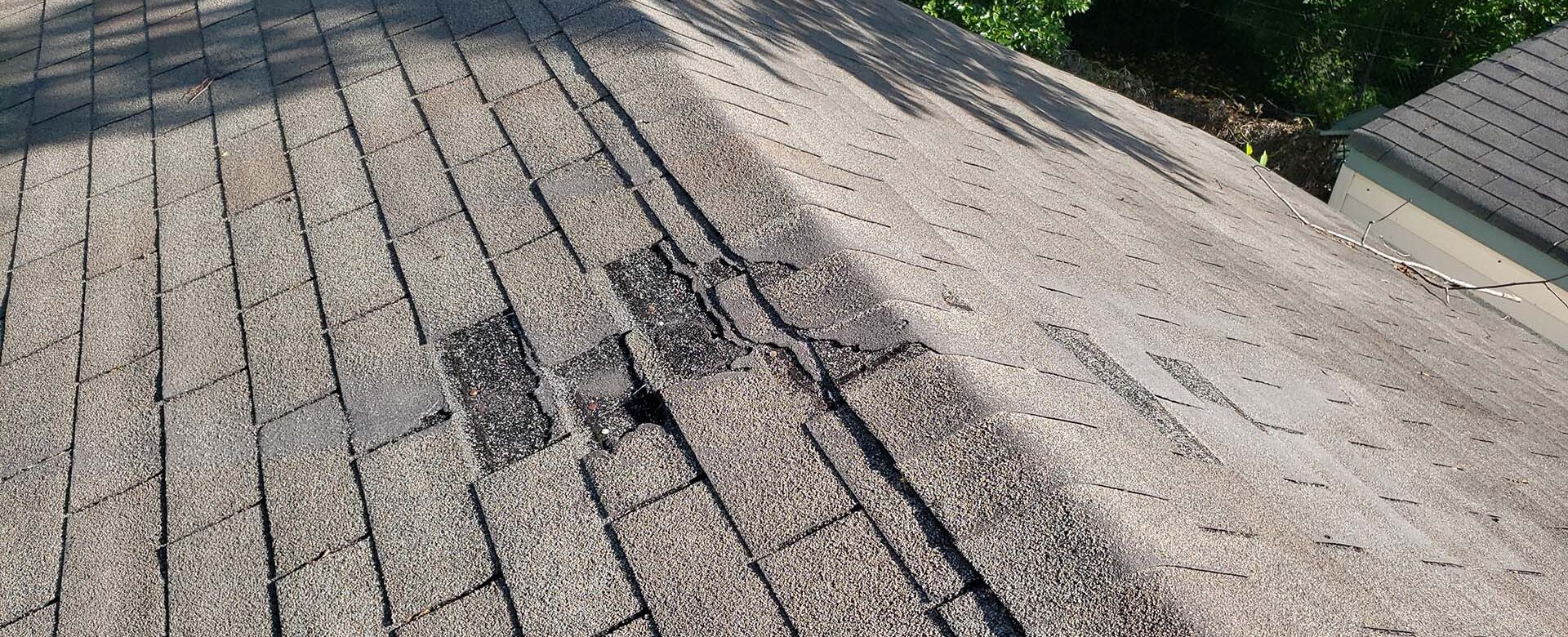
  • Missing, torn, or lifted shingles after high winds
  • Hail damage, including bruised or cracked shingles
  • Impact damage from fallen tree limbs or debris
  • Leaks that appear shortly after a storm
  • Damage from hurricanes, tropical storms, or tornadoes

If roof issues show up immediately after a major storm—or you notice similar damage throughout your neighborhood—it’s a good sign that the damage may be insurable.

Step One: Get a Professional Roof Inspection

Before filing a roof damage insurance claim, it’s important to schedule a professional roof inspection with a licensed roofing contractor that is local to the Hampton Roads region and knows our local weather as well as the local insurance providers. A trained roofer can determine whether the damage is storm-related or simply age-related. The inspection should:

  • Identify visible and hidden storm damage you may not be able to see from the ground
  • Document findings with photos and written notes which can be submitted to your claims agent
  • Provide a detailed repair or replacement estimate to give a “second opinion” to the insurance adjustor’s estimate
  • Help you decide whether filing a claim makes financial sense at all

Step Two: Complete the Insurance Claim Process

If your roofing contractor determines the damage is likely covered, here’s how the process typically works:

  1. File a Claim with Your Insurance Company. You’ll contact your insurer and provide details about the storm or event that caused the damage. This is where the information from the roof inspection will come in especially handy.
  2. Meet with the Insurance Adjuster. An adjuster inspects your roof and evaluates the damage. Your contractor can often be present to ensure nothing is overlooked.
  3. Review the Insurance Estimate. The insurance company provides an estimate outlining approved repairs or replacement, minus your deductible. You may want to have your contractor review the estimate to ensure nothing was overlooked or underquoted.
  4. Complete Roof Repairs or Replacement. Once approved, your contractor completes the work according to the claim’s scope, providing any necessary documentation for your insurance company.

Step Three: Keep It Local

Having an experienced Hampton Roads roofing contractor involved helps ensure the insurance estimate reflects the full extent of the damage as well as the cost of local labor — not just what’s immediately visible or generic.

While not every roofing issue requires an insurance claim, ignoring any type of roof damage – storm-related or otherwise, can lead to much larger problems, including interior water damage and mold. If you’re unsure whether your roof damage is normal wear or something insurance should cover, Andrews Roofing is here to help you make an informed decision. Contact us today for a professional inspection, clear documentation, and support throughout the insurance claims process —without pressure or guesswork.
read more

How to Pay for a New Roof

Reroofing your home is a major investment, and it’s not always one you were expecting or planning for. This can make it difficult to pay for a roof replacement out of pocket. So how are you supposed to fund a new roof without draining your bank account? Here are a few options that may be available to you.

Insurance Claims

If your roof was damaged during a storm or other catastrophic event, the replacement of it, or the repair costs, may be covered by your homeowners’ insurance. The amount that may be paid out and the process through which you receive this money is different from policy to policy. It’s a good idea to review your homeowners’ policy every year or so to make sure it is still providing the coverage you believe your home may need. For instance, in areas like Hampton Roads, it’s a good idea to make sure you have hurricane, high wind and flood coverage in your policy.

At Andrews Roofing, we work closely with our clients who are going through an insurance claim for roof repair or replacement, providing any necessary paperwork or information they may need to ensure their claims are accurate and paid accordingly.

Home Improvement Financing

If you are replacing your roof because your current roof has reached the end of its life span, you can expect to be paying for it in full on your own. This can be daunting, as new roofs are one of the largest home improvement investments you may make. Fortunately, there are home improvement financing options available. At Andrews Roofing, we work with GreenSky® financing, which offers a variety of different financing options to consumers. They offer financing up to 120 months with fixed rates as low as  9.99%. They also offer 12 month no interest, no payments options for those who qualify.

Applications may be done online quickly and easily, and once you are approved you are provided with a 16-digit account number, which you can then use like a credit card to make payments for the work being done. You have four months after you are approved to make your qualified purchases to the approved merchant, so it’s best to wait to apply until the project is ready to begin.

Home Equity Loan

Depending on the amount of equity you have in your home, another financing option may be to go through a bank or credit union for a home equity loan. The housing market and interest rates are in a great place for homeowners to take advantage of the equity they have in their home in order to make improvements on it. If you know your roof is reaching the end of its lifespan, you may consider taking out a home equity loan to replace it before there are leaks that may cause damage to the interior of your home.

A new roof can also increase your home’s value and make it more appealing to potential buyers if you’re considering moving any time soon. Home equity loans generally do not have strict rules about how long you have to use the money or what exactly it needs to be used for, so if you’re considering doing multiple projects around your house, or you just aren’t sure when you want to begin the work, a home equity loan may be a more flexible option for you.

Manufacturer Warranties

Most material manufacturers have a warranty of some length on their products, provided they are installed correctly by a licensed contractor. If your roof is still within its expected lifespan and warranty period, but you have experienced leaks or other damage, the repairs or replacement may be covered by your warranty. Even if you didn’t have the roof installed yourself, there may still be a transferred warranty from the person who did have it installed.

The best way to determine if the damage or leaks you’re experiencing are caused by the materials is to have a licensed roofing contractor come and inspect your roof. In addition to identifying the cause of the damage, they can also identify the materials that were used so that you can reach out to the manufacturer about a potential warranty. Keep in mind, however, that you will likely need to provide some sort of proof of the installation being completed by a qualified contractor and paperwork showing that the materials were purchased for that purpose.

We Can Help

At Andrews Roofing, we are happy to work alongside customers using a variety of methods of payment for their roof repair or replacement. Whether you’re paying out of pocket, filing an insurance claim or applying for some type of financing, we will help guide you through the process while providing excellent workmanship and products. All of our work is guaranteed, and we use some of the best materials on the market, all of which provide their own manufacturer’s warranty. Contact us today to get started.

read more