

When the temperatures rise in Hampton Roads and your fireplace goes cold for the season, it can be easy to forget the chimney even exists.
That is, until the fall, when you’re ready to get cozy, lighting your first fire of the year and noticing a musty smell, a mysterious water stain on the ceiling, or worse, the sound of something potentially living up there?
Summer is actually the ideal time to inspect and address chimney issues before you’re ready to snuggle up in front of a fire. Here’s why regular maintenance matters for your roof, your home, and your peace of mind.
The Off-Season Advantage
Most homeowners think about their chimneys in late fall when the evenings start to cool down. The problem is that by then, roofing and chimney contractors are slammed with demand, and any damage that’s been accumulating all summer has had months to get worse. Scheduling your chimney inspection and any needed repairs during summer means no disruption in your routine or heat. It also means you’ll get more scheduling flexibility with contractors, dryer summer weather that’s better conditions for mortar work, flashing repairs and sealant curing, and peace of mind heading into the cooler months knowing your system is sound.
Summer is Wildlife Season
An uncapped or damaged chimney is prime real estate for birds, squirrels, raccoons, and other wildlife who are out and about during the warmer months. Once a chimney isn’t in frequent use, it becomes an attractive nesting spot that is dark, sheltered and elevated.
In addition to nesting materials being a major fire hazard and mess, when wildlife intrudes into your chimney, the cap can be physically damaged or removed entirely, leaving the flue wide open to rain, debris, and ongoing animal access. A raccoon or even a squirrel that’s been using your chimney all summer can cause a lot of damage that you might not know about until you go to light that first fall fire of the season. Fortunately, the solution to this is simple: a properly installed, well-fitting chimney cap keeps wildlife AND weather out.
The Importance of Chimney Caps
Not all chimneys are alike, which means not all chimney caps are either. There are standard sizes, which can be dealt with using stock caps but then there are non-standard sizes and special situations where custom caps are needed. This is not at all uncommon in Hampton Roads, given the number of older and historic homes here.
For standard flue openings, a stock chimney cap is practical, cost-effective and can be installed quickly, solving most animal intrusion issues immediately. But for those outliers, Andrews Roofing can custom fabricate chimney caps to fit virtually any opening, ensuring a proper seal, a professional appearance, and longevity.
A well-fitted chimney cap does more than keep animals out. It also:
- Prevents rain and moisture from entering the flue and damaging the firebox, liner, and surrounding masonry
- Blocks wind-driven debris from accumulating inside the chimney
- Reduces downdrafts that can push smoke back into the home
- Extends the life of your chimney liner and surrounding masonry
Why Your Chimney is so Important to Your Roof
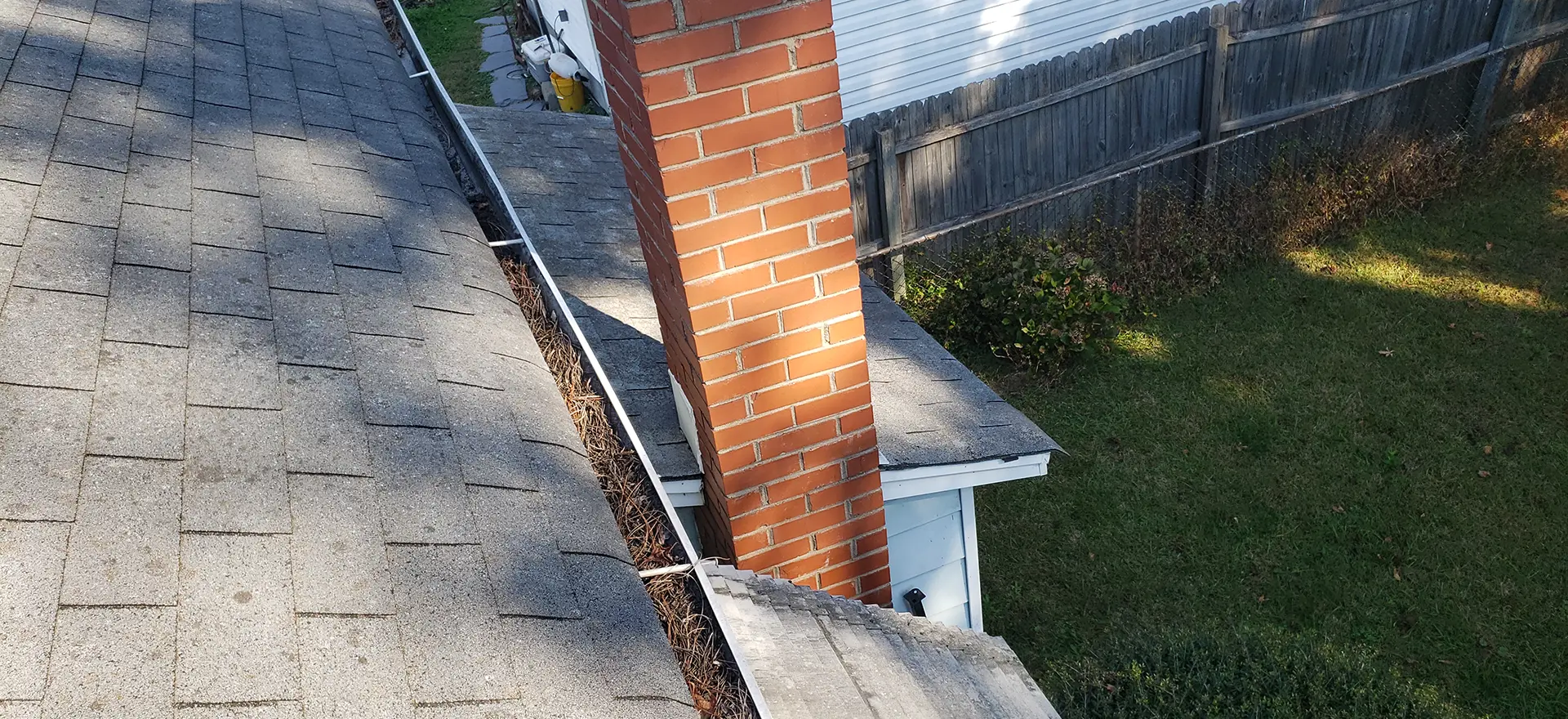
Chimney leaks are one of the most common sources of roof-related water damage, but they are also often the most misdiagnosed. Your roof may be in great shape, but the connection points between it and the chimney may actually be to blame for the damage.
Brick Chimneys: Mortar and Masonry Concerns
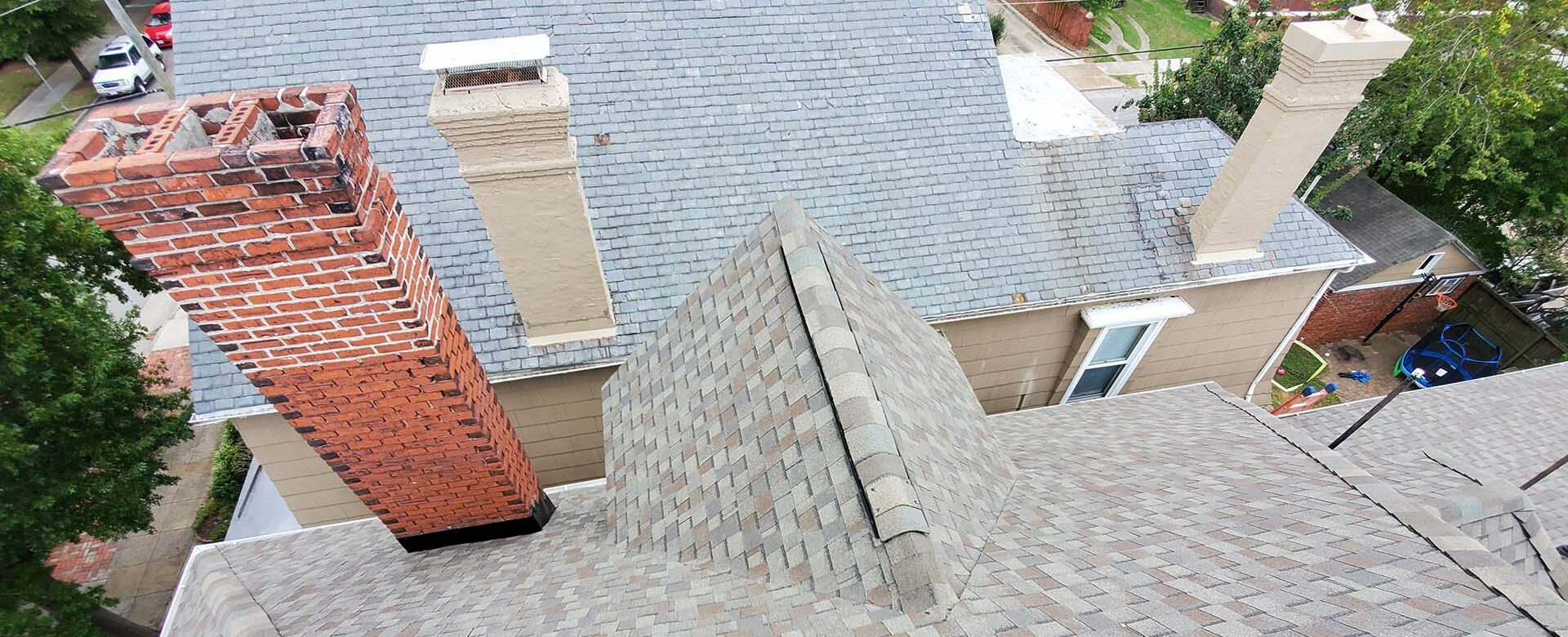
On brick chimneys, the most common leak source is deteriorating mortar – the material that holds the bricks together and seals the top crown of the chimney. Our coastal climate can be hard on masonry due to the summer heat, humidity and thaw-freeze cycles in the winter. That repeated expansion and contraction can eventually crack or erode mortar joints.
Once mortar begins to fail, water can get inside the masonry itself. Without remediation, bricks can literally pop off or become loose, causing significant structural deterioration and water intrusion into attic and living spaces. However, there are masonry specialists who can make these repairs, called “tuckpointing” which removes and replaces damaged mortar. Summer is the ideal time of year for this type of work for the mortar to dry quickly and effectively.
Vinyl-Sided Homes: Flashing Concerns
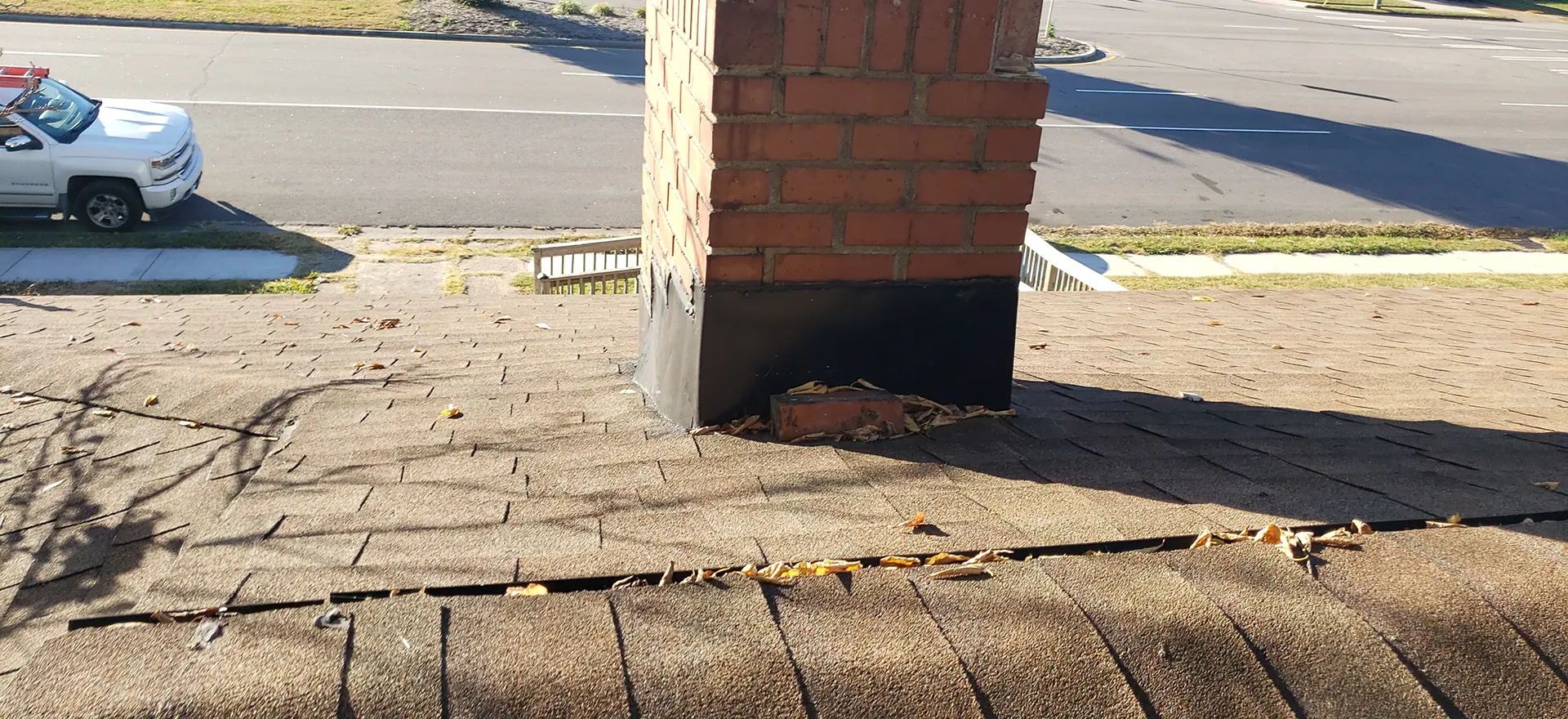
On homes with vinyl siding and vinyl sided chimneys, the critical element is flashing, that thin metal material installed around the base of the chimney where it meets the roof deck. When installed properly, step and counter flashing should create a watertight seal at this important transition point.
But flashing can fail for a number of reasons: poor original installation, sealant that has dried out and cracked over time, or physical damage from storms or settling. Because the failure point is often hidden under the siding or shingles, flashing leaks can be particularly tricky to diagnose and are often blamed on the roof itself when the chimney is actually the culprit.
Hampton Roads Humidity and Chimney Health
Hampton Roads’ coastal climate brings year-round moisture challenges that accelerate the wear on chimneys faster than drier inland climates. High humidity means mortar stays damp longer, sealants and caulks degrade more quickly, and any small opening in a cap, crown, or flashing becomes an invitation for ongoing water intrusion. That’s why staying ahead of chimney maintenance in our region is essential.
Check It Off Your List
At Andrews Roofing, we can inspect, and in some cases repair or replace chimney-related roofing components. From flashing to custom-fabricated chimney caps built to fit your specific chimney, we have the expertise to take care of it. If it’s been more than a year since your chimney was inspected, or if you’ve noticed any signs of water intrusion near the fireplace or in the attic above it, now is the time to act. Contact us today to schedule your chimney and roof inspection before summer flies by.