


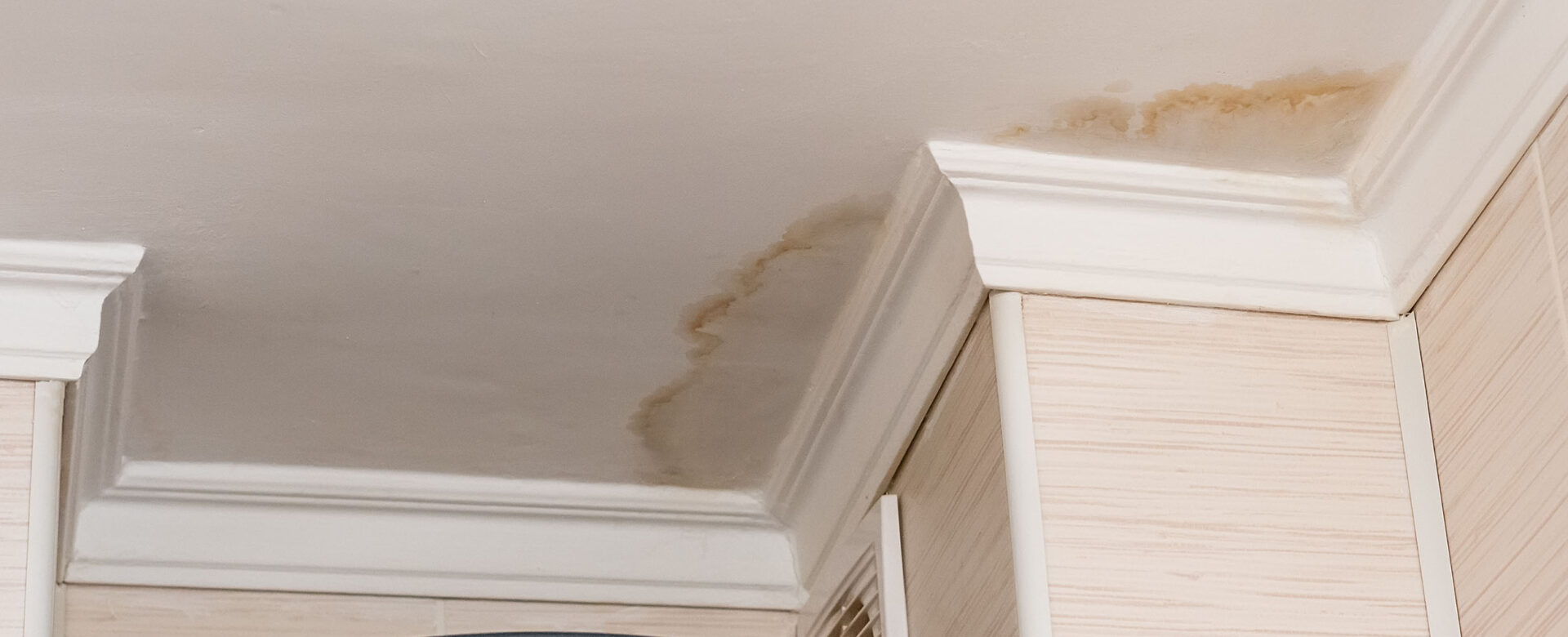

When you spot a water stain on the ceiling, your first thought is probably that your roof has a leak which is a reasonable assumption and often correct.
But a surprising number of leaks in Hampton Roads homes and businesses trace back to something other than a failed shingle, membrane, or flashing system.
Practically, however, you should still call a professional roofer first. Diagnosing a leak takes training and experience, and a reputable company will tell you exactly what they find, even when the answer is “it’s not us” or “we can’t help you.” Understanding some of the other common leak sources can help you go into that conversation informed, and it can save you time if the fix ends up requiring a different kind of specialist. Here are seven reasons why your roof might not be the problem.
Gutters and Drainage
Water can enter your house in more ways than one, and it’s not always because of a hole or puncture. Overflowing gutters at the eaves are one of the most common non-roof leak sources. When gutters clog with leaves and debris, or when they’re installed incorrectly, water backs up and spills over the edge instead of flowing through the downspouts. That water then runs down your siding, seeps behind fascia boards, or pools against your foundation. Inside the house, it can show up as a stain on your exterior walls or ceiling corners, which makes it easy to mistake for a roofing problem.
The fix is often as simple as a thorough gutter cleaning and a check of the gutter’s pitch, hangers and downspouts. A roofing company can usually handle this directly, since gutters and roofs work as a system.
Debris Buildup on the Roof Surface
Shingle roofs are designed to shed water quickly, but that’s only if there’s a clear path. Piled-up leaves, pine needles, and other debris in valleys or along the roofline can dam up water and force it to sit rather than drain. Standing water on a shingle roof, even for a short time, increases the odds it finds a way underneath the shingles through a seam or a nail hole that would otherwise never be an issue.
This issue comes down to maintenance, rather than repair. Regular debris removal, especially after the fall when the leaves have dropped, or after a big storm, keeps water moving the way it’s supposed to.
Rooftop AC Units
Commercial buildings and some homes with rooftop-mounted HVAC equipment have a built-in leak source in their heating and cooling system’s condensate lines and drain pans. AC units generate a lot of condensation, which is why it has a built in system for expelling that water. However, if a condensate line is clogged or a drain pan has rusted through, water can pool right on the roof surface or drip directly into the building.
This is a case where a roofing company usually can’t fix the issue alone, and an HVAC company will need to be called in. What a roofer can do is inspect and repair the roofing membrane or flashing around the unit in the event that it’s been damaged from the water exposure. Best results usually come from the two trades coordinating rather than working in isolation.
Inadequate Attic Ventilation
Not all “leaks” come from the outside! Sometimes it’s moisture that never left. Attics with poor ventilation trap warm, humid air, especially here in Hampton Roads where summer humidity is no joke. That trapped moisture condenses on the underside of the roof deck and drips down, mimicking the signs of a leak, even when the roofing system is in perfect working order.
A roofing company can evaluate whether your attic has enough intake and exhaust ventilation and recommend upgrades like ridge vents, soffit vents, or additional attic fans. This repair or upgrade will usually fall under a roofing company’s purview, since they’re well trained in ventilation and how to improve it.
Chimneys, Pipes, and Penetrations
Anywhere something pokes through your roof is a potential entry point for water, and in this case a roofing company should be able to handle the fix. Flashing around chimneys, plumbing vent pipes, and other penetrations can come loose, or even rust out and wear down over time, creating one of the most common actual roof-related leak points. Often homeowners assume leaks that pop up around their fireplace and chimney are caused by cracked masonry or a bad cap, but often the culprit is actually the flashing where the chimney meets the roof deck. A mason may need to get involved if the chimney structure itself has cracks or deteriorating mortar joints. But the flashing repair is standard roofing work.
Siding, Window Seals, and Dormers
Water doesn’t care if the opening is in the roof, window or wall. Failed or damaged caulking around window seals, gaps in siding, or bad dormer flashing can all let water in above the ceiling line, which makes it look exactly like a roof leak from inside the house. Dormers are especially tricky because they combine roof, wall, and window elements in one small area, giving water multiple potential entry points. Depending on what’s found, you may need to call in a siding or window company. A good roofer will tell you clearly where the roofing system ends and where another trade’s scope begins.
Believe It or Not: Bullet Holes
It may sound unbelievable, but it happens more often than you’d think, particularly on commercial flat roofs. If a membrane roof experiences a small, isolated leak, it is occasionally (but more than once in our experience!) because of a bullet lodged in the membrane from a stray round fired somewhere in the surrounding area. The good news is these are usually simple, inexpensive fixes once identified. While an unusual leak diagnosis, it’s not impossible. Fortunately, a roofing company with experience in commercial roofing materials should be able to patch it up in no time.
Leave the Diagnosis to the Professionals
If you’ve got a leak, call a professional roofing company first. A reputable contractor will inspect thoroughly and tell you honestly what they find, whether that’s a roofing repair, a referral to another trade, or a case where both need to work together. Don’t be surprised if the answer isn’t what you expected. Sometimes “it’s not your roof” is good news, since gutters, ventilation, and window seals are often quicker and less expensive fixes than a roofing repair would be. But no matter what you think the cause is, stay safely on the ground and let the professionals figure it out.
If you’re dealing with a leak anywhere in Hampton Roads, contact Andrews Roofing today. We’ll get to the bottom of it, even if the answer isn’t us.