

Leaks & Service Repairs

757-399-3066 ext 3 (Leaks & Service Repairs)

Reroof Estimates & Inspections

757-399-3066 ext 1 (Reroof Estimates & Inspections)

Category: Flat Roof

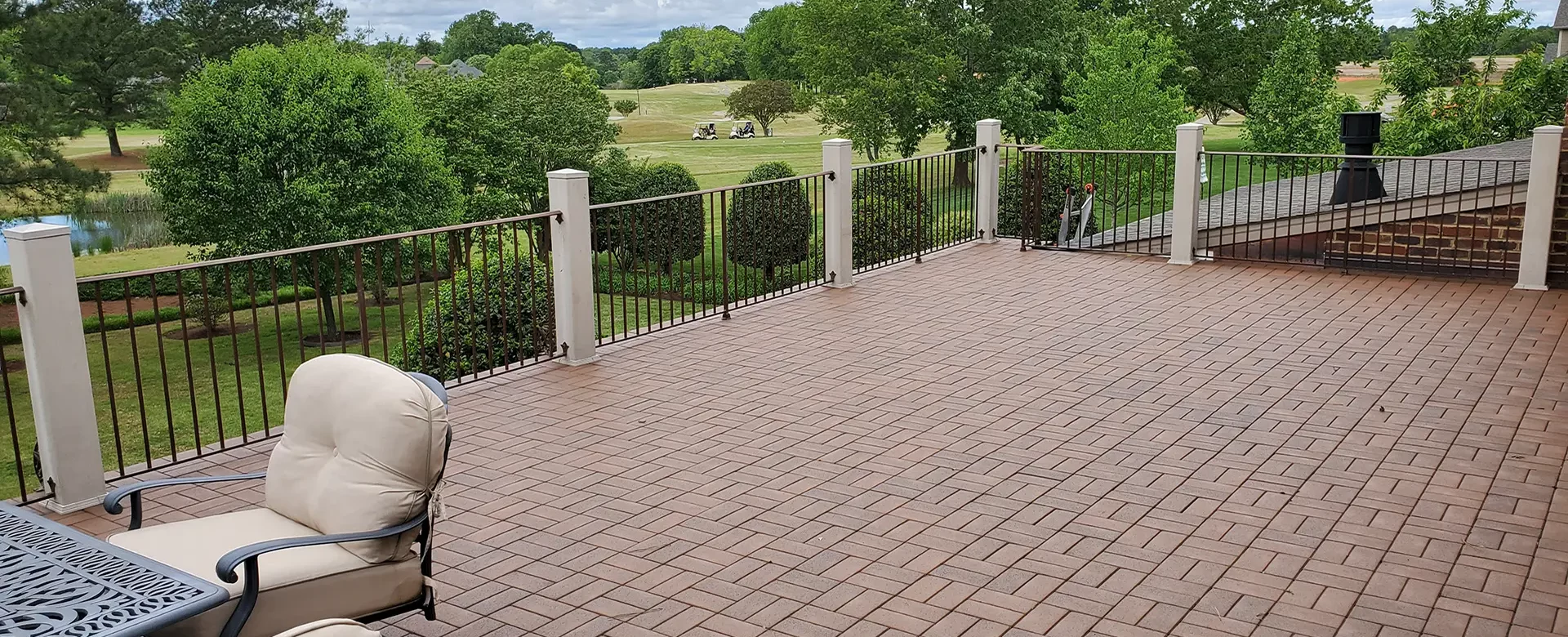
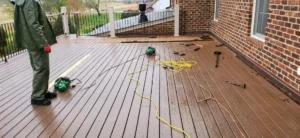
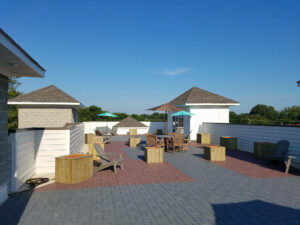
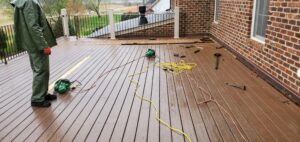
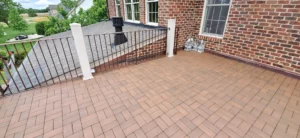
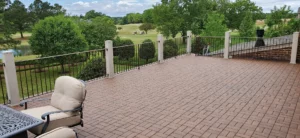
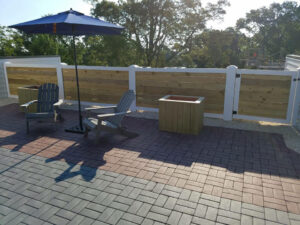
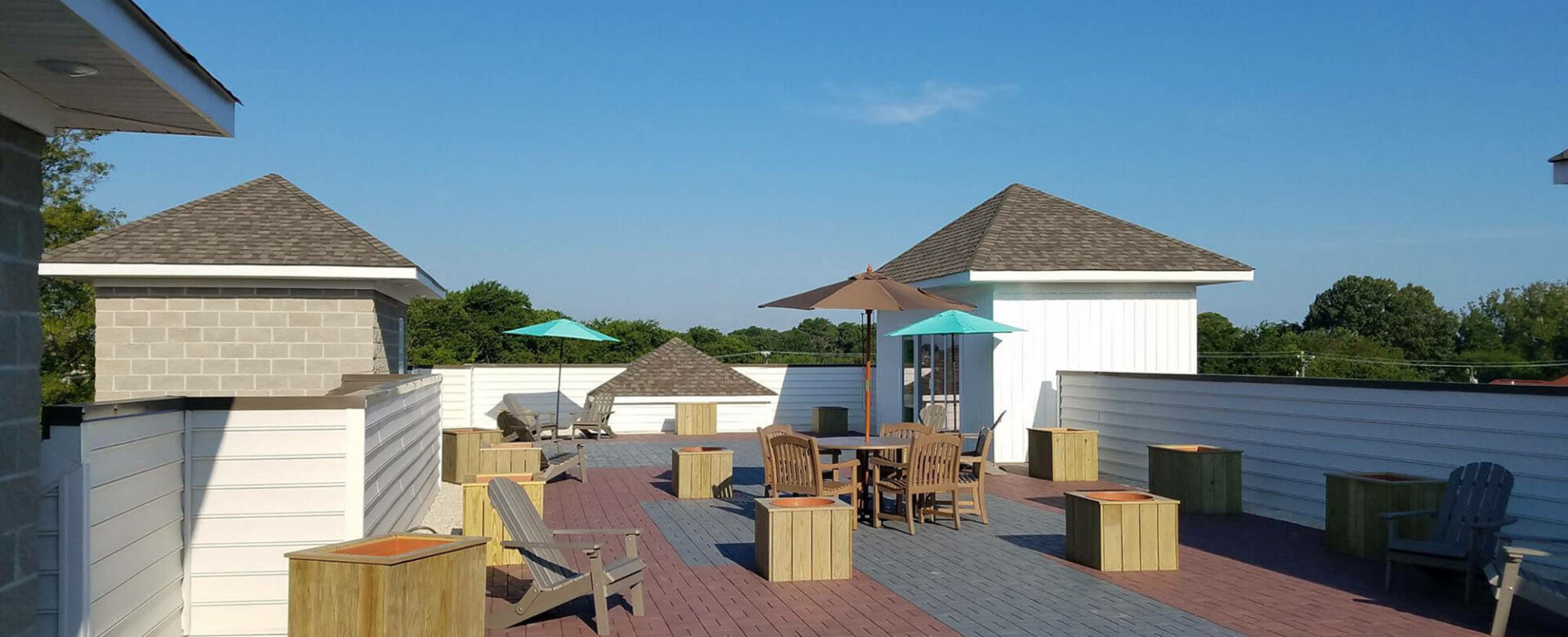
Designing a Better Deck with Walkable Roofing Pavers

If you have an elevated deck or raised patio, you probably already understand and appreciate the value of an outdoor living space in the Hampton Roads region with our year-round mild weather.

Whether you invested in the deck yourself, or it came with your property when you purchased it, you also probably understand and appreciate how much maintenance and upkeep these decks require. You may be seeing boards that have warped, splintered, or gone gray; a surface that needs sanding and resealing every couple of years; or just an overall look that feels dated and tired. And if you are, you’re probably starting to weigh your options for repairs or replacements.

The obvious choices are what most people gravitate toward: replace the wood with composite decking, re-board the whole thing, do extensive sanding and resealing or put down concrete pavers and call it done. All of those are reasonable paths, but there is another path that you may not have considered that is a great option for elevated decks and raised patios in particular: walkable rubber composite roofing pavers.

These are the same materials used to create rooftop terraces and walkable flat roof surfaces, but it turns out that everything that makes them excellent for a rooftop makes them excellent for a deck, too.

The Usual Suspects

Wood decking is a popular choice because of cost as well as the warmth and aesthetics it brings to a space, but it requires a real maintenance commitment, especially in a coastal environment like Hampton Roads. The humidity, the salt air, the wet, rainy springs and blazing summers can take a toll. Wood warps, splits, splinters, fades, and eventually rots if it isn’t kept up. Pressure washing, sanding, staining, and sealing is a recurring cycle that costs time and money year after year, and inevitably the wood will get to a state where it needs to be fully replaced.

Composite decking was developed largely to solve those problems, and it does address some of them. It won’t rot or splinter, and it requires less maintenance than wood. However, it can get uncomfortably hot underfoot in direct summer sun, which anyone who’s walked barefoot across a composite deck in July in Virginia Beach can attest to. And in rooftop or terrace situations, it isn’t designed to account for drainage, waterproofing, or the specific stresses of a surface that’s also functioning as a protective layer over a structure below. In addition to that, it can become very costly depending on the size of the deck you’re replacing.

Concrete pavers are durable and attractive, but weight becomes a real issue on elevated structures. Concrete is heavy, and a lot of it on an elevated deck puts serious structural stress on the framing, which on an older deck may already be showing wear.

The Unusual Suspect

Walkable rubber composite roofing pavers were engineered specifically for elevated, exposed surfaces, whether that’s a rooftop terrace or an elevated deck. Here are a few “pros” of this material that go beyond the rooftop.

  • They’re dramatically lighter than concrete. Elevate SkyPavers weigh roughly 35% of what comparable concrete pavers would. On an elevated deck, that’s a big difference. Less weight means less structural stress on the framing, which matters both for safety and for the long-term integrity of the structure.
  • Roofing pavers will not warp, splinter, gray out or rot. The material is inherently resistant to moisture, and in a region like Hampton Roads where humidity is a fact of life year-round that is a meaningful advantage.
  • They reflect heat rather than absorbing it. The TPO membrane that underlies the paver system is typically white and highly reflective. This keeps the surface temperature considerably lower than composite decking or concrete in direct sun. On a sunny summer afternoon at the Virginia Beach oceanfront, that makes a big difference for a surface to stay walkable and enjoyable rather than becoming a bed of coals you need to navigate in bare feet.
  • Elevate SkyPavers carry a 20-year warranty and have a potential lifespan of up to 50 years. Compare that to a wood deck that needs significant attention every few years, and the math on long-term cost starts looking very appealing.
  • And importantly, they look good. Walkable pavers are available in a wide range of colors that can be selected to complement your home’s exterior. The finished surface is clean, modern, and attractive.

Roofing Paver Installation

These systems work in layers. First the existing deck surface will need to be evaluated to ensure it’s structurally sound. This step is critical and should be done by a qualified contractor who can tell you whether any framing repairs are needed before any additional weight is added. From there, a TPO waterproofing membrane is installed, followed by a drainage mat, and then the pavers are set on top. The pavers aren’t permanently adhered, which means the surface beneath remains accessible and the system can be adjusted if needed.

The result is a surface that protects the structure below while providing a durable, attractive, walkable surface above – exactly what a good deck surface should do.

As with any roofing or elevated surface project, installation should be handled by a licensed contractor with experience in this specific material. The system has its own requirements and best practices and getting it right matters both for performance and for warranty purposes.

A Good Fit for Hampton Roads

Elevated decks and raised patios are common throughout Hampton Roads: second-floor decks on oceanfront and ocean-block homes, raised patios on homes with grade changes, balconies on multi-story townhomes in Virginia Beach, Norfolk, and Chesapeake. Many of these surfaces were built with wood and are now at or past the point where they need an upgrade.

If you’re already thinking about what to do with an aging deck, it’s worth adding roofing pavers to the conversation before you default to the familiar options. For elevated surfaces especially, the combination of low weight, durability, heat reflectivity, and longevity makes a truly compelling case.

Andrews Roofing has experience with walkable paver installations across Hampton Roads, including in the demanding coastal environments where these materials really prove their worth. If you’d like to talk through whether this approach makes sense for your deck or raised patio, contact us today. We’re happy to take a look at your home’s specific situation and walk you through the options.
read more

TPO or PVC: Which Low-Slope Membrane Is Right for Your Industrial Roof?

For property owners of warehouses, manufacturing facilities, or other industrial structures, the roof of your building isn’t just literal overhead, it’s one of the most critical components of the entire building.

Its success or failure can massively impact operations and profitability. And for the flat or low-slope roofs that dominate industrial construction, the material you choose matters enormously. Two of the most popular options – TPO (Thermoplastic Polyolefin) and PVC (Polyvinyl Chloride) – are all single-ply membrane systems, which is exactly why they’re so commonly confused. While they may look similar on the surface, they perform differently depending on your building’s environment, purpose and your priorities as a property owner. If you’re having a roof installed or replaced on an industrial structure, here’s what you need to know about these different membrane materials.

TPO (Thermoplastic Polyolefin)

TPO is one of the most widely installed low-slope membrane systems in the country, and for good reason. It’s a single-ply white reflective membrane that’s heat-welded at the seams, creating a watertight bond.

Benefits: TPO’s biggest selling point for industrial clients is its energy efficiency. The white reflective surface deflects UV rays and reduces cooling costs, which is a real advantage for large industrial buildings with significant roof square footage. It holds up well against punctures, tears, and impact, and the heat-welded seams are highly resistant to leaks over time. It’s also one of the more cost-effective options up front, making it a good value for large-scale projects.

Challenges: TPO is a relatively newer material compared to EPDM, so there’s less performance data, and the quality can vary between manufacturers. The key to using TPO is working with a contractor who sources from reputable brands and is familiar with the product.

Best for: Buildings where energy efficiency is a priority with large roof areas that are exposed to sunlight. Projects where budget and performance need to be balanced. It’s an excellent all-around choice for warehouses and distribution centers in climates like Hampton Roads where summer heat is a real factor.

PVC (Polyvinyl Chloride)

Like TPO, PVC membranes have a white reflective surface and heat-welded seams, but they offer the additional advantage of being chemical resistant. PVC has been used in industrial roofing since the 1960s and continues to be a popular option because of its performance in specific demanding environments.

Benefits: PVC’s resistance to chemicals, grease, animal fats, and industrial oils sets it apart from TPO. The heat-welded seams are as strong as TPO’s and like TPO, the white reflective surface helps manage heat and energy usage. PVC is also highly fire-resistant, which matters a lot in certain industrial settings.

Challenges: PVC carries a higher price point than TPO. Due to its formula, certain chemicals can leach out of the membrane over time, which will often cause it to become brittle if it’s not a high quality product. It can also be more sensitive to certain adhesives and solvents during installation.

Best for: Food processing facilities, restaurants, manufacturing plants that handle oils or chemicals, and any industrial application where roof exposure to chemical runoff or grease-laden exhaust is a real possibility. If your facility vents cooking oils, industrial solvents, or other chemical byproducts anywhere near the roof, PVC should be at the top of your list.

So How Do You Choose?

The honest answer both are good, solid systems when properly installed. The right choice depends on your specific building and how it’s used.

  • Choose TPO when energy efficiency, budget, and general performance are your priorities.
  • Choose PVC when your facility is exposed to chemicals, grease, or industrial byproducts that would compromise other membrane materials.

Andrews Roofing Can Help

At Andrews Roofing, we’ve been installing all three systems across industrial facilities in Hampton Roads for decades, and we’re happy to walk through which material makes the most sense for your facility, budget and priorities. Contact us for an estimate or inspection for a straight answer on what will deliver the best long-term return on your investment.

read more

Look Up: Finding the Outdoor Space You Didn’t Know You Had

Spring is almost here, and if you’re like most Hampton Roads homeowners, you’re probably already thinking about how to start shifting life more outdoors.

Maybe you’re planning to freshen up the patio furniture, fire up the grill, or finally tackle that landscaping project you’ve been putting off since fall. Outdoor living is one of the biggest perks of life in this region thanks to our mild temperatures, fresh coastal air and gorgeous spring weather.

But when you think about making the most of your outdoor space, are you only thinking horizontally? Most people default to ground-level thinking when it comes to outdoor living: the backyard, a patio, maybe a raised deck off the back door, which makes sense for most properties. But for a significant number of homes across Hampton Roads, the most valuable and underutilized outdoor space isn’t on the ground – it’s above your head.

With walkable roofing pavers, almost any flat roof surface can be transformed into functional, attractive outdoor living space. And in a region with as many potential water views as ours, the payoff can be big. To learn more about exactly what walkable pavers are, read our earlier blog on the material, but read on here to see how they can create possibilities in your own property that you may not have ever considered.

A Region Primed for Rooftop Life

Hampton Roads sits at the intersection of the Chesapeake Bay, the Atlantic Ocean, the Elizabeth River, the Lafayette River, the Lynnhaven, and dozens of creeks, inlets, and waterways threading through Virginia Beach, Norfolk, Portsmouth, Chesapeake, and beyond. We are, by almost any measure, one of the most water-rich metropolitan areas on the entire East Coast.

Water views in this region aren’t just nice to have – they’re a premium asset. Properties with water views command significantly higher prices, and for good reason. We all know that there’s something special about an unobstructed view of any one of these beautiful waterways.

The problem is that while a lot of Hampton Roads homeowners technically live near the water – even a stone’s throw distance – they miss the view completely because they’re experiencing it from the wrong elevation. Neighboring structures, fences, mature trees, and the general density of coastal neighborhoods can block what would otherwise be a stunning sight line. But go up one or two stories, and the picture changes completely. Here are a few neighborhood-specific examples.

Chic’s Beach

If you’ve spent any time in the Chic’s Beach neighborhood of Virginia Beach along the Chesapeake Bay, then you know that many of the properties there are three-story townhomes packed closely together, many of them sitting within a short walk of the Bay. From the street or the backyard (if there is a backyard), the views are often modest at best, blocked by the neighbor’s fence, the next row of townhomes, or a screen of vegetation. But from the rooftop of many of these homes, suddenly the Bay is right there.
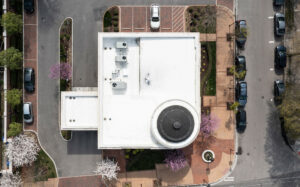
A walkable rooftop terrace on a home in Chic’s Beach doesn’t just add outdoor square footage, it adds a premium view that expands the way you can live in your home and how much there is to enjoy. Morning coffee with the sunrise over the water, or evening breezes watching the boats come into the inlet – those are now realistic visions for the right property with the right walkable rooftop paver installation.
The North End

The north end of the Virginia Beach Oceanfront is one of the most coveted and valuable stretches of real estate in the region. Oceanfront and ocean-block cottages and homes, many of them multi-story, sit along some of the most beautiful Atlantic coastline on the East Coast.

For true oceanfront homes, a rooftop deck is an obvious enhancement: more square footage, higher elevation, more expansive views that can even include sunset views from the right spot. But perhaps the more compelling case in this area is actually for the ocean-block properties – those sitting just one street back from the oceanfront. At ground level, an ocean-block home may have limited water views. Add a rooftop terrace, and a home that was a short walk from the ocean suddenly feels oceanfront from the right vantage point. That’s a meaningful difference, both for everyday enjoyment and for the property’s value and marketability.

Inland Views and Little Yards

Water views make for a compelling story, but a rooftop deck doesn’t require an ocean backdrop to be worth pursuing. For many Hampton Roads homeowners the issue is simply that they don’t have a large enough back yard to truly enjoy their outdoor space. It may also be too exposed, too shaded, too uneven or often – too soggy.

Older neighborhoods across Norfolk and Portsmouth were often developed with modest lot sizes. Backyards can be small, awkwardly shaped, hemmed in by utilities or HVAC equipment, or simply too shaded and enclosed to feel like a real outdoor retreat. Ground-level patios in dense neighborhoods often feel exposed to neighbors visible on all sides, without any privacy or separation.

A rooftop terrace solves several of these problems at once. It creates usable outdoor space without expanding the home’s footprint. It often feels considerably more private than a ground-level patio level, you’re above the fence lines, above the neighboring yards, with a sense of openness and seclusion that’s hard to achieve at the ground. A flat roof over a garage, a first-floor addition, or even a main structure that’s currently just sitting there collecting leaves and weathering quietly may represent more functional outdoor square footage than anything available at ground level.

Keeping in Mind: Building Codes, Zoning, and Feasibility

Of course, a rooftop deck is not a possibility in every home or in every neighborhood. The feasibility of a project like this depends on a number of factors that need to be evaluated before getting too far down the road.

Structural capacity is the most fundamental consideration. A flat roof intended to become a walkable terrace needs to be assessed by a qualified contractor to confirm it can safely bear the additional load which includes not just the pavers themselves, but furniture, people, and anything else you plan to put up there. Walkable roofing pavers like Elevate SkyPavers are significantly lighter than concrete alternatives, but structural review is still essential.

Local building codes and zoning regulations also come into play. For most cities in our region, a rooftop deck will require a permit, and there are often requirements around railings or parapet walls for safety that must meet specific height and load standards. Neighborhoods governed by homeowners associations may have restrictions on rooftop modifications or additions. HOA documents are worth reviewing early in the process.

The right first step is a conversation with an experienced roofing contractor who can give you an honest assessment of what’s possible on your specific property. Many projects that seem complicated on the surface turn out to be very achievable once someone with the right expertise takes a look. And for properties where a rooftop terrace genuinely isn’t feasible, there are often other flat roof surfaces — over garages, additions, or lower-level sections of the home — that may present a workable alternative.

How Walkable Pavers Work

A walkable roof surface is created by starting with a TPO (thermoplastic polyolefin) white flat roof membrane, which reflects heat and protects the structure below. On top of that a drainage mat is installed, with the composite roofing pavers placed on top. The pavers sit on the drainage mat without being permanently adhered, which means the roof below remains accessible and the system can be adjusted or removed if needed.

We work primarily with Elevate SkyPavers, which are made from 95% recycled rubber tires, weigh roughly 35% of what comparable concrete pavers would, and carry a 20-year warranty with a lifespan that can reach 50 years. They come in multiple colors, they reflect heat rather than absorbing it, and they’re comfortable underfoot.

Done correctly by a contractor experienced with this system, the installation protects the roof below while creating an attractive, durable surface above. For the full breakdown of materials, installation, and eco-friendly benefits, take a look at our earlier post on walkable roofing pavers.

Spring Is the Right Time to Start the Conversation

Walkable rooftop paver projects involve assessment by a roofing contractor and often a general contractor as well as permitting, scheduling and of course – construction. They do not happen overnight, so if your goal is to have a new outdoor space ready to enjoy by late summer or fall, spring is the time to start planning.

Andrews Roofing has extensive experience with walkable roof surfaces throughout Hampton Roads, including demanding coastal environments where the right materials and installation approach really matter. If you’re curious about what might be possible on your property, we’d be happy to answer your questions. Contact us today and we’ll give you an honest picture of what your rooftop could become.

read more

Understanding Roofing Crickets and When to Use Membrane vs. Shingles

At first glance, a roof may look like a simple series of slopes and shingles, but in reality, good roofing is a careful blend of structure, materials, and strategy—especially when it comes to managing water flow. One critical but under-appreciated element in certain roof designs is the roofing cricket.

What Is a Roofing Cricket?

A roofing cricket—sometimes called a saddle—is a small, peaked structure installed on the high side of a roof penetration such as a chimney, wall, or dormer. Its job is to divert water around these vertical elements and prevent it from pooling, which can lead to leaks, rot, or premature roof failure.

You’ll typically find crickets in low-slope areas or where two roof slopes intersect to form a valley. Without a cricket, water tends to gather and sit—especially during heavy rain which we are prone to in Southeast Virginia—leading to drainage problems and long-term damage.

How Crickets Work

Crickets redirect water using gravity. By adding a subtle peak to the backside of a chimney or at the base of a wall intersection, water is forced to flow down either side of the obstruction rather than gathering behind it. This keeps your roof drier and increases its longevity.

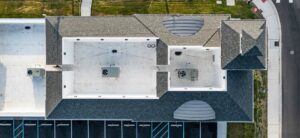
In these photos from a recently completed project in Suffolk, you can see two examples of cricket installations. Each cricket helps manage the directional flow of water and is customized to fit the slope of that particular roofline.

Membrane vs. Shingles: Choosing the Right Material

In most residential roofing, asphalt shingles are the go-to material due to their cost-effectiveness and ease of installation. However, they aren’t ideal in every situation—especially when it comes to areas with very low slopes, also present on this roof that required crickets.

Roofing membranes are single-ply materials (typically rubber or synthetic) designed to be fully waterproof. They’re most commonly used on flat or low-slope areas of a roof where shingles would fail to shed water effectively. It is a material that is often used on commercial buildings, but less often used on residential homes. Their cost can be a little higher than shingles, but their performance in specific areas makes them a necessary investment in certain situations.

In this recent project, we encountered two cricket areas that were previously covered with membrane. Our team made material choices based on pitch and performance needs and determined that in one area with a low pitch, we should reinstall membrane because the slope required a fully waterproof solution to prevent ponding and leaks. In the second area, although membrane had been used previously, the steepness of the slope allowed for us to use shingles instead, saving the homeowner on cost without compromising performance.

What Homeowners Should Know

If your roof includes valleys, dormers, or chimneys, especially if your home has a complex roof layout, it’s worth asking your roofer whether crickets are needed. These small features can make a big difference in preventing leaks and prolonging the life of your roof.

Also, be aware that not all areas of your roof should be treated the same. Experienced roofers assess each slope and intersection to determine whether shingles are sufficient or if membrane is a better long-term solution. A one-size-fits-all approach simply doesn’t work when it comes to effective roofing.

Andrews Roofing Can Help

If you’re considering a roof replacement or have concerns about water pooling near roof features like chimneys or walls, our team at Andrews Roofing is here to help. We bring the technical expertise and attention to detail that complex roofing projects demand. Contact us today for an inspection or consultation.

read more

The HULK Machine Provides Faster, Stronger Commercial Roofing

At Andrews Roofing, we are committed to researching and educating ourselves on innovative, high-quality roofing products and technology so we can provide them for our residential and commercial clients in Hampton Roads.

That’s why we’ve invested in the HULK Spray Rig, a state-of-the-art adhesive application system designed specifically for installing rigid board insulation on flat and low-slope commercial roofs. This advanced equipment allows us to provide a more efficient, consistent, and durable insulation installation—giving your roof better long-term performance.

What Makes the HULK Machine So Effective?

The HULK Spray Rig is an automated, self-propelled system that precisely dispenses low-rise polyurethane foam adhesive in pre-measured patterns. This ensures even coverage across the entire roof deck, eliminating the inconsistencies that can come with manual application. Once the adhesive is applied, the machine uses its built-in roller system to firmly press the rigid board insulation into place, creating a strong, uniform bond between the insulation and the substrate.

The Benefits of Using the HULK Machine

By incorporating this cutting-edge equipment into our installation process, we provide our commercial roofing clients with several key advantages:

  • Stronger Adhesion & Wind Resistance: The precision application ensures a secure bond, reducing the risk of insulation shifting or lifting due to wind uplift, something we are always thinking about in our storm and hurricane prone region.
  • Faster Installation: The HULK machine speeds up the process significantly, reducing labor time and getting your roof installed quicker with minimal disruption to your business.
  • Improved Energy Efficiency: Properly adhered insulation minimizes gaps and air pockets, helping to enhance thermal performance and lower energy costs.
  • Reduced Waste & Cleanup: The controlled application minimizes adhesive waste and overspray, resulting in a cleaner job site and a more environmentally friendly installation.

Hampton Roads Commercial Roofing Specialists

We are proud to bring this industry-leading technology to our commercial roofing projects in Southeast Virginia. If you are looking for a high-performance, energy-efficient roofing system that will stand the test of time, contact Andrews Roofing today to learn how the HULK advanced installation methods can benefit your business and property.

read more

Manufacturer Spotlight: Carlisle SynTec Systems

Andrews Roofing has been serving business owners in the Hampton Roads community for decades, and as a small, local business ourselves, we understand the unique needs of our commercial clients. Whether you’re managing a retail center, an office building, or an industrial facility, having a reliable, durable, and energy-efficient roof is critical to the long-term success of your business. To that end, one of the manufacturers we are proud to offer our commercial clients is Carlisle SynTec Roofing Systems, which is one of the leading names in commercial roofing solutions. Here are a few reasons why we find it works so well for so many other local businesses.

Durability and Longevity

Carlisle SynTec systems are known for their unmatched durability. Whether you opt for their EPDM, TPO, or PVC membranes, each material is designed to withstand the toughest weather conditions. Here in Tidewater, our commercial clients face everything from heavy rain, extreme temperatures, salt air, hail, and strong winds, but these roofing systems can take it all. Their resistance to UV degradation and punctures means fewer repairs and maintenance costs over the roof’s lifetime, giving you peace of mind and long-term savings.

Energy Efficiency = Cost Savings

One of the standout benefits of Carlisle SynTec’s TPO and PVC roofing systems is their energy efficiency. These membranes are highly reflective, reducing heat absorption into your building. In the hot southeastern Virginia summer, this can dramatically cut down on cooling costs. For  businesses operating large facilities or warehouses, the reduction in energy consumption can be significant, which makes it friendly for your bottom line and the environment. In fact, many of the Carlisle roofing membranes qualify for LEED credits. Whether it’s recycled content or energy-efficient design, the roofing systems contribute to a greener footprint, appealing to environmentally-conscious businesses and customers alike.

Industry-Leading Warranties

We know that when our commercial clients invest in a new roof, they want the reassurance that it’s built to last. Carlisle SynTec provides industry-leading warranties, ranging from 10 to 30 years depending on the system. Their warranties cover materials, installation, and more, ensuring you’re fully protected. As your trusted local roofing partner, we handle all warranty-related questions and maintenance needs, making sure you’re always covered.

Customizable Solutions for All Types of Commercial Buildings

No two commercial buildings are exactly alike, and Carlisle SynTec Systems accommodate for that. Whether your business operates in a multi-story office building, a retail space, or a manufacturing facility, we can customize a roofing solution that perfectly fits your needs. Their extensive range of systems—including their single-ply membranes, metal roofing systems, and insulation options—allows us to tailor a solution that fits your structure and budget.

We also know that it’s important to minimize the disruptions a roofing installation may have on your day-to-day business. Thanks to Carlisle SynTec’s versatile installation systems, we can install your new roof quickly and efficiently thanks to their prefabrication options and simple installation methods.

Supporting Local Businesses

We all understand the importance of supporting locally owned and operated businesses. When you choose us for your roofing needs, you’re getting the personalized service of a local expert, but with the backing of a globally recognized brand. We bring the craftsmanship and commitment to every project, while manufacturers like Carlisle provide cutting-edge technology, premium materials and exceptional warranties.

So, if you’re looking for a long-lasting, energy-efficient and sustainable roofing solution for your commercial building, we’d be happy to talk to you about how Carlisle SynTec or a range of other commercial products we work with can meet your needs. Contact us today to schedule a consultation with our commercial roofing specialist.

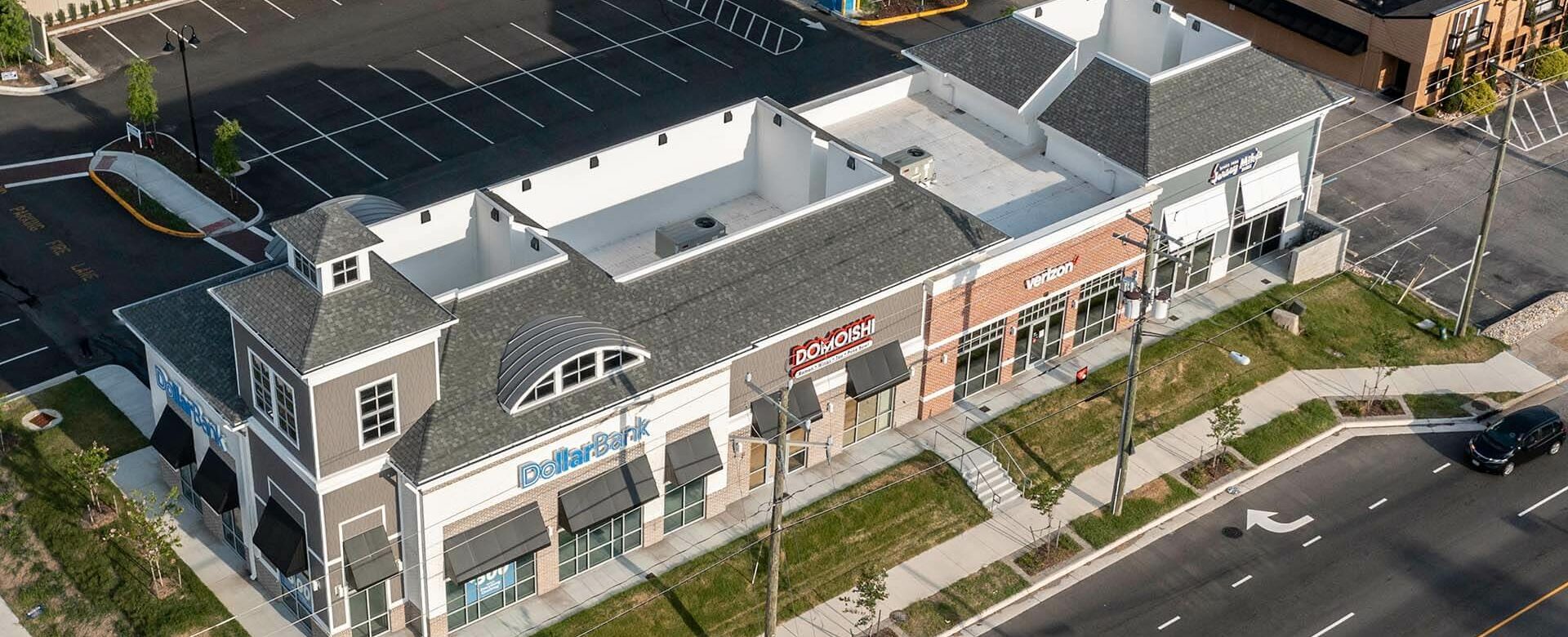
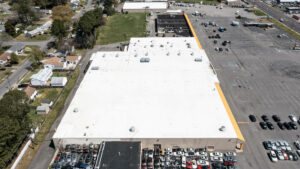
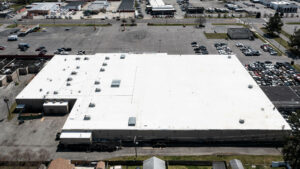
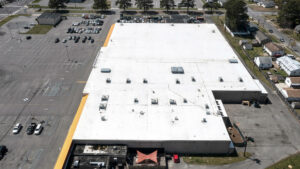
An example of of Carlisle SynTec Systems

read more