

After a long, humid summer, it’s not unusual to notice dark streaks on your roof or a few green patches.
And if you look around, you’re likely to see it on your neighbors’ roofs as well. Staining is one of the most common issues homeowners in our humid, coastal Virginia climate have with their roofs. But before you climb up a ladder to take care of it yourself or pay someone a bunch of money to clean it up for you, let’s dive more deeply into what it is, how it affects your roof, and the best way to deal with it.
What exactly is it?
Roof staining usually comes from one of three things, and it’s common to have more than one at the same time.
Dark streaks. These are the black or brownish stripes that look like soot or dirt running down the roof. They’re typically caused by cyanobacteria, which most people (and most roofers) simply call algae. Early on, this is mostly a cosmetic issue.
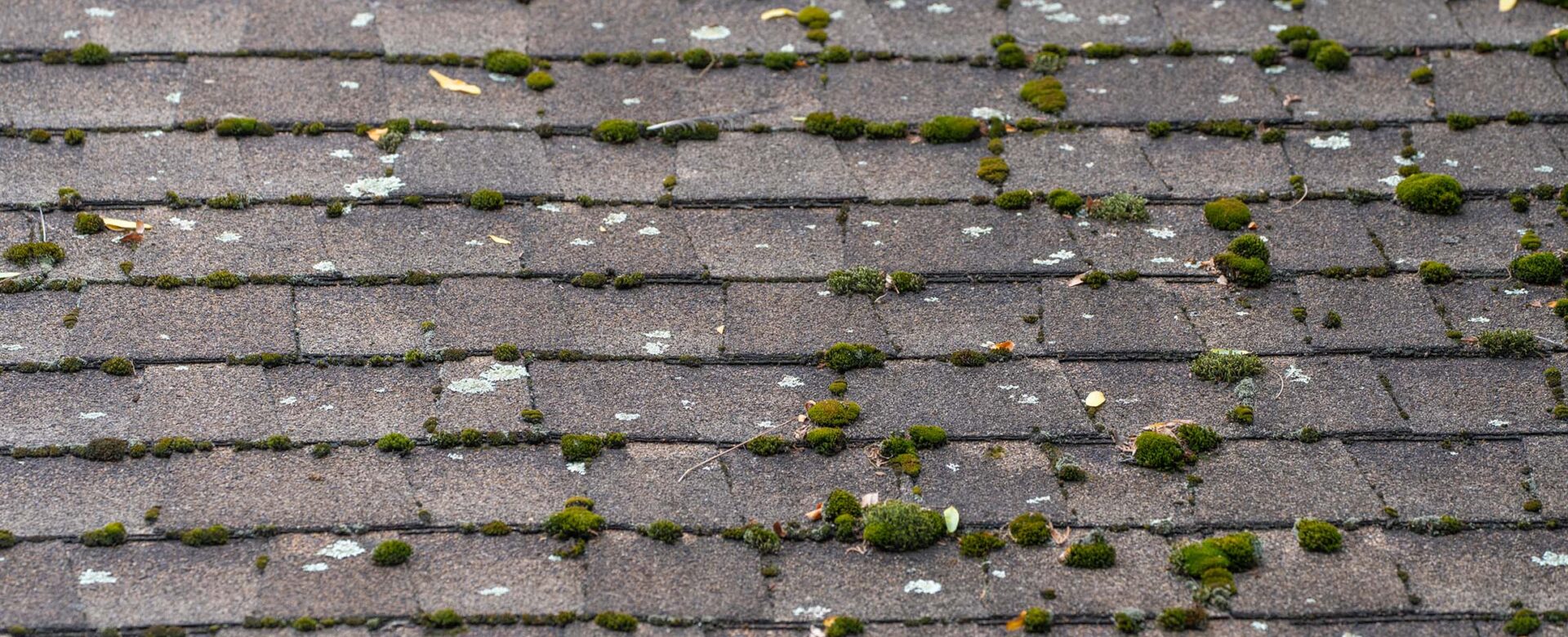
Green, fuzzy patches. This is moss. It tends to grow in thick cushions, usually in shaded spots or along the lower edges of the roof. Moss behaves differently than streaking because it holds moisture against the roof surface.
Flat, crusty spots. Gray, green, or orange patches that look almost painted onto the shingles are lichen. They hold on tightly and grow slowly, which makes them harder to remove than the other two.
You don’t need to identify each one perfectly to know what to do next. What matters is how long it has been there and whether it has started affecting the shingles underneath.
Why Hampton Roads roofs are so impacted
Our region is the perfect place for these organisms to live and thrive. Humidity stays high for much of the year. We get regular rain and heavy morning dew. Winters are mild enough that growth never fully stops. And between the mature oaks and pines, plenty of roofs spend part of the day in shade, which slows drying.
Wind plays a role too. Spores travel from roof to roof, which is why staining often seems to move through an entire neighborhood. Homes near the water or marsh, where the air stays damp longer, tend to see it sooner and more heavily.
All that said, you may look around and see half the houses in your neighborhood show signs of this staining, and half don’t. Two houses on the same street can look very different for a few reasons:
- Shingle makeup. Many asphalt shingles contain limestone filler, which these organisms can feed on.
- Sun exposure. Shaded slopes, and often the north-facing side, stay damp longer and show growth first.
- Color. Streaks are much more obvious on light-colored roofs than on dark ones, even when the growth is similar.
- Material. Metal roofs are far more resistant, though growth can still collect in shaded valleys and around laps.
Does the staining really matter?
The honest answer depends on how long it has been there and what’s growing. Dark streaking by itself rarely causes leaks. It affects curb appeal, and in some neighborhoods, it can draw attention from the HOA. Dark streaks also absorb a bit more heat than a clean roof, though the effect on your energy bills is small.
Moss and lichen are a different story over time. Moss can lift the edges of shingles and let water work its way underneath. Growth that sticks around for years can contribute to granule loss, which shortens the life of the shingles. While none of this is going to destroy your roof overnight, it’s also not a great idea to ignore it for years on end.
Signs the problem has gone beyond surface staining:
- Shingles that are curling, lifting, or cracking
- Bare or thinning spots where granules have worn away
- A noticeable amount of granules collecting in your gutters or at the downspouts
- Soft or spongy areas found during a roof inspection
- Water stains on ceilings or in the attic
If any of those sound familiar, it’s time to have a roofer take a look.
Preventing roof staining
Prevention is where homeowners have the most control as well as the most options, depending on your home’s specific scenario. Here are a few ways to combat the stains.
Algae-resistant shingles. Many manufacturers build copper-containing granules into their shingles to discourage growth. If you’re planning a roof replacement, ask about this option. Algae resistance warranties are typically limited to a set number of years and vary by manufacturer, so understand the details.
Copper or zinc strips. Installed along the ridge, these strips release trace metal ions when it rains. The ions wash down the roof and discourage growth. They protect the area below them best, so long roof slopes may not see the benefit all the way to the edge.
Trim back the trees. More sunlight and airflow mean a faster-drying roof. Cutting back overhanging branches also reduces the debris that holds moisture against the shingles.
Keep water moving off the roof. Clogged gutters let water sit at the roof edge, which is exactly where moss likes to start.
Can you clean it?
Plenty of homeowners want to simply wash it off, but it’s not always that simple.
High-pressure washing is hard on shingles. It can strip away the granules that protect the roof and may affect your warranty. The gentler option is soft washing, which uses low pressure and a roof-safe cleaning solution. It’s best left to a company that cleans roofs regularly. DIY attempts with bleach and a ladder can damage landscaping, stain siding, corrode metal, and put you at risk on a wet, slick surface.
It’s also worth noting that while cleaning removes what’s there now, it doesn’t stop it from coming back. Without a prevention step, the growth usually returns.
When to call a roofer
If you’ve noticed staining on your shingles, but everything else looks and seems OK, you likely have time to plan. Trimming trees, clearing gutters, and finding a reputable roof cleaner is a reasonable place to start.
If the growth has led to damage, like lifted shingles, worn spots, or leaks, that’s where a licensed roofing contractor needs to come in. At Andrews Roofing, we handle roof repairs and replacements due to a variety of issues and are familiar with those most common in Hampton Roads. If you’re due for a new roof, we’re happy to talk through options that can help keep this from happening again, so contact us today.