


Leaks & Service Repairs

757-399-3066 ext 3 (Leaks & Service Repairs)

Reroof Estimates & Inspections

757-399-3066 ext 1 (Reroof Estimates & Inspections)

Tag: aging home roof

Should You Make an Insurance Claim for Your Roof Damage?

In Southeast Virginia and the Hampton Roads region, roofs can take a serious beating.

Between strong coastal winds, heavy rain, tropical storm systems, and intense summer heat and humidity, it’s common for homeowners to discover roof damage and wonder if it’s just normal aging—or something that should be covered by insurance.

It’s a common homeowner question that we encounter: “Should I file an insurance claim for this?” Knowing the difference between everyday wear and tear and storm-related roof damage can help you avoid unnecessary claims, out-of-pocket expenses, and frustration with your insurance provider. Here’s how you can tell the difference—and what to do next.

Normal Roof Wear and Tear: What Insurance Typically Does Not Cover

Roofing materials naturally age over time, especially in the coastal climate of Southeast Virginia. Insurance companies generally do not cover damage caused by gradual, natural deterioration or lack of maintenance. Common examples of normal wear and tear include:

  • Aging or brittle shingles that are near the end of their lifespan
  • Granule loss on asphalt shingles, typically from age and long-term sun exposure
  • Faded or discolored roofing materials
  • Minor cracking or curling that are age-related/typical
  • Small leaks caused by age—not a specific weather event

If your roof is 20–30 years old and showing these signs, it’s usually considered a maintenance or replacement issue rather than an insurable loss. In these cases, planning a roof replacement before major leaks develop is often the smartest move.

When Roof Damage May Be Covered by Insurance

Insurance typically applies when roof damage is caused by a sudden, identifiable event, such as severe weather. In Hampton Roads, this often means wind, hail, or tropical systems.

Roof damage that may warrant an insurance claim includes:

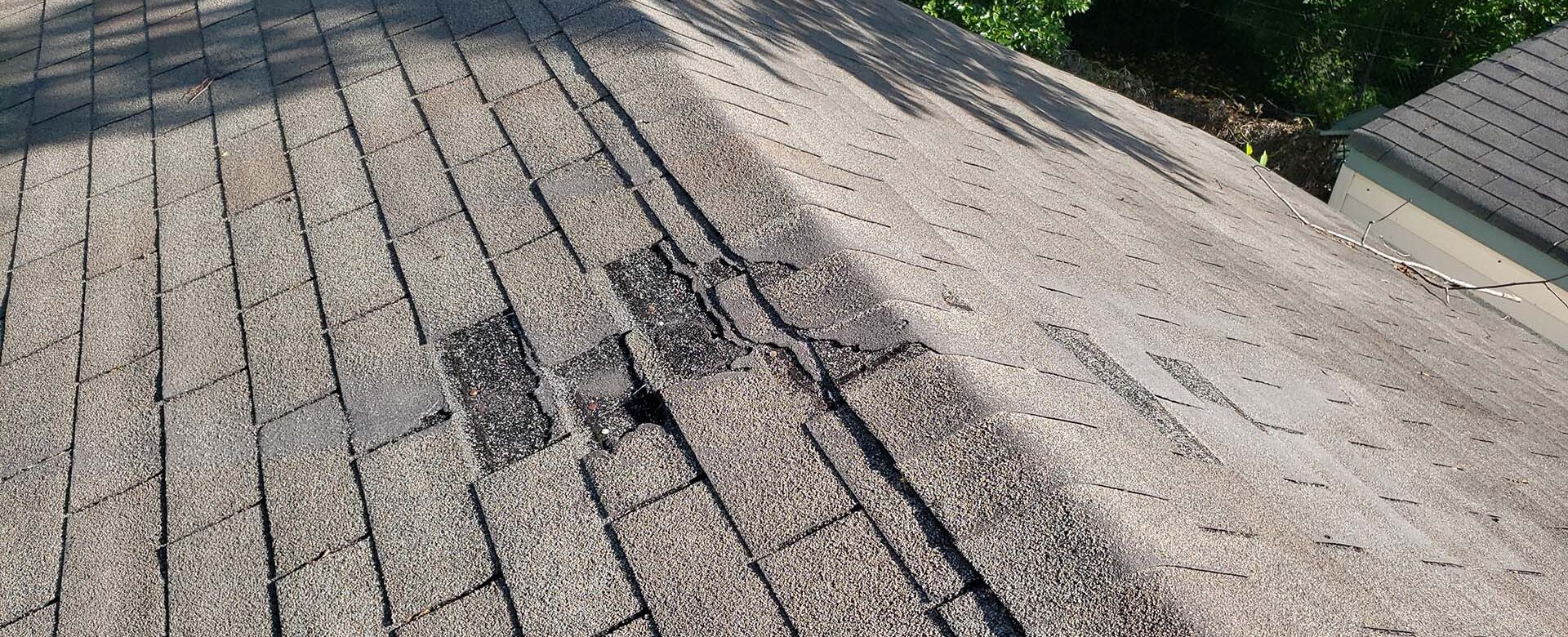
  • Missing, torn, or lifted shingles after high winds
  • Hail damage, including bruised or cracked shingles
  • Impact damage from fallen tree limbs or debris
  • Leaks that appear shortly after a storm
  • Damage from hurricanes, tropical storms, or tornadoes

If roof issues show up immediately after a major storm—or you notice similar damage throughout your neighborhood—it’s a good sign that the damage may be insurable.

Step One: Get a Professional Roof Inspection

Before filing a roof damage insurance claim, it’s important to schedule a professional roof inspection with a licensed roofing contractor that is local to the Hampton Roads region and knows our local weather as well as the local insurance providers. A trained roofer can determine whether the damage is storm-related or simply age-related. The inspection should:

  • Identify visible and hidden storm damage you may not be able to see from the ground
  • Document findings with photos and written notes which can be submitted to your claims agent
  • Provide a detailed repair or replacement estimate to give a “second opinion” to the insurance adjustor’s estimate
  • Help you decide whether filing a claim makes financial sense at all

Step Two: Complete the Insurance Claim Process

If your roofing contractor determines the damage is likely covered, here’s how the process typically works:

  1. File a Claim with Your Insurance Company. You’ll contact your insurer and provide details about the storm or event that caused the damage. This is where the information from the roof inspection will come in especially handy.
  2. Meet with the Insurance Adjuster. An adjuster inspects your roof and evaluates the damage. Your contractor can often be present to ensure nothing is overlooked.
  3. Review the Insurance Estimate. The insurance company provides an estimate outlining approved repairs or replacement, minus your deductible. You may want to have your contractor review the estimate to ensure nothing was overlooked or underquoted.
  4. Complete Roof Repairs or Replacement. Once approved, your contractor completes the work according to the claim’s scope, providing any necessary documentation for your insurance company.

Step Three: Keep It Local

Having an experienced Hampton Roads roofing contractor involved helps ensure the insurance estimate reflects the full extent of the damage as well as the cost of local labor — not just what’s immediately visible or generic.

While not every roofing issue requires an insurance claim, ignoring any type of roof damage – storm-related or otherwise, can lead to much larger problems, including interior water damage and mold. If you’re unsure whether your roof damage is normal wear or something insurance should cover, Andrews Roofing is here to help you make an informed decision. Contact us today for a professional inspection, clear documentation, and support throughout the insurance claims process —without pressure or guesswork.
read more

Four Common Roofing Issues for Homeowners in Hampton Roads

If you own a home in Virginia Beach, Chesapeake, Norfolk, Portsmouth, Suffolk or any of the other surrounding cities of Hampton Roads, there are specific roofing issues you can expect to arise, but being prepared for them is the best way to minimize their impact.

Missing Shingles

Thanks to our coastal location, hurricanes, tropical storms, nor’easters and plain old summer thunderstorms are a constant concern for homeowners. Especially during hurricane season, it is important to keep a close eye on the condition of your roof. The most common problem you’ll experience during one of these storms is missing shingles. While a few missing shingles may not seem like such a big deal, they can lead to much bigger and much more expensive problems. Replacing these shingles as soon as possible will reduce the risk of having water damage done to your roof deck or experiencing a leak down the road. It is even a good idea to have some extra shingles in storage, so that if and when one blows off, it can be easily patched.

If multiple shingles are missing, or large patches have been blown away by a storm, then it is time to contact a professional roofing company to make the repair. Roofing repairs may seem like a simple job, but can be very dangerous for the average DIY-er to tackle. Protect yourself and your home by using a professional.

Humidity and Moisture Damage

The Tidewater region has its fair share of humidity and moisture, both of which can affect the longevity of a roof if it has not been installed properly. Moisture issues in roofs often start inside the home’s attic, where if enough ventilation isn’t present, condensation can occur. This issue can often be identified from inside the home before exterior damage is noticeable. If you see water dripping from the inside of the ceiling or beams in your attic, there may not be enough ventilation present, in which case additional attic ventilation may be needed. If the damage has already been done, a new roof system with proper venting installed beneath the roofing layer will help dissipate heat and prevent condensation from forming on the interior of the home.

Aging Homes

Hampton Roads has always been a steadily growing area, but it did experience a real housing boom in the 90’s when many large “track” neighborhoods were constructed. These homes are now rounding the 30 year mark, which is just about as long as a roof with asphalt shingles – the most common roofing material used in these homes – is going to last. So when issues start to arise in homes of this age, it’s often better to go ahead and reroof the home than to make repair after repair.

For owners of these homes who are doing a full reroof, there are many more options now than when their home was built. Asphalt shingles are still the most popular choice, but they now come in a wide variety of colors. There are also architectural shingles that have a little longer lifespan and lots of color options. Metal roofs have also become more popular both because of the farmhouse style look as well as their durability and longevity. An experienced and knowledgeable roofing company can help you decide which material is best for your home, location and budget.

Salt Water Exposure

Salt is highly corrosive, so when a home is exposed to salt spray from the water or in the air, you can expect just about any of the exterior materials to decay quicker than they would in a different environment. Of course homes right on the ocean or bay in Virginia Beach, Norfolk, Hampton, the Eastern Shore and the Outer Banks will experience this the worst, but even homes that aren’t directly on the water can be affected by the salinity in the air. If you live near the water and your shingles are deteriorating, it may be because of salt damage, which may warrant a new roofing system.

While asphalt shingles are still common in waterfront areas, there are other options that may hold up to that environment better such as metal, slate or even cedar. There are also new roofing products on the market that mimic the look of cedar shake shingles, but which are made with recycled and sustainable materials that have excellent durability and lifespan. This is an excellent choice for the beach house aesthetic.

Find a Roofing Expert

If you are experiencing any of these common Hampton Roads roofing issues, your next step should be contacting a roofing professional. Andrews Roofing has been providing the Hampton Roads region with excellence in new roof and reroofing services for over 20 years. We’ve seen, repaired and replaced every one of these issues, and we can work with you to come up with a solution that meets your needs and budget. Contact us today.

read more