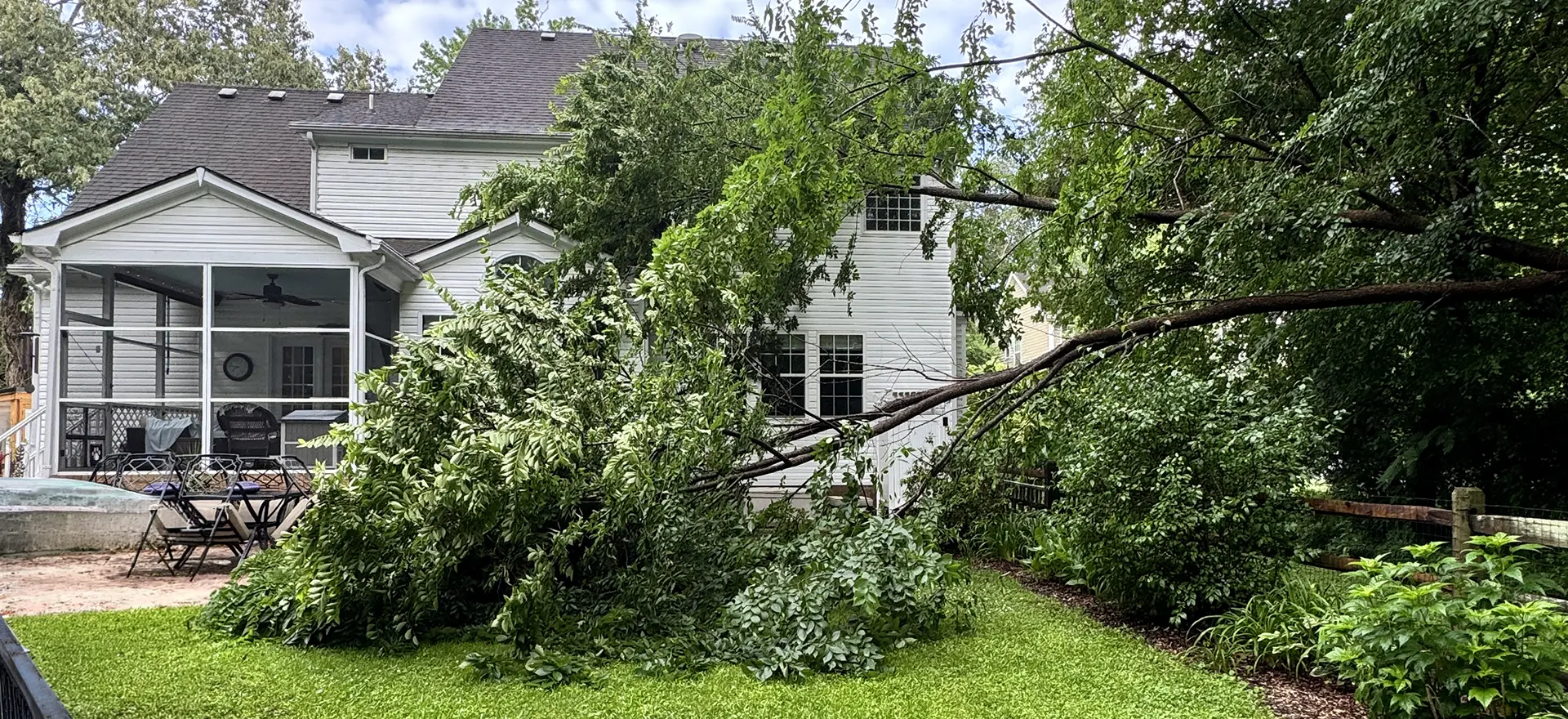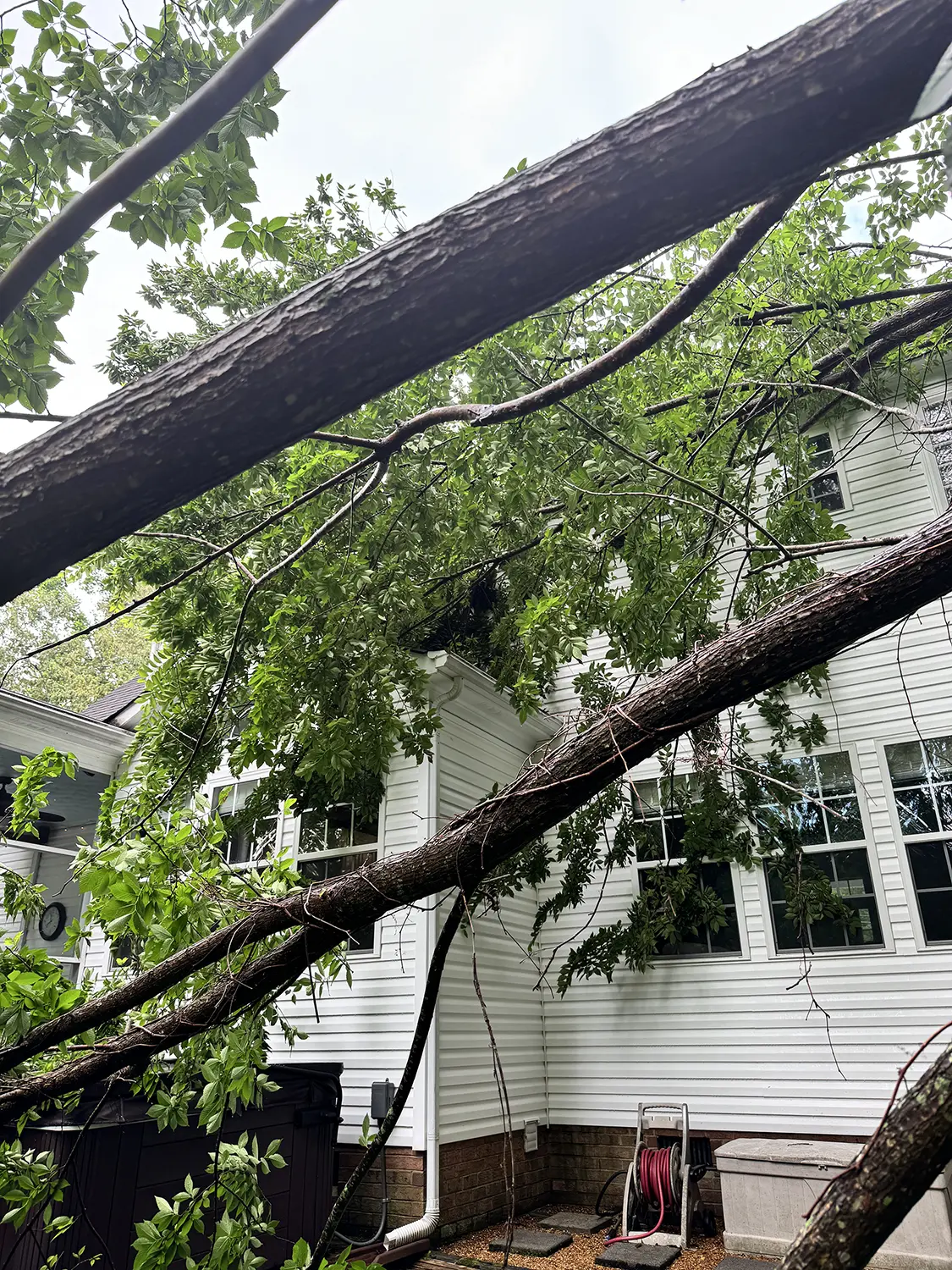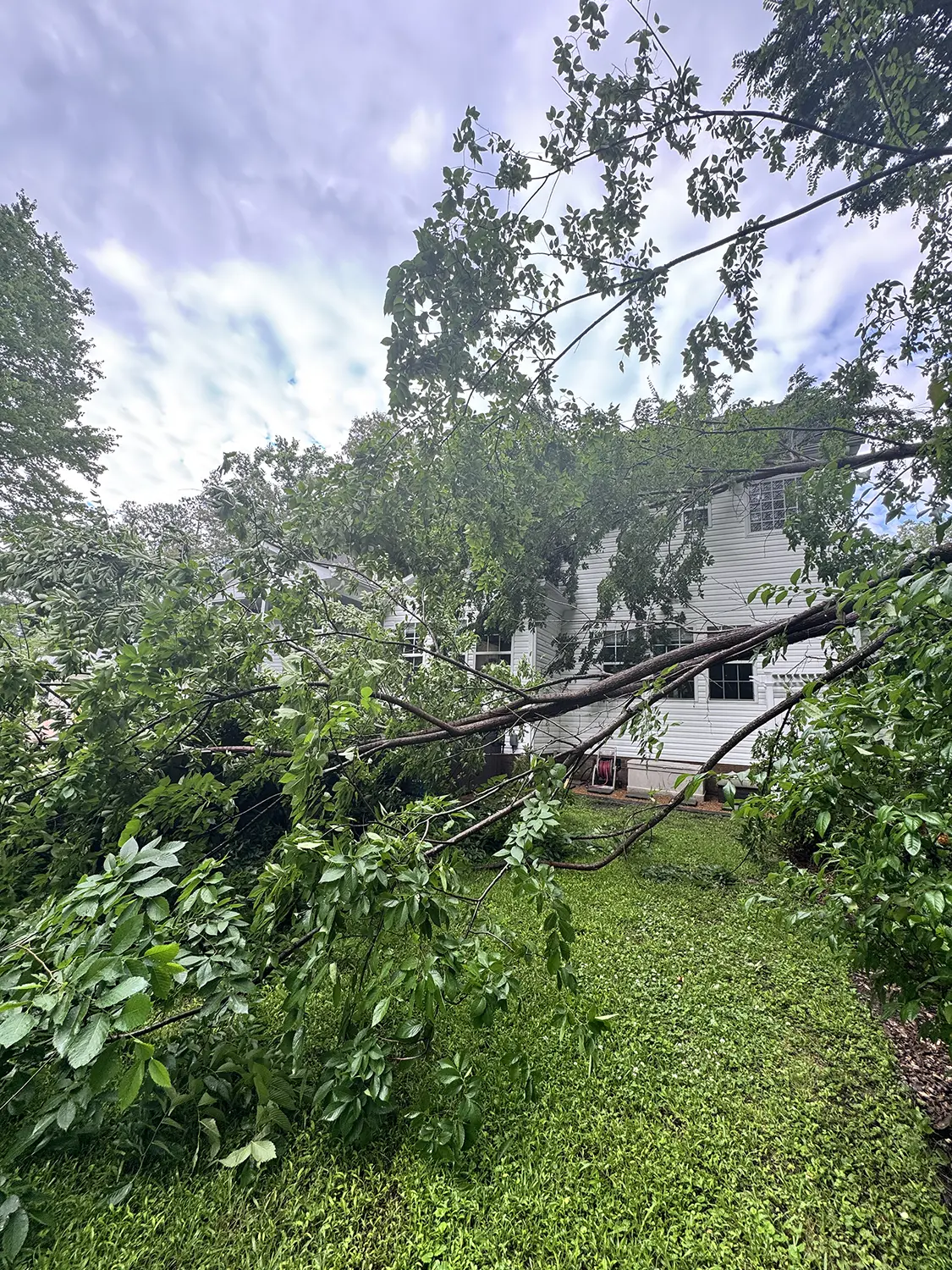


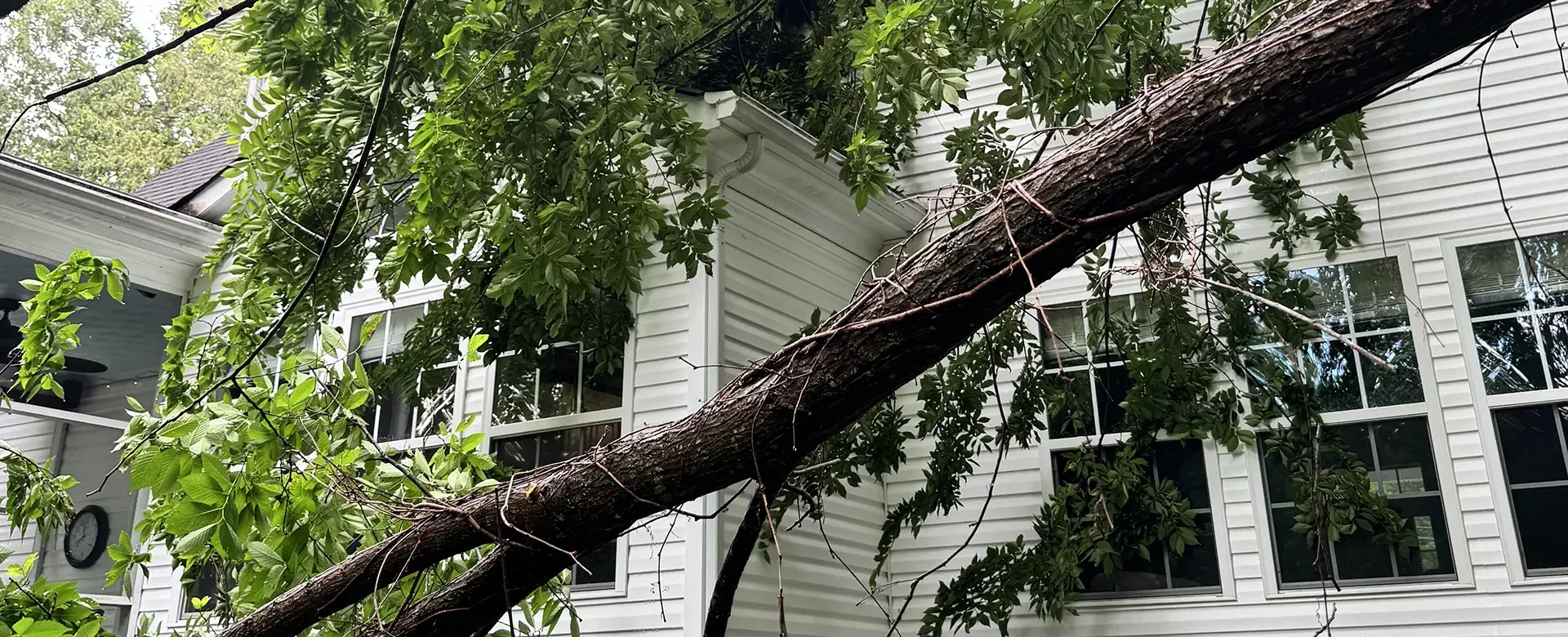

We hope it never happens, but in Hampton Roads, where wooded lots are as plentiful as the pop-up storms, tropical system and nor’easters we experience, it’s never out of the question. There may come a day when you’re awoken in the middle of night to the unmistakable “thud” of a tree landing on your roof. As jarring as that moment can be, the real anxiety is usually in the follow up. Who do you call first? What can you do yourself and what should you wait for an expert for? Who pays for the damage? While we always hope for the best, let’s walk through how to be prepared for the worst.
Step 1: Inspect for Immediate/Emergency Damage
Depending on the size of the tree or the force with which it hit your home, some damage may be immediately obvious. If the tree has penetrated your roof, windows or siding, it will be hard to miss. But in most cases, this doesn’t actually happen. A tree lands on your roof and the damage is typically only exterior and often is underneath the tree in a way that may not be visible without equipment or risky roof access. Immediately following the incident, do a basic safety check first. Look for downed power lines, gas leaks, structural sagging – all things that mean you should vacate the house and call emergency services.
If you don’t see signs of imminent danger, access your attic to check for any penetration or daylight coming through. This may be hard to do if the incident happens at night, so double check when it’s daylight. Next, look for water intrusion – even if there isn’t a visible hole. You may see seeping water coming through the roof deck from the inside where shingles have been lifted or come off.
Whatever you find, document everything! Take photos and videos from multiple angles where it’s safe to do so. This will matter enormously for any insurance claims that need to be made. Unless it is absolutely critical in order to exit the home or for immediate safety, avoid moving debris or cutting the tree yourself, especially if it’s resting up against the house. Shifting the weight of a tree can actually cause further structural damage, and one large limb or piece being moved off the house can drag across and remove shingles, gutters, siding, etc.
Most insurance companies will actually require you to take “reasonable steps” to prevent any further damage, but this does not mean getting on your roof or putting yourself in danger. Tarping your roof is a job for a professional. Your “reasonable steps” should be calling a tree removal company and roofing company as soon as possible.
Step 2: Reach Out to Insurance
As soon as you’ve documented the damage, reach out to your insurance company, even if you’re not sure yet that you’ll need to make a claim. You can ask them specifics about what they consider “reasonable steps” to mitigate any damage, but again – no one should be asking you to put yourself in danger. Instead, ask them if they have preferred vendors for doing this kind of temporary repair work.
Clarify with your agent or representative what exactly is covered in your policy. If your home is not actually damaged by the tree, the cost of removal may or may not be covered. Schedule an insurance adjuster to come inspect your property as soon as possible. Have your documentation ready to share – some insurance companies will have you email or upload photos to their app or website. In the meantime, keep every receipt for any work you have done for immediate repairs, tarping or even hotel costs if you’ve had to vacate your home.
Phase 3: Call in the Professionals
Your insurance company may have preferred contractors and vendors they work with for this type of job, but most policies do not require you to use those vendors. Whether the reference comes from them or elsewhere, you should call a licensed, insured tree removal company ASAP. Until the tree is removed it will be impossible to know the extent of the damage done to the house. As best as you can, coordinate the timing between the tree removal and a roofing inspection by a licensed roofing contractor as closely as possible.
Even if you don’t see signs of a leak, bring in a professional roof inspector. Hidden damage like cracked shingles, missing shingles or compromised flashing are very common and not always visible from the ground. Get a detailed, written estimate from the roofing contractor to supply your insurance adjuster. If possible, work with tree removal and roofing companies who are experienced with insurance claims and who have a process in place for how those jobs are estimated and billed.
Once the inspection is complete and repairs are scheduled, make sure the area stays properly secured until the fix is complete. Especially since storms tend to come in waves in our area, it’s important to try and avoid any additional damage that could complicate a claim or put any of the fault on you.
Step 4: Finalize the Claim
Hopefully the damage is covered by your insurance and the vendors you’ve worked with understand the claims process. In many cases, contractors will bill your insurance company directly. But in other cases, you’ll pay out of pocket, submit your receipts to your claims agent and then your insurance company will cut you a check for what is covered, minus your deductible. This can be stressful, as it’s not always clear that all expenses will be covered, but the best thing you can do is document everything fully, and submit everything you have in an organized, clear way.
Contact a Local Expert
If you’re dealing with a felled tree on your house, Andrews Roofing can help. We have decades of experience with Hampton Roads homeowners and insurance companies, and we have processes in place to help you easily file claims for the work done to your home. We are licensed, insured and experienced. Contact us today for a roof inspection, professionally written estimate and quickly scheduled repair to help you get through this stressful time.