

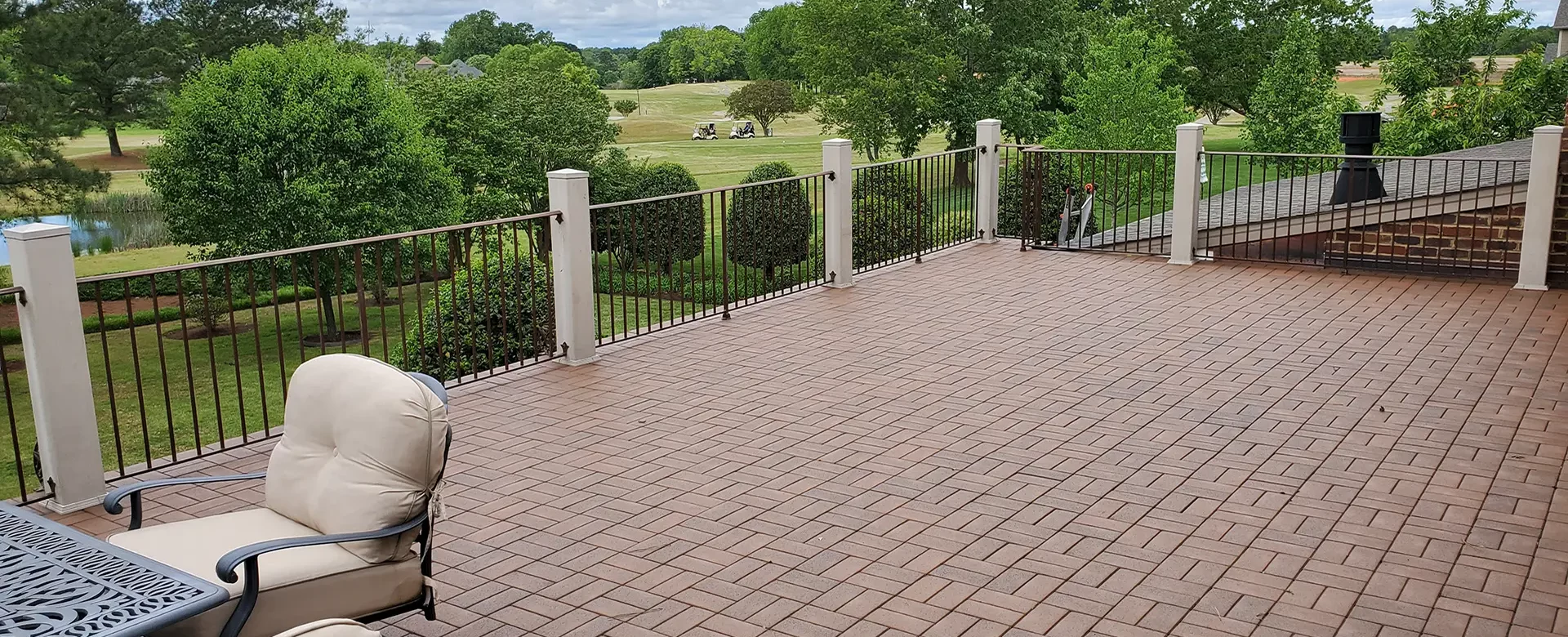

If you have an elevated deck or raised patio, you probably already understand and appreciate the value of an outdoor living space in the Hampton Roads region with our year-round mild weather.
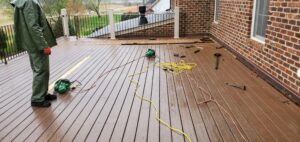
Whether you invested in the deck yourself, or it came with your property when you purchased it, you also probably understand and appreciate how much maintenance and upkeep these decks require. You may be seeing boards that have warped, splintered, or gone gray; a surface that needs sanding and resealing every couple of years; or just an overall look that feels dated and tired. And if you are, you’re probably starting to weigh your options for repairs or replacements.
The obvious choices are what most people gravitate toward: replace the wood with composite decking, re-board the whole thing, do extensive sanding and resealing or put down concrete pavers and call it done. All of those are reasonable paths, but there is another path that you may not have considered that is a great option for elevated decks and raised patios in particular: walkable rubber composite roofing pavers.
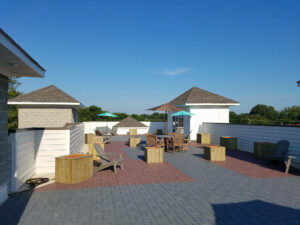
These are the same materials used to create rooftop terraces and walkable flat roof surfaces, but it turns out that everything that makes them excellent for a rooftop makes them excellent for a deck, too.
The Usual Suspects
Wood decking is a popular choice because of cost as well as the warmth and aesthetics it brings to a space, but it requires a real maintenance commitment, especially in a coastal environment like Hampton Roads. The humidity, the salt air, the wet, rainy springs and blazing summers can take a toll. Wood warps, splits, splinters, fades, and eventually rots if it isn’t kept up. Pressure washing, sanding, staining, and sealing is a recurring cycle that costs time and money year after year, and inevitably the wood will get to a state where it needs to be fully replaced.
Composite decking was developed largely to solve those problems, and it does address some of them. It won’t rot or splinter, and it requires less maintenance than wood. However, it can get uncomfortably hot underfoot in direct summer sun, which anyone who’s walked barefoot across a composite deck in July in Virginia Beach can attest to. And in rooftop or terrace situations, it isn’t designed to account for drainage, waterproofing, or the specific stresses of a surface that’s also functioning as a protective layer over a structure below. In addition to that, it can become very costly depending on the size of the deck you’re replacing.
Concrete pavers are durable and attractive, but weight becomes a real issue on elevated structures. Concrete is heavy, and a lot of it on an elevated deck puts serious structural stress on the framing, which on an older deck may already be showing wear.
The Unusual Suspect
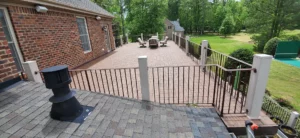
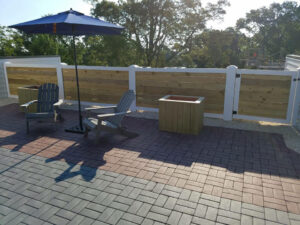
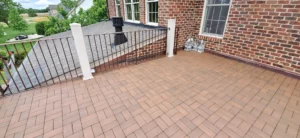
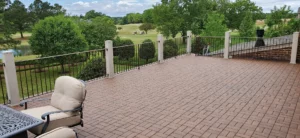
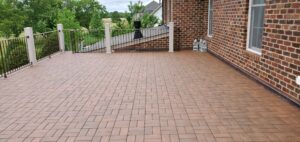
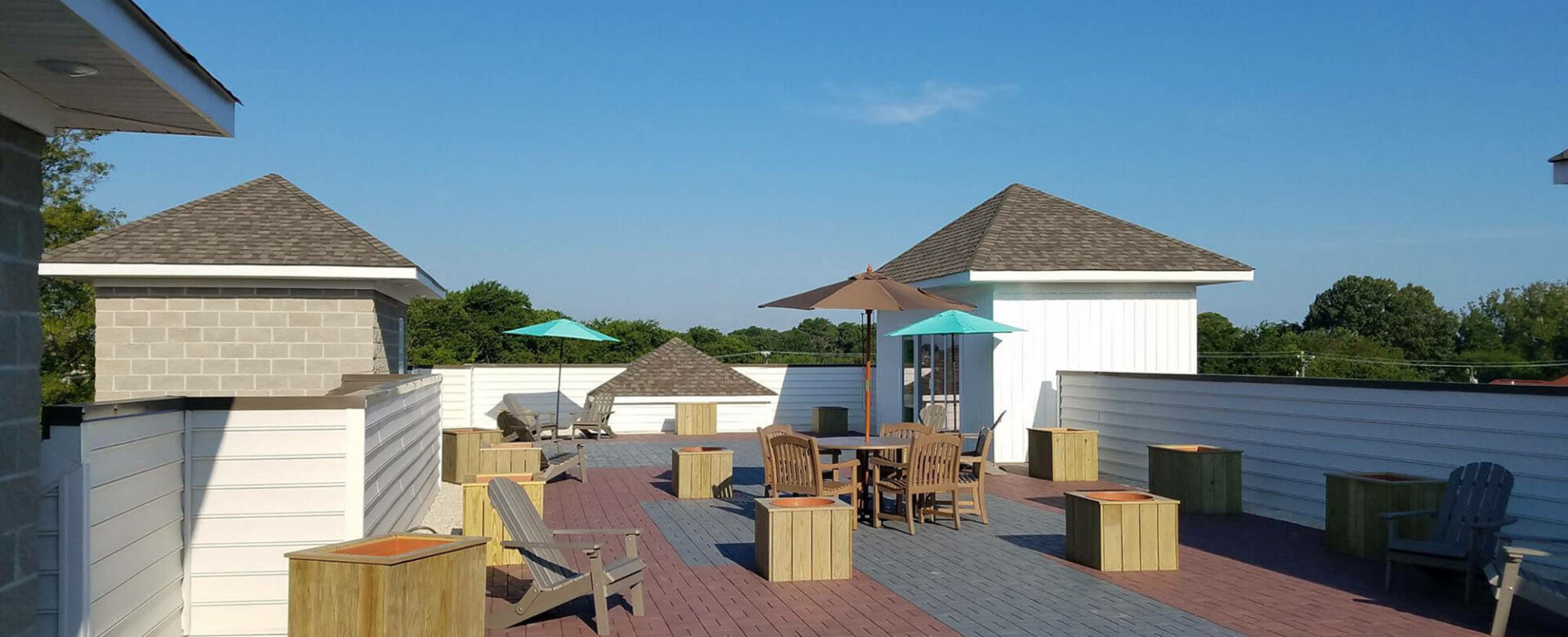
Walkable rubber composite roofing pavers were engineered specifically for elevated, exposed surfaces, whether that’s a rooftop terrace or an elevated deck. Here are a few “pros” of this material that go beyond the rooftop.
- They’re dramatically lighter than concrete. Elevate SkyPavers weigh roughly 35% of what comparable concrete pavers would. On an elevated deck, that’s a big difference. Less weight means less structural stress on the framing, which matters both for safety and for the long-term integrity of the structure.
- Roofing pavers will not warp, splinter, gray out or rot. The material is inherently resistant to moisture, and in a region like Hampton Roads where humidity is a fact of life year-round that is a meaningful advantage.
- They reflect heat rather than absorbing it. The TPO membrane that underlies the paver system is typically white and highly reflective. This keeps the surface temperature considerably lower than composite decking or concrete in direct sun. On a sunny summer afternoon at the Virginia Beach oceanfront, that makes a big difference for a surface to stay walkable and enjoyable rather than becoming a bed of coals you need to navigate in bare feet.
- Elevate SkyPavers carry a 20-year warranty and have a potential lifespan of up to 50 years. Compare that to a wood deck that needs significant attention every few years, and the math on long-term cost starts looking very appealing.
- And importantly, they look good. Walkable pavers are available in a wide range of colors that can be selected to complement your home’s exterior. The finished surface is clean, modern, and attractive.
Roofing Paver Installation
These systems work in layers. First the existing deck surface will need to be evaluated to ensure it’s structurally sound. This step is critical and should be done by a qualified contractor who can tell you whether any framing repairs are needed before any additional weight is added. From there, a TPO waterproofing membrane is installed, followed by a drainage mat, and then the pavers are set on top. The pavers aren’t permanently adhered, which means the surface beneath remains accessible and the system can be adjusted if needed.
The result is a surface that protects the structure below while providing a durable, attractive, walkable surface above – exactly what a good deck surface should do.
As with any roofing or elevated surface project, installation should be handled by a licensed contractor with experience in this specific material. The system has its own requirements and best practices and getting it right matters both for performance and for warranty purposes.
A Good Fit for Hampton Roads
Elevated decks and raised patios are common throughout Hampton Roads: second-floor decks on oceanfront and ocean-block homes, raised patios on homes with grade changes, balconies on multi-story townhomes in Virginia Beach, Norfolk, and Chesapeake. Many of these surfaces were built with wood and are now at or past the point where they need an upgrade.
If you’re already thinking about what to do with an aging deck, it’s worth adding roofing pavers to the conversation before you default to the familiar options. For elevated surfaces especially, the combination of low weight, durability, heat reflectivity, and longevity makes a truly compelling case.
Andrews Roofing has experience with walkable paver installations across Hampton Roads, including in the demanding coastal environments where these materials really prove their worth. If you’d like to talk through whether this approach makes sense for your deck or raised patio, contact us today. We’re happy to take a look at your home’s specific situation and walk you through the options.
 What is a Walkable Roof?
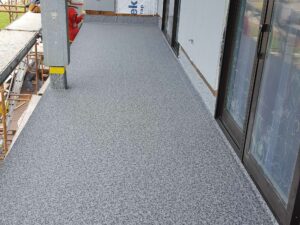
 Can rubber pavers be used for decks and balconies?