

Leaks & Service Repairs

757-399-3066 ext 3 (Leaks & Service Repairs)

Reroof Estimates & Inspections

757-399-3066 ext 1 (Reroof Estimates & Inspections)

Tag: PVC roof membrane

TPO or PVC: Which Low-Slope Membrane Is Right for Your Industrial Roof?

For property owners of warehouses, manufacturing facilities, or other industrial structures, the roof of your building isn’t just literal overhead, it’s one of the most critical components of the entire building.

Its success or failure can massively impact operations and profitability. And for the flat or low-slope roofs that dominate industrial construction, the material you choose matters enormously. Two of the most popular options – TPO (Thermoplastic Polyolefin) and PVC (Polyvinyl Chloride) – are all single-ply membrane systems, which is exactly why they’re so commonly confused. While they may look similar on the surface, they perform differently depending on your building’s environment, purpose and your priorities as a property owner. If you’re having a roof installed or replaced on an industrial structure, here’s what you need to know about these different membrane materials.

TPO (Thermoplastic Polyolefin)

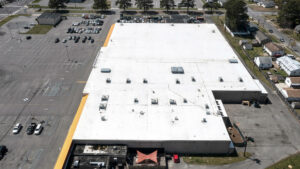
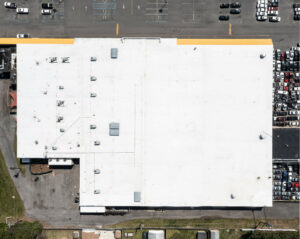
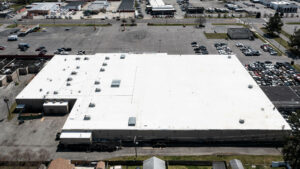
TPO is one of the most widely installed low-slope membrane systems in the country, and for good reason. It’s a single-ply white reflective membrane that’s heat-welded at the seams, creating a watertight bond.

Benefits: TPO’s biggest selling point for industrial clients is its energy efficiency. The white reflective surface deflects UV rays and reduces cooling costs, which is a real advantage for large industrial buildings with significant roof square footage. It holds up well against punctures, tears, and impact, and the heat-welded seams are highly resistant to leaks over time. It’s also one of the more cost-effective options up front, making it a good value for large-scale projects.

Challenges: TPO is a relatively newer material compared to EPDM, so there’s less performance data, and the quality can vary between manufacturers. The key to using TPO is working with a contractor who sources from reputable brands and is familiar with the product.

Best for: Buildings where energy efficiency is a priority with large roof areas that are exposed to sunlight. Projects where budget and performance need to be balanced. It’s an excellent all-around choice for warehouses and distribution centers in climates like Hampton Roads where summer heat is a real factor.

PVC (Polyvinyl Chloride)

Like TPO, PVC membranes have a white reflective surface and heat-welded seams, but they offer the additional advantage of being chemical resistant. PVC has been used in industrial roofing since the 1960s and continues to be a popular option because of its performance in specific demanding environments.

Benefits: PVC’s resistance to chemicals, grease, animal fats, and industrial oils sets it apart from TPO. The heat-welded seams are as strong as TPO’s and like TPO, the white reflective surface helps manage heat and energy usage. PVC is also highly fire-resistant, which matters a lot in certain industrial settings.

Challenges: PVC carries a higher price point than TPO. Due to its formula, certain chemicals can leach out of the membrane over time, which will often cause it to become brittle if it’s not a high quality product. It can also be more sensitive to certain adhesives and solvents during installation.

Best for: Food processing facilities, restaurants, manufacturing plants that handle oils or chemicals, and any industrial application where roof exposure to chemical runoff or grease-laden exhaust is a real possibility. If your facility vents cooking oils, industrial solvents, or other chemical byproducts anywhere near the roof, PVC should be at the top of your list.

So How Do You Choose?

The honest answer both are good, solid systems when properly installed. The right choice depends on your specific building and how it’s used.

  • Choose TPO when energy efficiency, budget, and general performance are your priorities.
  • Choose PVC when your facility is exposed to chemicals, grease, or industrial byproducts that would compromise other membrane materials.

Andrews Roofing Can Help

At Andrews Roofing, we’ve been installing all three systems across industrial facilities in Hampton Roads for decades, and we’re happy to walk through which material makes the most sense for your facility, budget and priorities. Contact us for an estimate or inspection for a straight answer on what will deliver the best long-term return on your investment.
read more

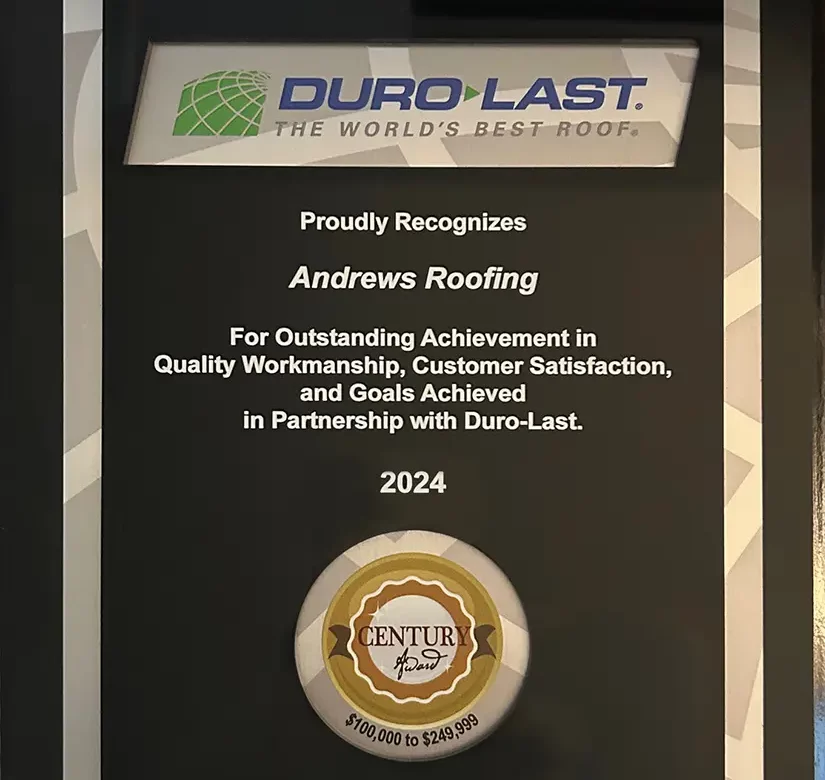
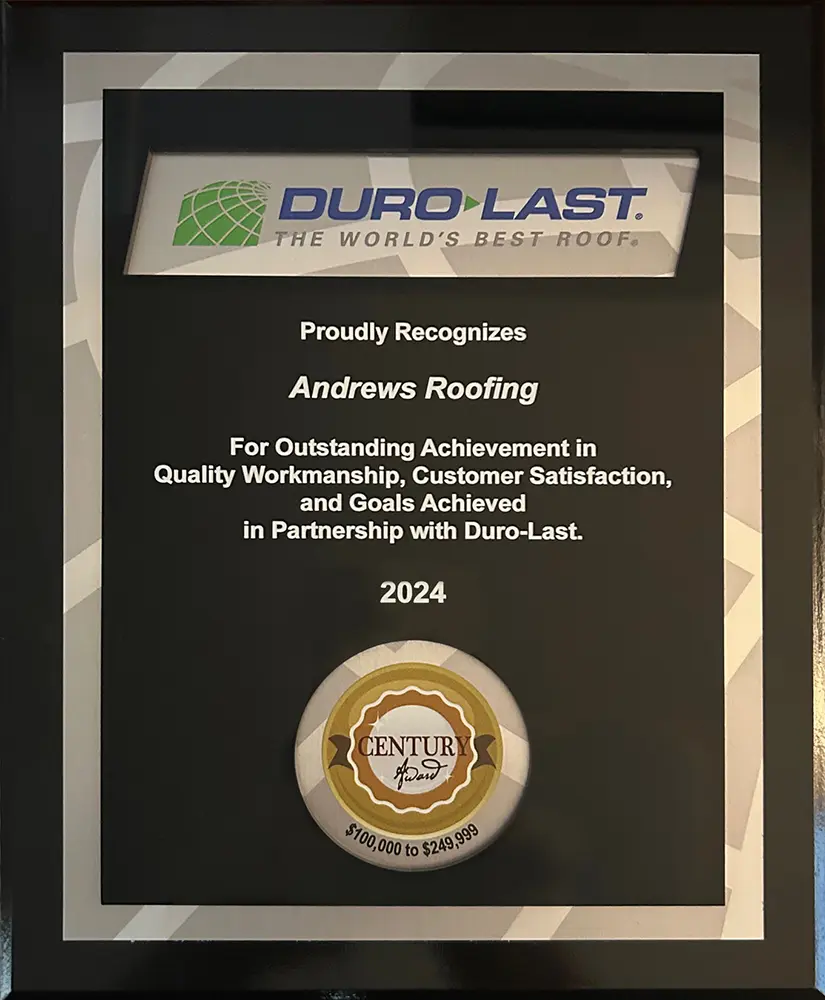
Duro-Last Recognizes Andrews Roofing

Duro-Last is a highly reputable company in the Roofing Industry. They are well known in Commercial Roofing circles as a popular Single-Ply Roofing System with superior durability and longevity.
Andrews Roofing is proud of its partnership with Duro-Last and honored to be recognized by them for Outstanding Achievement in our field.
When you are given an award by the Pros in your field, that means we’re doing something right!

read more

Manufacturer Spotlight: Carlisle SynTec Systems

Andrews Roofing has been serving business owners in the Hampton Roads community for decades, and as a small, local business ourselves, we understand the unique needs of our commercial clients. Whether you’re managing a retail center, an office building, or an industrial facility, having a reliable, durable, and energy-efficient roof is critical to the long-term success of your business. To that end, one of the manufacturers we are proud to offer our commercial clients is Carlisle SynTec Roofing Systems, which is one of the leading names in commercial roofing solutions. Here are a few reasons why we find it works so well for so many other local businesses.

Durability and Longevity

Carlisle SynTec systems are known for their unmatched durability. Whether you opt for their EPDM, TPO, or PVC membranes, each material is designed to withstand the toughest weather conditions. Here in Tidewater, our commercial clients face everything from heavy rain, extreme temperatures, salt air, hail, and strong winds, but these roofing systems can take it all. Their resistance to UV degradation and punctures means fewer repairs and maintenance costs over the roof’s lifetime, giving you peace of mind and long-term savings.

Energy Efficiency = Cost Savings

One of the standout benefits of Carlisle SynTec’s TPO and PVC roofing systems is their energy efficiency. These membranes are highly reflective, reducing heat absorption into your building. In the hot southeastern Virginia summer, this can dramatically cut down on cooling costs. For  businesses operating large facilities or warehouses, the reduction in energy consumption can be significant, which makes it friendly for your bottom line and the environment. In fact, many of the Carlisle roofing membranes qualify for LEED credits. Whether it’s recycled content or energy-efficient design, the roofing systems contribute to a greener footprint, appealing to environmentally-conscious businesses and customers alike.

Industry-Leading Warranties

We know that when our commercial clients invest in a new roof, they want the reassurance that it’s built to last. Carlisle SynTec provides industry-leading warranties, ranging from 10 to 30 years depending on the system. Their warranties cover materials, installation, and more, ensuring you’re fully protected. As your trusted local roofing partner, we handle all warranty-related questions and maintenance needs, making sure you’re always covered.

Customizable Solutions for All Types of Commercial Buildings

No two commercial buildings are exactly alike, and Carlisle SynTec Systems accommodate for that. Whether your business operates in a multi-story office building, a retail space, or a manufacturing facility, we can customize a roofing solution that perfectly fits your needs. Their extensive range of systems—including their single-ply membranes, metal roofing systems, and insulation options—allows us to tailor a solution that fits your structure and budget.

We also know that it’s important to minimize the disruptions a roofing installation may have on your day-to-day business. Thanks to Carlisle SynTec’s versatile installation systems, we can install your new roof quickly and efficiently thanks to their prefabrication options and simple installation methods.

Supporting Local Businesses

We all understand the importance of supporting locally owned and operated businesses. When you choose us for your roofing needs, you’re getting the personalized service of a local expert, but with the backing of a globally recognized brand. We bring the craftsmanship and commitment to every project, while manufacturers like Carlisle provide cutting-edge technology, premium materials and exceptional warranties.

So, if you’re looking for a long-lasting, energy-efficient and sustainable roofing solution for your commercial building, we’d be happy to talk to you about how Carlisle SynTec or a range of other commercial products we work with can meet your needs. Contact us today to schedule a consultation with our commercial roofing specialist.

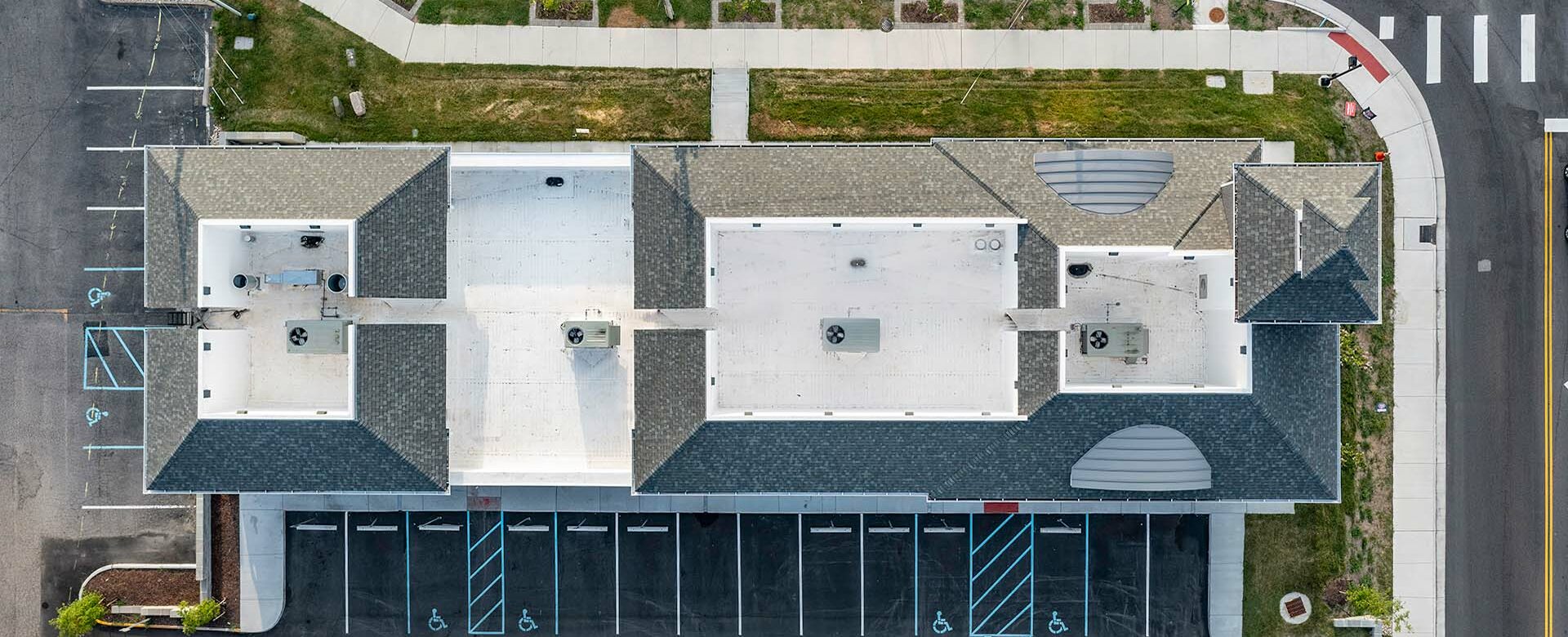
An example of of Carlisle SynTec Systems

read more

What’s the Difference Between a Shingle and Membrane Roof?

If you’ve been researching roofing repairs or replacements, you’ve probably come across several different roofing materials. The type of materials used for a roof depends on a lot of factors including the structure of the building, the building’s purpose and use, location, budget and local building codes. Two large categories of roofing materials are shingles and membranes. Both of these categories are made up of many different types of products and materials that are used for different purposes, so let’s dive in.

Steep Slope vs. Low Slope

The first factor in determining which of these two roofing methods will be used is whether the roof in question has a steep or low slope. Shingles are typically used on steep slope roofs, while membranes are used in flat or low slope roof situations. For the most part, membrane roofs are seen on industrial and commercial buildings, but can be found on residential properties as well, often as decks, over side and rear adjoining roofs. On residential properties, they are often found over sunrooms, utility rooms, or porches and can be used under decks and other walkable surfaces materials like pavers. Membrane roofs are quite common at waterfront properties and on new construction in the Hampton Roads/Tidewater area.

Types of Membrane Roofs

There are many different roofing membrane products on the market today, each with their own purposes and benefits. Below are four common flat and low slope roof membrane materials.

Thermoplastic polyolefin (TPO)

In the Mid-Atlantic region, TPO is becoming the low slope roofing standard. Because TPO is white, it is highly reflective, which means it’s efficient in keeping buildings cool. In fact, TPO roofs generally exceed the current energy efficiency standards and are a US Department of Energy, Energy Star rated roofing system, which some commercial structures may need to meet. TPO is also very durable thanks to its heat welded seams, and can last 20 to 30 years, making it a budget-conscious choice for businesses.

Ethylene Propylene Diene Terpolymer (EPDM)

EPDM is also a single ply membrane, but it is made of a rubber compound, rather than plastic like TPO. This material has been in commercial use for longer than TPO and has a strong reputation for durability. When properly installed, EPDM can easily last 30 years or more. However, if installed incorrectly or without proper maintenance, the adhesive treated seams can become vulnerable over the long term. Although EPDM roofs are usually black in color, meaning they are not as energy efficient as TPO, the material is 100% recyclable. There are also EPDM products that come in white, doubling their environmentally-friendly factor.

Polyvinyl Chloride (PVC)

PVC is a single ply membrane that is similar in appearance to TPO and is usually white, giving it similar energy efficient qualities. Other environmentally friendly aspects of PVC include its low petroleum content compared to TPO and EPDM. It’s also a recyclable material, even post-consumer, meaning it stays out of landfills. A PVC roofing system requires a slightly greater investment than that of a TPO roof, but it is also very durable and has a similar lifespan if installed and maintained correctly.

Modified Bitumen

The previous materials are almost exclusively used in industrial and commercial structures, but modified bitumen is perhaps the most common material for residential low slope roofs. It consists of five layers of asphalt that has had modifiers added to it to give it plastic or rubber-like properties. It is installed in large rolls and adhered with heat or with a factory applied self-adhesive. Modified Bitumen is designed to withstand very harsh environmental conditions, which makes it a good option for storm and heat prone areas of the Mid-Atlantic such as southeast Virginia.

Types of Shingle Roofs

Shingle roofs are seen on both commercial and residential structures, as long as the roof has a steep slope. There is a wide variety of shingle materials on the market designed for different purposes, styles and locations.

Asphalt Shingles

This is the most popular type of residential roofing material today. It’s also the most cost effective. Asphalt shingles consist of a fiberglass mat, top and bottom layers of asphalt, and mineral granules. There are three-tab shingles and architectural shingles, the latter being more costly but also more durable. Asphalt shingles are produced in a wide variety of colors to match myriad home styles and designs.

Synthetic Roofing

Whether they’re made to look like cedar shake, slate or any other type of upscale material, synthetic shingles are made with recycled materials and have a lower impact on the environment in part because of their lifespan which can be 40-60 years. These premium roofing systems should only be installed by roofing contractors who are experienced with these materials. They can be expensive, but their extended lifespan makes up for some of the upfront cost.

Wood Shingles & Shakes

Made from cedar, redwood, southern pine and other woods, these shingles are machine sawn or hand hewn. Some local building codes limit the use of wood shingles and shakes because of concerns about fire resistance, but there are certain wood shingle products that incorporate a factory-applied, fire-resistant treatment. These shingles are not often installed on a new structure or total roof replacement, but because of the age of some homes in the Tidewater region, wood shingles are often needed for repairs of older roofs or to maintain the design of a historic home.
Find an Expert

Whatever type of material you choose for your roof replacement, Andrews Roofing has experience with nearly all of them. If you’re not sure what the best material for your project is, please contact us to set up an appointment with one of our knowledgeable cost estimators. We can help you determine the most appropriate, durable and cost-effective roofing solution for your needs.

read more