

Leaks & Service Repairs

757-399-3066 ext 3 (Leaks & Service Repairs)

Reroof Estimates & Inspections

757-399-3066 ext 1 (Reroof Estimates & Inspections)

Category: Roofing Repairs

Repairing Roof Leaks Doesn’t Have to Be a Nightmare

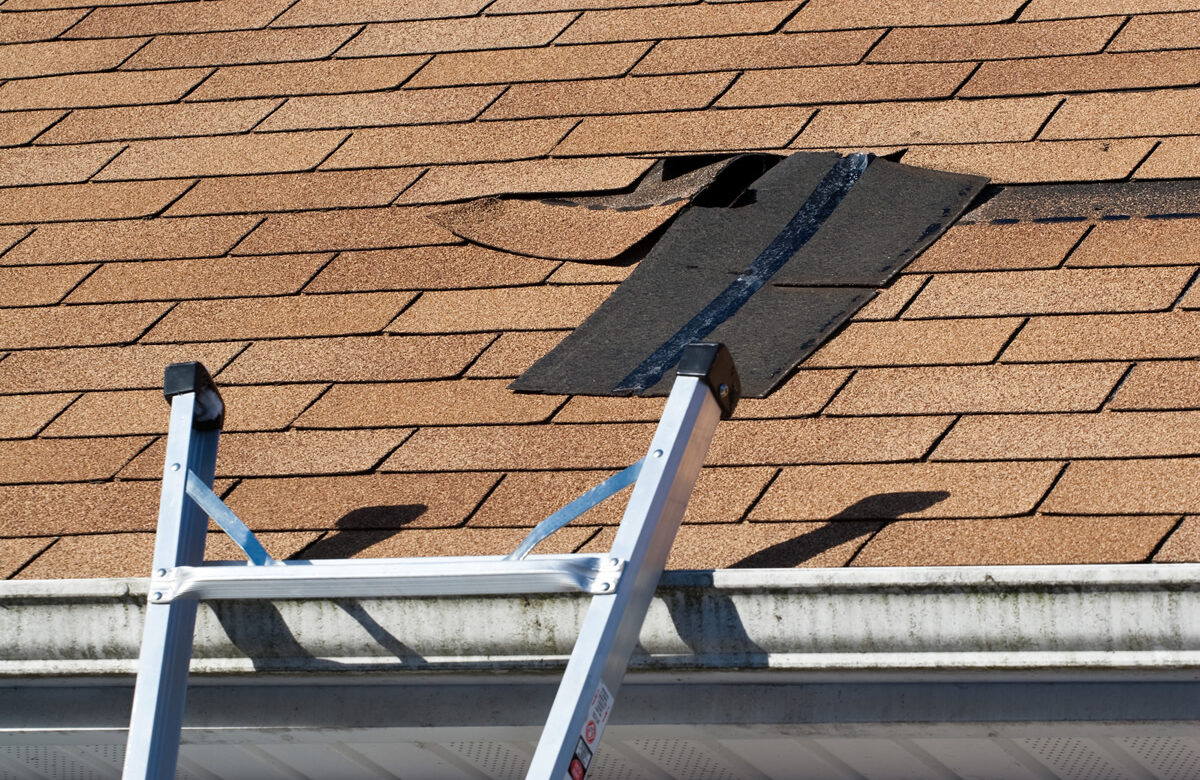
Fixing a leak on the roof can be like finding a needle in the haystack. Many times, the leak ends up in a different place than where it starts. Even if it’s raining, it can still be difficult to find the origin of the leak. You’ll need to look for water marks, discoloration and stains in the attic.

How to Find the Leak

Fortunately, it doesn’t have to rain to find where the water is coming in. Here are three ways to find where your leak starts:

  • Use light. Look for the leak during the day. Use a bright flashlight to follow the stains and water marks. If you can get up in the attic when it’s raining, you may be able to follow the water.
  • Work backwards. It’s rare that the leak is directly where it’s coming in. Water travels down a path until finding a vulnerable spot to drip down.
  • Add water. When the weather is clear, send a friend up to the roof with a garden hose. Have your friend systematically work across the roof, one area at a time.

Call in an Expert

Fixing a roof is not always a DIY project. You might void the warranty of your roof if you try and fix it yourself. An older roof may be disintegrating even more. When you don’t know what you’re doing, you could create an even bigger problem. Steep roofs are extremely hazardous too. Most homeowners don’t have the right tools or even know how to repair a roof properly. Unless you’ve done roofing before, it’s better to call a professional to ensure that the job is done right.

Experienced Residential Roofers in Virginia

Andrews Roofing has 20 years of experience in residential roofing. If your roof is leaking, protect your largest investment by sending an email to [email protected] or completing our contact form to get a free estimate for your next project.
read more

Top 3 Reasons to Have a Well-Ventilated Attic

Most people don’t pay attention to the ventilation in their attic. After all, you don’t live up there, so why does it matter how the air circulates? It only takes you a few seconds to drop things up there that you don’t plan to use for a long time. While it may be true that most people don’t spend much time in their attic except for storing or retrieving items, having a well-ventilated attic is actually quite important. Here are three reasons you should make sure that air is properly circulating in your attic.

Heat and Moisture

Everyone knows that their attic gets extremely hot during the summer. However, most people don’t know that some of the structural components that make up the attic are vulnerable to too much heat and moisture. Parts such as the roof deck, trusses and rafters can become warped when exposed to extreme heat for an extended period of time, which can lead to a weakened structure and eventually a collapsed roof if not addressed in time.

Mold and Mildew

Where there is heat and moisture, you can expect mold and mildew. This is true for anywhere in your home, but the attic is especially at risk for heavy growth because you don’t spend too much time up there. It’s possible that by the time you notice it, the mold and mildew infestation has gotten out of control and caused serious damage.

Damage to Insulation

It’s also possible for heat and moisture to get absorbed by the insulation in the attic and cause them to become damaged. If this happens, then your home’s energy efficiency can be thrown off which can lead to a significant increase in your monthly utility bill.

It’s clear that proper attic ventilation is more important than most people think. If you’re concerned about the air circulation in your attic or want to speak with a professional about a consultation, contact the experts at Andrews Roofing today by sending an email to [email protected] or completing our contact form to get a free estimate for your next project.
read more

Selecting the Best Possible Roofing Contractor

Selecting the Best Possible Roofing Contractor

One of the most important investments you will ever make for your home is a sturdy, durable roof. With warm weather across the United States, it’s an excellent time to have a new roof installed or to hire a contractor to do some needed repairs on your roof. Finding the right contractor can be a little challenging, but we have some tips you can use.

Consider Referrals

If you have a neighbor, coworker, or friend who has had a roof installed or repaired, ask them about their experience. You may find out things you won’t elsewhere. Ask about how the work was done and if they are satisfied looking back on the experience. You can also hit up lumber yards or hardware stores to get ideas.

Research Local Companies

First things first, consider your options. Make sure you can find contact information and determine that the companies are licensed and insured. Check how long they’ve been operating and what sort of reviews they have online. You can search for complaints using Angie’s List or Yelp. You should also consider visiting the company website to see if it is professional and well put together.

Meet the Contractors

You likely have narrowed down your options and have a few that you are considering. This sets stage two, when you actually meet with representatives of the companies you’re looking at. Have them visit to talk about your roofing needs, potential materials, and how long the job may take. Ask any questions that you have before you choose a contractor to do the job.

Get it in Writing

Before you allow anyone to start work, you need a contract. That contract should state everything from what materials will be used to the length of product warranties. You should also find information about liability and safety procedures. Finally, check for a schedule, payment amount, and what method of clean-up is covered. If you have questions, this is another great time to get them answers.

Whether you need a small repair, huge repair, or a full roof installation, Andrews Roofing can help. Contact us today by sending an email to [email protected] or completing a contact form to get a free estimate for your next project.
read more

The Truth About Leaks

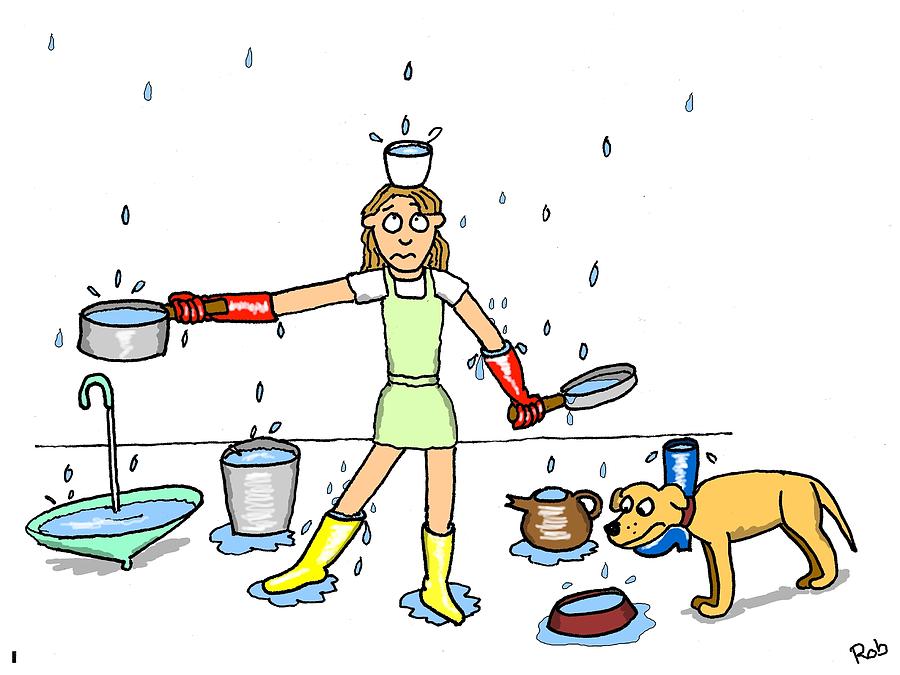
Leaking Roof Cartoon_091015

Our goal is to secure your first line of defense when it comes to the elements. Water, in whatever form, (rain, snow, sleet, or hail), has a way of penetrating any weaknesses in a roofing system. It is our goal to not only install roofs that will stand up to the wear and tear that the weather brings year after year, but to also assist when water intrusions occur.

While many roofs leaks are simple to repair, determining the source of the leak is often the more difficult task. When customers identify a drip in their ceiling, they often assume that the leak is originating above the leakage point, however, a leak can be traveling down a rafter or can even be the accumulation of condensation. For example, it is common for plumbing and AC leaks to be misdiagnosed as roof leaks.  They can be tricky.

Roof leaks can be caused by any number of things. Once you familiarize yourself with the potential causes of leaks, you may be able to determine the source through process of elimination. If not, you can always contact our office for assistance. Here are a few of the main sources of roof leaks:

Missing, cracked or loose shingles, tiles or seams
Damaged or deteriorated flashing, seals and caulking
Improper attic ventilation, which can cause moisture through a buildup of condensation
Improper installation of valleys, flashing, shingles, collars, etc.
Ice Dams, which prevent proper run off and force water to back up beneath shingles
Ponding water
Exposed nail heads
Skylight flashings
Wind driven rain
Built up debris, which can trap moisture and accelerate deterioration

Robert Andrews II
757-286-7400
[email protected]

read more

Warning Signs: How to Avoid a Roof Collapse

Having your roof collapse can be an unexpected nightmare.

A collapse can happen during any time of the year, but with the weight of heavy snowfall in recent years, it is best to make sure your roof is in good condition to withstand the elements.

Snow Covered Roof_011615

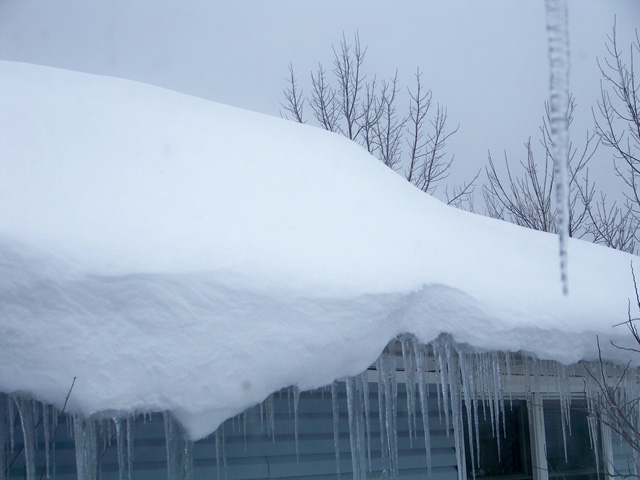
Snow-related collapses can be caused by heavy amounts of snow accumulation on any type of roofing. One cubic foot of dry snow weighs approximately 6 to 8 pounds, while packed snow and/or ice can weigh even more. Other forms of precipitation can compound the problem if moisture from rain or sleet has been absorbed into the roof.

Flat roofs and lower sloped roofs tend to be at greater risk because they will accumulate larger amounts of precipitation.

Major warning signs should be addressed immediately by contacting your local roofer. Those signs include:

  • Sagging sections of exterior shingles or interior ceiling.
  • Severe/repeated leakage
  • Cracks in the exterior masonry
  • Bends, ripples or deformities in the roof supports, framing or structure
  • Sprinkler heads that have dropped below ceiling tiles
  • Doors or windows that are difficult to open or pop open on their own
  • Bent or bowed utility pipes or conduits at ceiling

Should you notice any of these conditions, contact Andrews Roofing for a free consultation with one of our estimators. We have a 24 hour answering service that can receive emergency calls and allow us to dispatch repair teams.

Regular maintenance and inspection of your roof will help you identify any type of roof damage and prevent a collapse if fixed in a timely manner. Some preventative maintenance tips include:

  • Removing debris, mold and algae accumulation, which can hold moisture
  • Keep drains, gutters and downspouts clear of leaves, dirt and debris so that drains can flow freely
  • Have roof problems repaired when they are discovered to prevent any further damage.
  • Remove any excessive amounts of snow from the roof (consider hiring a professional).

Robert Andrews II
Office: 757-399-3066
Email: [email protected]

read more

Flat / Low Slope Roof Overlay Replacement as an Option (Retro – Fit)

There are many ways to handle your roof replacement. A lot of commercial and residential flat roof owners know that you can install a new roof over top of an old one. Many old built-up roofs are still out there, and most even have rocks on them. These roofs can be expensive to tear off and dispose of, so for years roofers have been overlaying with “recovery” insulation board and single – ply roof systems such as TPO membrane, E.P.D.M., modified bitumen membrane, and P.V.C. membrane. These roof systems will last about 20 years and then you tear both roof layers off and start over.

Single-Ply roof systems are also roofed over. Building codes only allow for two layers of roofing and we agree with this code. Also, the insulation and roof deck on your existing roof must be dry and in such a certain condition to be roofed over. Some roofs cannot be left in place and roofed over for several reasons, so consult with a roofing professional to see if it is an option.

Special specifications are made by the industry when roofing over, so be sure you can trust and rely on your roofer to do the job correctly. Generally, it is better to tear off the old roof, but in many cases a roof over is a very acceptable option. In fact, based on my experience, the vast majority of one layer flat roofs get a retro-fit treatment.

Call or email me if you want to talk about it. Thanks for reading.

Robert Andrews, II
President/Estimator
Phone: 757-286-7400
Email: [email protected]

read more