

Leaks & Service Repairs

757-399-3066 ext 3 (Leaks & Service Repairs)

Reroof Estimates & Inspections

757-399-3066 ext 1 (Reroof Estimates & Inspections)

Category: Roofing Innovations

Look Up: Finding the Outdoor Space You Didn’t Know You Had

Spring is almost here, and if you’re like most Hampton Roads homeowners, you’re probably already thinking about how to start shifting life more outdoors.

Maybe you’re planning to freshen up the patio furniture, fire up the grill, or finally tackle that landscaping project you’ve been putting off since fall. Outdoor living is one of the biggest perks of life in this region thanks to our mild temperatures, fresh coastal air and gorgeous spring weather.

But when you think about making the most of your outdoor space, are you only thinking horizontally? Most people default to ground-level thinking when it comes to outdoor living: the backyard, a patio, maybe a raised deck off the back door, which makes sense for most properties. But for a significant number of homes across Hampton Roads, the most valuable and underutilized outdoor space isn’t on the ground – it’s above your head.
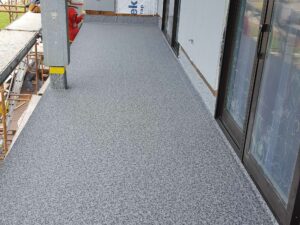
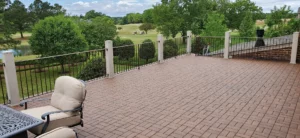
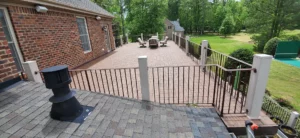
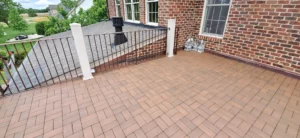
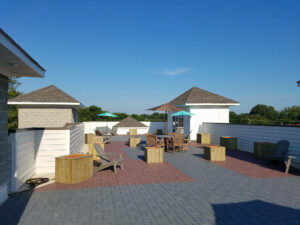
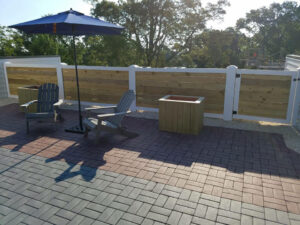
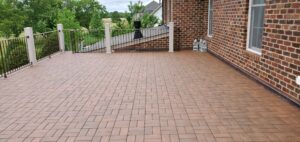
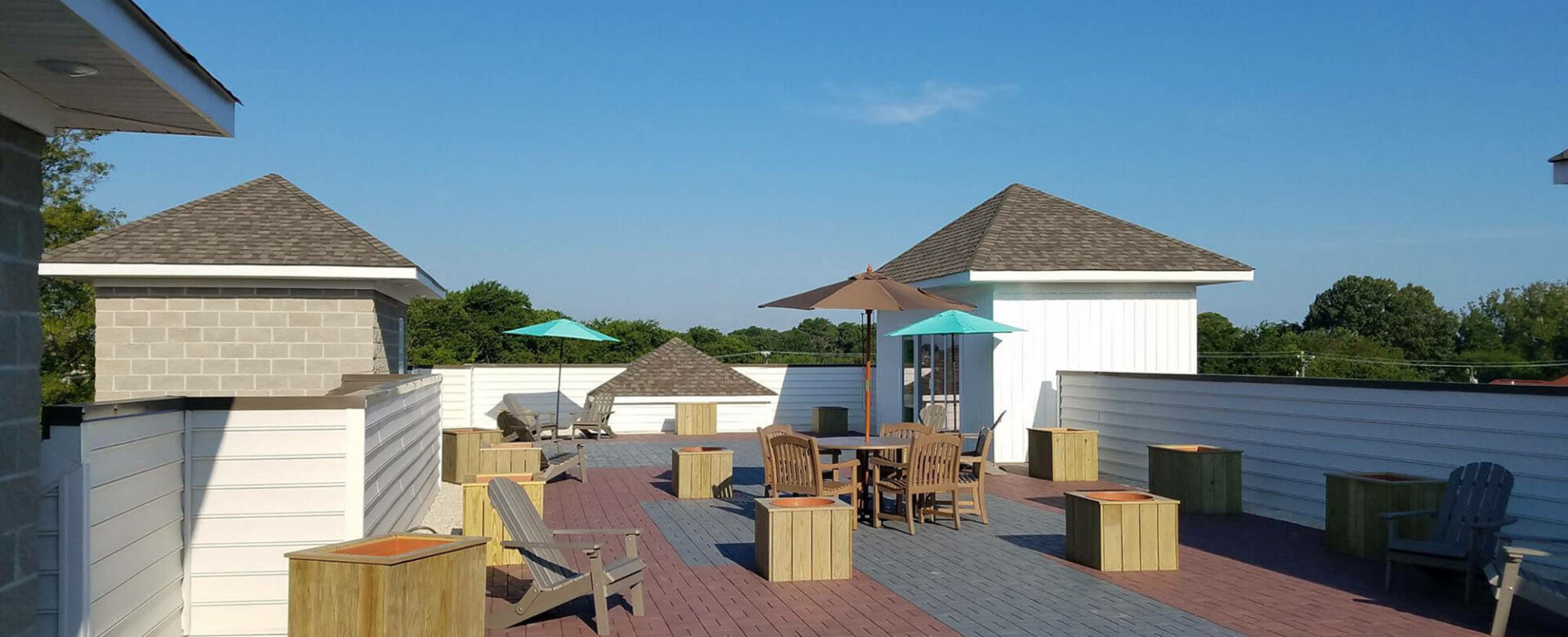
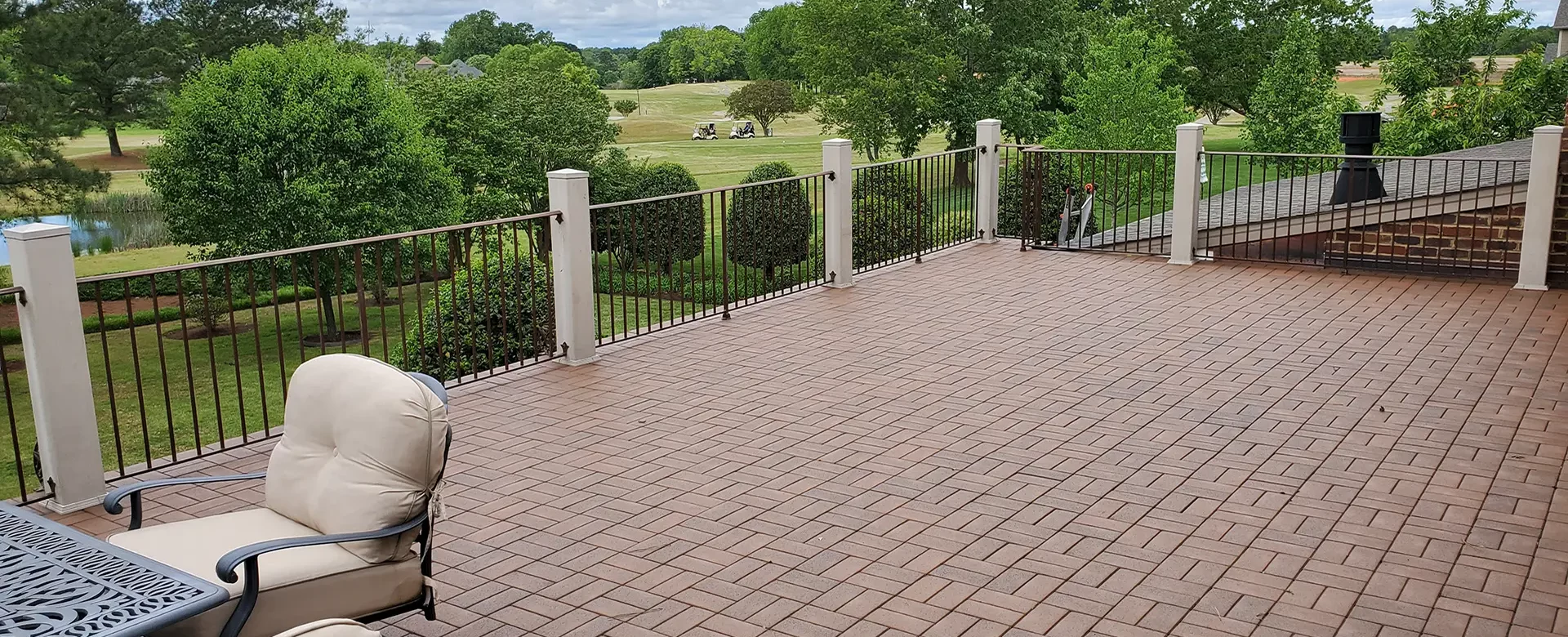
With walkable roofing pavers, almost any flat roof surface can be transformed into functional, attractive outdoor living space. And in a region with as many potential water views as ours, the payoff can be big. To learn more about exactly what walkable pavers are, read our earlier blog on the material, but read on here to see how they can create possibilities in your own property that you may not have ever considered.

A Region Primed for Rooftop Life

Hampton Roads sits at the intersection of the Chesapeake Bay, the Atlantic Ocean, the Elizabeth River, the Lafayette River, the Lynnhaven, and dozens of creeks, inlets, and waterways threading through Virginia Beach, Norfolk, Portsmouth, Chesapeake, and beyond. We are, by almost any measure, one of the most water-rich metropolitan areas on the entire East Coast.

Water views in this region aren’t just nice to have – they’re a premium asset. Properties with water views command significantly higher prices, and for good reason. We all know that there’s something special about an unobstructed view of any one of these beautiful waterways.

The problem is that while a lot of Hampton Roads homeowners technically live near the water – even a stone’s throw distance – they miss the view completely because they’re experiencing it from the wrong elevation. Neighboring structures, fences, mature trees, and the general density of coastal neighborhoods can block what would otherwise be a stunning sight line. But go up one or two stories, and the picture changes completely. Here are a few neighborhood-specific examples.

Chic’s Beach

If you’ve spent any time in the Chic’s Beach neighborhood of Virginia Beach along the Chesapeake Bay, then you know that many of the properties there are three-story townhomes packed closely together, many of them sitting within a short walk of the Bay. From the street or the backyard (if there is a backyard), the views are often modest at best, blocked by the neighbor’s fence, the next row of townhomes, or a screen of vegetation. But from the rooftop of many of these homes, suddenly the Bay is right there.

A walkable rooftop terrace on a home in Chic’s Beach doesn’t just add outdoor square footage, it adds a premium view that expands the way you can live in your home and how much there is to enjoy. Morning coffee with the sunrise over the water, or evening breezes watching the boats come into the inlet – those are now realistic visions for the right property with the right walkable rooftop paver installation.

The North End

The north end of the Virginia Beach Oceanfront is one of the most coveted and valuable stretches of real estate in the region. Oceanfront and ocean-block cottages and homes, many of them multi-story, sit along some of the most beautiful Atlantic coastline on the East Coast.

For true oceanfront homes, a rooftop deck is an obvious enhancement: more square footage, higher elevation, more expansive views that can even include sunset views from the right spot. But perhaps the more compelling case in this area is actually for the ocean-block properties – those sitting just one street back from the oceanfront. At ground level, an ocean-block home may have limited water views. Add a rooftop terrace, and a home that was a short walk from the ocean suddenly feels oceanfront from the right vantage point. That’s a meaningful difference, both for everyday enjoyment and for the property’s value and marketability.
Inland Views and Little Yards

Water views make for a compelling story, but a rooftop deck doesn’t require an ocean backdrop to be worth pursuing. For many Hampton Roads homeowners the issue is simply that they don’t have a large enough back yard to truly enjoy their outdoor space. It may also be too exposed, too shaded, too uneven or often – too soggy.

Older neighborhoods across Norfolk and Portsmouth were often developed with modest lot sizes. Backyards can be small, awkwardly shaped, hemmed in by utilities or HVAC equipment, or simply too shaded and enclosed to feel like a real outdoor retreat. Ground-level patios in dense neighborhoods often feel exposed to neighbors visible on all sides, without any privacy or separation.

A rooftop terrace solves several of these problems at once. It creates usable outdoor space without expanding the home’s footprint. It often feels considerably more private than a ground-level patio level, you’re above the fence lines, above the neighboring yards, with a sense of openness and seclusion that’s hard to achieve at the ground. A flat roof over a garage, a first-floor addition, or even a main structure that’s currently just sitting there collecting leaves and weathering quietly may represent more functional outdoor square footage than anything available at ground level.

Keeping in Mind: Building Codes, Zoning, and Feasibility

Of course, a rooftop deck is not a possibility in every home or in every neighborhood. The feasibility of a project like this depends on a number of factors that need to be evaluated before getting too far down the road.

Structural capacity is the most fundamental consideration. A flat roof intended to become a walkable terrace needs to be assessed by a qualified contractor to confirm it can safely bear the additional load which includes not just the pavers themselves, but furniture, people, and anything else you plan to put up there. Walkable roofing pavers like Elevate SkyPavers are significantly lighter than concrete alternatives, but structural review is still essential.

Local building codes and zoning regulations also come into play. For most cities in our region, a rooftop deck will require a permit, and there are often requirements around railings or parapet walls for safety that must meet specific height and load standards. Neighborhoods governed by homeowners associations may have restrictions on rooftop modifications or additions. HOA documents are worth reviewing early in the process.

The right first step is a conversation with an experienced roofing contractor who can give you an honest assessment of what’s possible on your specific property. Many projects that seem complicated on the surface turn out to be very achievable once someone with the right expertise takes a look. And for properties where a rooftop terrace genuinely isn’t feasible, there are often other flat roof surfaces — over garages, additions, or lower-level sections of the home — that may present a workable alternative.

How Walkable Pavers Work

A walkable roof surface is created by starting with a TPO (thermoplastic polyolefin) white flat roof membrane, which reflects heat and protects the structure below. On top of that a drainage mat is installed, with the composite roofing pavers placed on top. The pavers sit on the drainage mat without being permanently adhered, which means the roof below remains accessible and the system can be adjusted or removed if needed.

We work primarily with Elevate SkyPavers, which are made from 95% recycled rubber tires, weigh roughly 35% of what comparable concrete pavers would, and carry a 20-year warranty with a lifespan that can reach 50 years. They come in multiple colors, they reflect heat rather than absorbing it, and they’re comfortable underfoot.

Done correctly by a contractor experienced with this system, the installation protects the roof below while creating an attractive, durable surface above. For the full breakdown of materials, installation, and eco-friendly benefits, take a look at our earlier post on walkable roofing pavers.

Spring Is the Right Time to Start the Conversation

Walkable rooftop paver projects involve assessment by a roofing contractor and often a general contractor as well as permitting, scheduling and of course – construction. They do not happen overnight, so if your goal is to have a new outdoor space ready to enjoy by late summer or fall, spring is the time to start planning.

Andrews Roofing has extensive experience with walkable roof surfaces throughout Hampton Roads, including demanding coastal environments where the right materials and installation approach really matter. If you’re curious about what might be possible on your property, we’d be happy to answer your questions. Contact us today and we’ll give you an honest picture of what your rooftop could become.

read more

How a Home Renovation Can Impact Your Existing Roof

Are you planning a big home renovation this spring to add a screened in porch, a sunroom, second story addition, kitchen expansion or anything else that affects the footprint of your home?

If so, you’ve probably been focused on floor plans and layouts, but it’s time to look up. One very critical component can be overlooked in the early stages of renovation planning: how the new structure will tie into and affect your existing roof system.

We work with plenty of homeowners in Hampton Roads who are surprised to learn that a renovation may require more than just “adding on” a little extra roofing. Here’s what you should know before construction begins so you can plan and budget accordingly.

When New Roofing Has to Tie into an Existing Roofline

Even if the existing shingles look fine from the ground, portions of the original roof may need to be removed to ensure the tie-in is watertight and structurally sound. A roof is a system, not just shingles. Proper flashing, underlayment, decking, and ventilation all have to work together. When a new roof section is integrated, those components must align seamlessly with the original system.

When you add a screened porch, covered patio, garage, or full home addition, the new roof must physically connect to the existing roof system. This connection point is often where issues arise. During construction, contractors may need to open up sections of the existing roof decking, depending on how the new structure ties into your existing structure. A new roof tie-in can involve creating a new valley where the two roof planes meet – a critical juncture point that can make or break the integrity of a roofing system.

At minimum, it will require removing existing shingles to properly install flashing and underlayment or even modifying the roof decking or underlying rafters for structural support. They may also need to modify the home’s framing to support any new load. This is especially true for second-story additions or large bump-outs. New ridge or soffit vents may be necessary, and gutters and downspouts are likely to be rerouted. Finally, the ventilation in your attic may need to be adjusted to accommodate an expanded footprint.

Will You Have to Replace the Entire Roof?

The answer really depends on several factors to determine whether a partial replacement is sufficient or whether a full roof replacement makes more sense.

  1. Age of the Existing Roof. If your roof is nearing the end of its lifespan (for example, a 20-year-old architectural shingle roof), it may not be cost-effective to tie new roofing into aging materials. You could end up replacing the entire roof a few years later anyway.
  2. Condition of Existing Materials. If there’s curling or brittle shingles, granule loss, prior storm damage, or soft decking, a full replacement may be necessary. Unfortunately, some of those issues may not be apparent until construction begins.
  3. Matching Materials. Shingle colors and product lines change over time. If your current shingles are discontinued, the new section may not match perfectly. For homeowners concerned about curb appeal this can be a deciding factor.

In many cases, homeowners choose to replace the entire roof during a major renovation simply for aesthetic continuity, long-term value and getting all of the construction out of the way at once.

What to Expect

Every type of renovation project is different, but there are some similarities across certain types of projects.

Screened Porch or Covered Patio

These projects often involve cutting into the existing roof line to create a new connection and new slope. Expect partial shingle removal and new flashing installation.

Garage Addition

This may create new valleys and require significant integration into the main roof structure. Expect removal of some existing roofing materials, possible structural changes to rafters and roof decking.

Second-Story Addition

Adding a new story to a home typically requires removing large portions (or all) of the existing roof structure. The new structure will require a new roof system, and whether or not that ties into your existing roofline will depend on the design.

Bump-Out or Kitchen Expansion

Bump outs can involve complex transitions and slope changes that demand careful waterproofing and sound structural design and construction. Expect that significant changes will need to be made to the existing roofline and plan for the possibility of needing to replace all exterior roofing materials in order to have a seamless transition to the new structure.

Timing Matters in Hampton Roads

Because of the unpredictable weather patterns we see across Southeast Virginia, scheduling roofing work strategically during renovations is important. Temporary exposure during tie-ins can create vulnerability if unexpected rain or storms roll in. Coordination between your general contractor and roofing contractor ensures that materials are delivered and staged properly, that open roof sections are protected, and that the installation sequence minimizes risk to your home. Bringing in a licensed roofing contractor during the planning phase before framing begins can prevent costly change orders and water intrusion issues later.

The Bottom Line

A home renovation doesn’t just expand your interior living space, it changes much about your home’s exterior, including the roofing system. Sometimes a tie-in is simple. Other times, it’s an opportunity to upgrade aging materials, improve ventilation, or invest in a full replacement that enhances both curb appeal and protection.

If you’re planning a screened-in porch, home addition, or structural renovation in the Tidewater Region, involving a local, qualified roofing professional early in the process can help you make informed decisions and avoid surprises. At Andrews Roofing, we’re happy to evaluate your existing roof, collaborate with your contractor, and help you determine the smartest path forward for your home. Contact us today.

read more

Why Choose Metal Roofing?

When it comes time to replace your roof, or even if you’re building a new construction home, most homeowners default to traditional asphalt shingles. While asphalt remains a popular and budget-friendly option, metal roofing has steadily gained traction across Southeast Virginia, and for good reason. From durability and energy efficiency to curb appeal, metal roofs offer long-term value that makes it hard to count them out completely. If you’re considering a roof replacement, here’s what you should know about current metal roofing options to help determine if it’s the right choice for your home.

The Basics of Metal Roofing

Metal roofing systems are made from large metal panels installed over your home’s roofing structure. These panels are typically manufactured from galvanized steel, aluminum, copper or zinc.

Steel and aluminum are the most common choices for residential homes due to their durability and cost efficiency. Panels can be designed in a variety of profiles—from traditional standing seam to metal shingles that mimic slate, wood shake, or tile.

Modern metal roofing is engineered with protective coatings that resist corrosion, fading, and rust, making it well suited for coastal and humid climates like ours. Aluminum metal roofing is always our choice for homes within a half mile of the bay or ocean, as it is non-corrosive, making it a good choice for just about any home within our region.

The Cost of Metal Roofing

Metal roofing typically costs more upfront than asphalt shingles. However, metal roofs often last two to three times longer than asphalt or even more, when installed and maintained correctly. When you factor in fewer replacements and lower maintenance costs over time, metal roofing can be a more cost-effective option long term, depending on how long you plan to live in your home.

Why Metal Roofing Makes Sense in Southeast Virginia

Our region’s climate plays a major role in roofing decisions. Between summer heat, coastal storms, high humidity, and occasional hurricanes, your roof needs to work hard year-round. Here’s how metal roofs do that:

  • Exceptional Durability in Severe Weather. Metal roofs are highly resistant to high winds, heavy rain, flying debris and hail. Many systems are rated to withstand wind speeds up to 140+ mph, making them a smart choice for storm-prone coastal areas.
  • Heat Reflection & Energy Efficiency. Metal roofs naturally reflect sunlight instead of absorbing it. This can reduce the temperature in your attic, which can lower cooling costs and improve overall energy efficiency. For Hampton Roads homeowners battling long, hot summers, this can make a noticeable difference on energy bills.
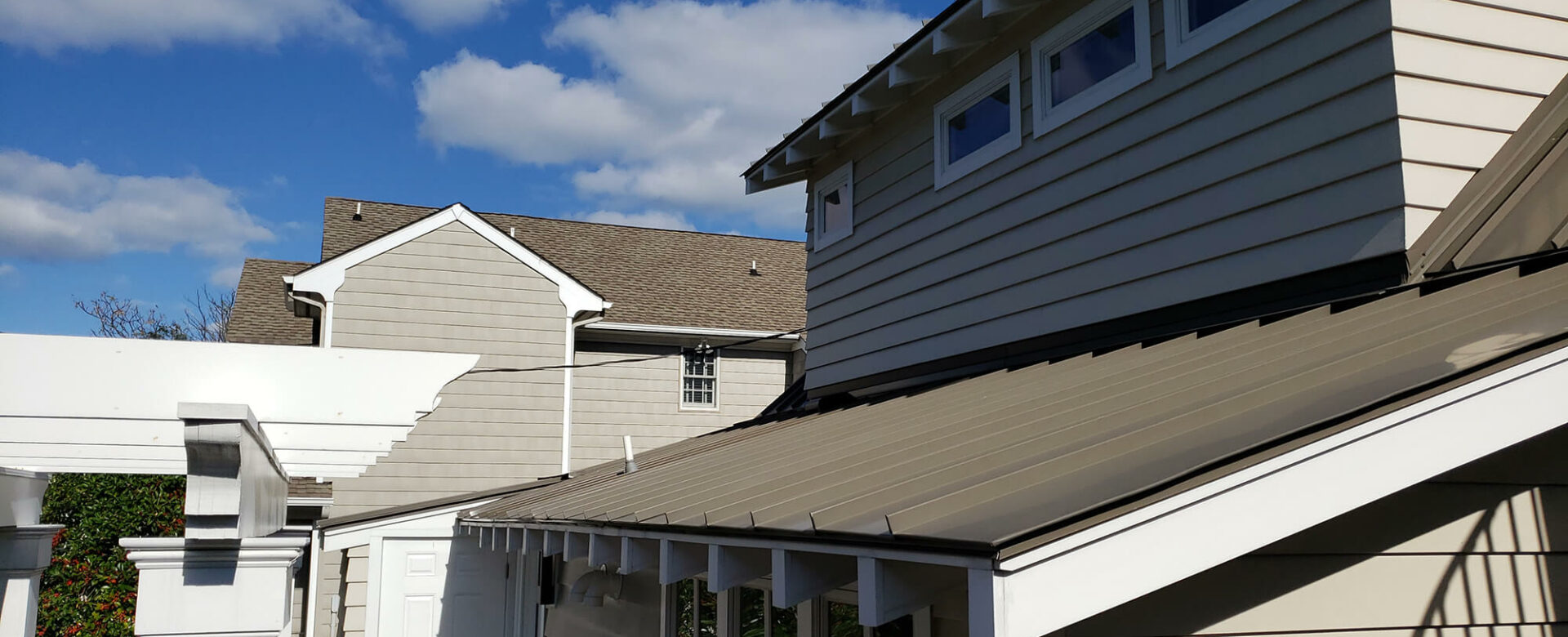
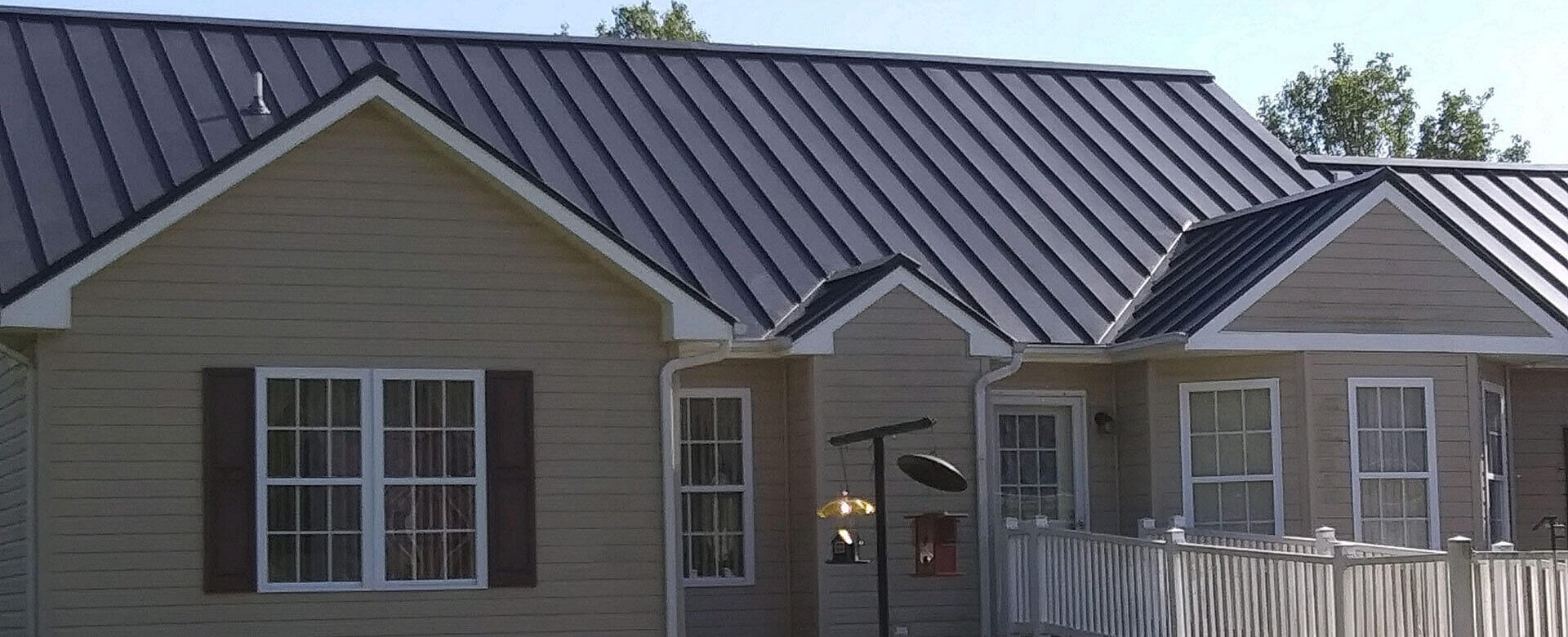
  • Aesthetic Appeal for Local Architecture. Metal roofing isn’t just functional, it’s stylish too. Locally, metal roofs really shine in farmhouse-style homes with classic standing seam metal that enhances their rustic charm, beach homes thanks to their sleek profiles that complement a modern seaside aesthetic, and on accent roofing, such as over porches or dormers for visual interest. With multiple colors and finishes available, metal roofing can elevate just about any home’s curb appeal.

What to Expect from a Metal Roof

Long Lifespan

A properly installed metal roof can easily last 40–70 years, compared to 20–30 years for asphalt shingles. When the factory applied Kynar paint finish is applied to a metal roof, it can reasonably last a lifetime, making it the last roof you will ever likely install on your home.

Strong Manufacturer Warranties

Many metal roofing systems come with 30–50 year material warranties, fade and finish protection, and wind and impact coverage. Your roofing contractor can help you understand the specific warranty options available.

Outstanding Performance

Metal roofs are fire resistant, resistant to mold and algae growth, less likely to crack or warp and they also shed rain efficiently, reducing the risk of water intrusion.

Minimal Maintenance

Metal roofs require very little upkeep. You can expect to do occasional debris removal, periodic visual inspections (from the ground or windows!), with special attention to fasteners and sealants. No heavy maintenance is required.

So, Is a Metal Roof Right for You?

Metal roofing is an excellent option if you’re looking for long-term durability, energy efficiency, storm protection, and a roof you won’t need to replace again anytime soon. If you have a traditional farmhouse style home, or a clean, modern design, different styles of metal roofing may work particularly well. If you have the budget upfront, you will find that the investment is worthwhile for peace of mind and long-term savings. Even if you’re not planning to stay in your home forever, a metal roof can increase the value of your home and be a great selling point as buyers will appreciate the extended warranties and low maintenance.

Talk to a Local Expert

Every home is different, and the best roofing choice depends on your budget, style preferences, and long-term goals. At Andrews Roofing, we specialize in helping homeowners throughout the Tidewater region explore their options and choose the right roofing system for their home. If you’re curious about metal roofing or any other type of roof replacement, contact our team today.

read more

Why Choose Architectural Shingles

If you’re considering replacing your roof, you may have discovered how overwhelming it can be to choose exactly the right material for your home. Metal, slate, cedar, and traditional three-tab shingles all have their pros and cons, but in our region of Southeast Virginia, architectural shingles continue to be the most popular option on the market.

At Andrews Roofing, we install a wide range of materials, but architectural shingles often offer the best mix of durability, curb appeal, and budget-right value. Let’s dive into what makes them so popular and whether or not they’re the right choice for your home.

What Are Architectural Shingles?

Architectural shingles (also called dimensional shingles) are a higher-end version of basic asphalt shingles. Instead of a single flat layer, they’re built from multiple laminated layers of asphalt and fiberglass. This creates a thicker, dimensional look similar to wood shake or slate, improved durability and wind resistance, and richer colors and shadow lines for a more polished, upgraded look. They’re designed to outperform three-tab shingles while staying more affordable than materials like metal or slate.

Why Homeowners Love Asphalt Shingles

Enhanced Curb Appeal and Home Value
A new roof can transform your home’s exterior. Architectural shingles add depth and dimension instead of lying flat, which helps the roof complement brick, siding, and trim more cohesively. If you’re sprucing up your home to put on the market, buyers will appreciate a newer, upgraded roof. Architectural shingles can help your home stand out in listing photos and alleviate buyer concerns about possible future maintenance or replacement costs.

Better Performance in Coastal Virginia Weather
Southeast Virginia can see high winds, heavy rains, tropical systems, nor’easters, snow and just about anything else! Architectural shingles typically have higher wind ratings than standard three-tab products. Overall, they provide excellent weather resistance when paired with proper underlayment, ventilation, and flashing—key factors Andrews Roofing emphasizes on every project.

Longer Lifespan
Many architectural shingle lines are rated for 30 years or more in ideal conditions. Real-world results vary based on installation, ventilation, and maintenance, but homeowners can expect a longer lifespan compared to entry-level asphalt roofs.

More Style and Color Variety
Manufacturers offer architectural shingles in a wide range of colors—from subtle grays to bolder earthy tone blends that can mimic the appearance of cedar shake or slate without the maintenance or cost.

Where Architectural Shingles Fit in Your Budget

On the roofing cost spectrum, architectural shingles fall into a comfortable middle range when compared to other common materials:

  1. Three-tab shingles – Lowest cost but limited lifespan
  2. Architectural shingles – Moderate cost with significantly better performance
  3. Designer asphalt shingles – Higher cost, specialized aesthetics
  4. Metal roofing – Higher upfront investment, excellent longevity
  5. Slate, tile, or cedar – Premium materials requiring specialized installation

For many homeowners, architectural shingles offer the best return on investment: upgraded aesthetics and performance without the jump into premium pricing.

Are Architectural Shingles Right for Your Home?

If you’re replacing your roof, architectural shingles might be the right choice for you if you want a meaningful upgrade from basic asphalt shingles and want to enhance your home’s curb appeal. If you are planning to sell your home in the next 5-10 years, asphalt shingles are a common sense investment that you can expect to last beyond the time you’ll spend in your home – giving you and future buyers peace of mind as well. Architectural shingles also pair well with many architectural styles common in Hampton Roads such as Colonials, Georgian-style brick homes, beach bungalows, ranch ramblers and Cape Cod cottages.

Talk to Andrews Roofing for a Personalized Recommendation

Every home is different. Our experienced team can evaluate your existing roof, discuss style and performance preferences, review shingle options, and provide a clear, detailed estimate. If you’re considering a roof replacement, architectural shingles may be the perfect balance of beauty, performance, and cost, but even if they’re not – we still have you covered with a wide variety of roofing options. Contact Andrews Roofing today to get started.

read more

Duro-Last Recognizes Andrews Roofing

Duro-Last is a highly reputable company in the Roofing Industry. They are well known in Commercial Roofing circles as a popular Single-Ply Roofing System with superior durability and longevity.
Andrews Roofing is proud of its partnership with Duro-Last and honored to be recognized by them for Outstanding Achievement in our field.
When you are given an award by the Pros in your field, that means we’re doing something right!

read more

Roofing Technology

The roofing industry has come a long way in recent years. New materials and installation techniques are making roofs more durable, energy-efficient, and even better looking—all things we know homeowners in Hampton Roads can appreciate. Whether you’re in the market for a full roof replacement, a minor repair, or just starting to research your options, it’s helpful to know what’s new and why it matters for your home or business.

Here are five roofing innovations that are changing the game:

  1. Synthetic Roofing Shingles

What it is: Synthetic shingles mimic the look of wood shake, slate, or even traditional asphalt shingles, but they’re made from advanced polymers or rubber-based materials.

Where it’s used: Mostly residential roofing projects where homeowners want a high-end look without the high-end cost or maintenance.

Why it matters: These shingles are lightweight, impact-resistant, long-lasting, and often come with excellent warranties. They’re ideal for coastal homes where weather durability is key—like those along the Atlantic Ocean in Virginia Beach or Chesapeake Bay in Norfolk.

  1. Impact-Resistant Shingles

What it is: These are reinforced shingles designed to withstand hail, flying debris, and other forms of impact that can damage traditional roofing.

Where it’s used: Residential roofs in areas prone to strong storms and hurricanes such as our own Tidewater region.

Why it matters: Impact-resistant shingles can help prevent costly roofing repairs after major weather events and may even qualify you for insurance discounts. They also add peace of mind for homeowners concerned about unpredictable coastal storms.

  1. Advanced Moisture Barriers and Underlayments

What it is: Modern roofing systems now include high-performance synthetic underlayments and moisture barriers that offer far better protection than traditional felt paper. These materials are tear-resistant, breathable, and designed to prevent water infiltration beneath shingles or other roofing surfaces.

Where it’s used: Nearly all new roof installations—both residential and commercial—as an essential layer beneath the primary roofing material.

Why it matters: In a climate like ours, where humidity, heavy rain and wind, and tropical storms are common, moisture control is crucial. These upgraded materials offer an extra line of defense against leaks and water damage, keeping your roof (and everything beneath it) safe and dry.

Roofing Innovation, Local Expertise

At Andrews Roofing, we stay up to date on the latest roofing technologies to provide our customers with the best options and service. Our team of experienced professionals knows what works best in our local climate—from the salt air of Virginia Beach to the heavily wooded neighborhoods of Chesapeake to the tornado-prone areas of Suffolk. Whether you’re considering installing a new roofing system, just need a repair or want to know more about energy-efficient material options, we’re here to provide reliable advice and service. Reach out to our team today to set up a consultation.

read more