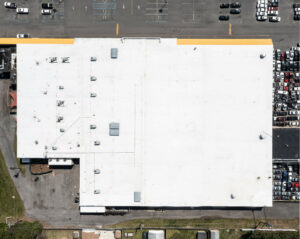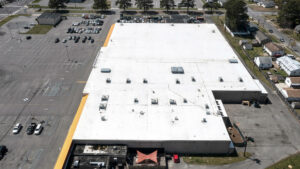

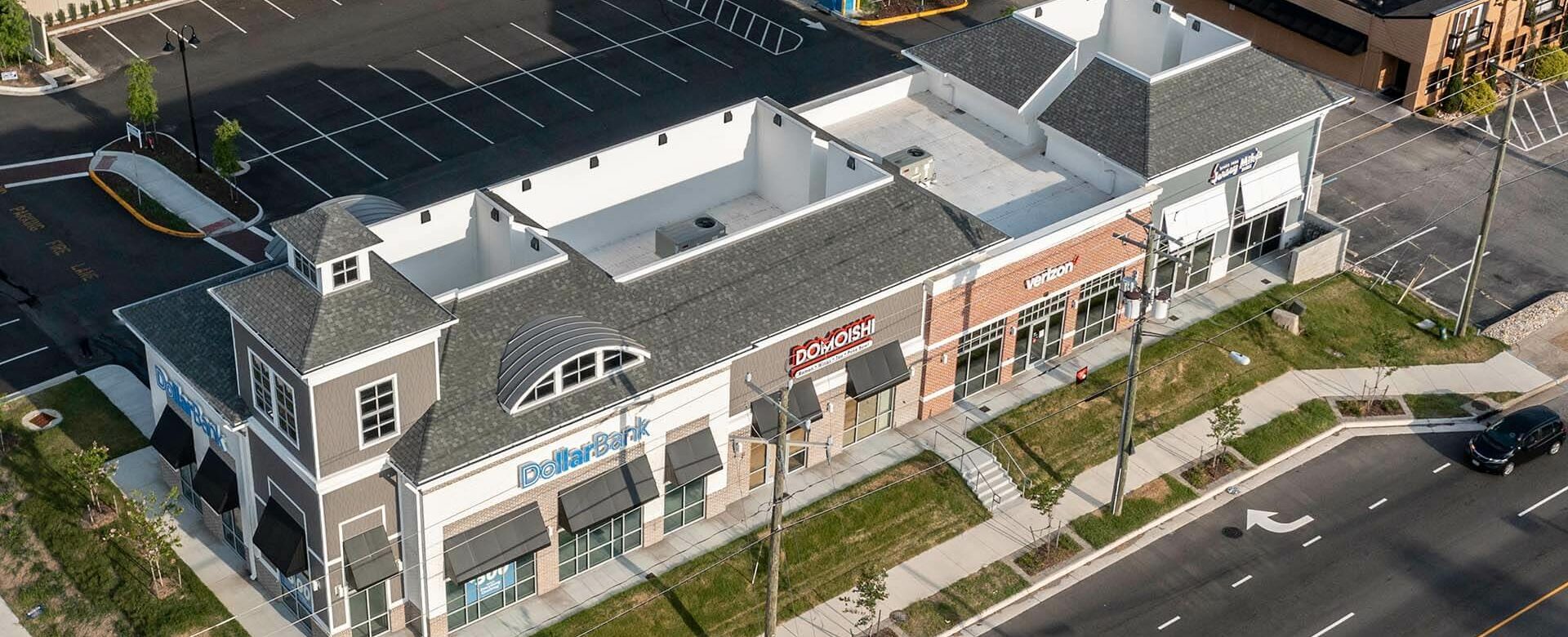

For property owners of warehouses, manufacturing facilities, or other industrial structures, the roof of your building isn’t just literal overhead, it’s one of the most critical components of the entire building.
Its success or failure can massively impact operations and profitability. And for the flat or low-slope roofs that dominate industrial construction, the material you choose matters enormously. Two of the most popular options – TPO (Thermoplastic Polyolefin) and PVC (Polyvinyl Chloride) – are all single-ply membrane systems, which is exactly why they’re so commonly confused. While they may look similar on the surface, they perform differently depending on your building’s environment, purpose and your priorities as a property owner. If you’re having a roof installed or replaced on an industrial structure, here’s what you need to know about these different membrane materials.
TPO (Thermoplastic Polyolefin)
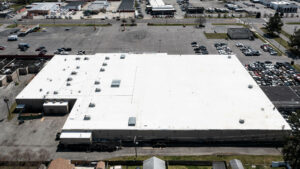
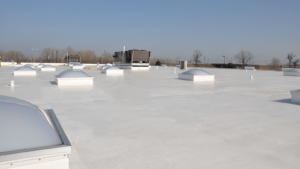
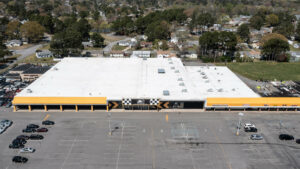
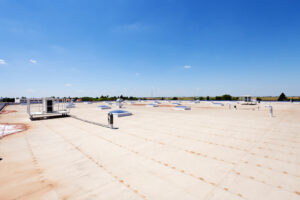
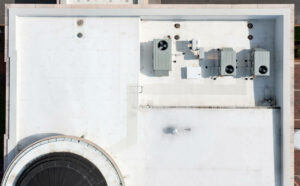
TPO is one of the most widely installed low-slope membrane systems in the country, and for good reason. It’s a single-ply white reflective membrane that’s heat-welded at the seams, creating a watertight bond.
Benefits: TPO’s biggest selling point for industrial clients is its energy efficiency. The white reflective surface deflects UV rays and reduces cooling costs, which is a real advantage for large industrial buildings with significant roof square footage. It holds up well against punctures, tears, and impact, and the heat-welded seams are highly resistant to leaks over time. It’s also one of the more cost-effective options up front, making it a good value for large-scale projects.
Challenges: TPO is a relatively newer material compared to EPDM, so there’s less performance data, and the quality can vary between manufacturers. The key to using TPO is working with a contractor who sources from reputable brands and is familiar with the product.
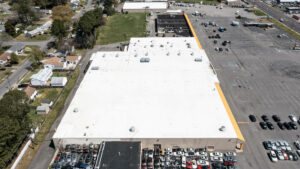
Best for: Buildings where energy efficiency is a priority with large roof areas that are exposed to sunlight. Projects where budget and performance need to be balanced. It’s an excellent all-around choice for warehouses and distribution centers in climates like Hampton Roads where summer heat is a real factor.
PVC (Polyvinyl Chloride)
Like TPO, PVC membranes have a white reflective surface and heat-welded seams, but they offer the additional advantage of being chemical resistant. PVC has been used in industrial roofing since the 1960s and continues to be a popular option because of its performance in specific demanding environments.
Benefits: PVC’s resistance to chemicals, grease, animal fats, and industrial oils sets it apart from TPO. The heat-welded seams are as strong as TPO’s and like TPO, the white reflective surface helps manage heat and energy usage. PVC is also highly fire-resistant, which matters a lot in certain industrial settings.
Challenges: PVC carries a higher price point than TPO. Due to its formula, certain chemicals can leach out of the membrane over time, which will often cause it to become brittle if it’s not a high quality product. It can also be more sensitive to certain adhesives and solvents during installation.
Best for: Food processing facilities, restaurants, manufacturing plants that handle oils or chemicals, and any industrial application where roof exposure to chemical runoff or grease-laden exhaust is a real possibility. If your facility vents cooking oils, industrial solvents, or other chemical byproducts anywhere near the roof, PVC should be at the top of your list.
So How Do You Choose?
The honest answer both are good, solid systems when properly installed. The right choice depends on your specific building and how it’s used.
- Choose TPO when energy efficiency, budget, and general performance are your priorities.
- Choose PVC when your facility is exposed to chemicals, grease, or industrial byproducts that would compromise other membrane materials.
Andrews Roofing Can Help
At Andrews Roofing, we’ve been installing all three systems across industrial facilities in Hampton Roads for decades, and we’re happy to walk through which material makes the most sense for your facility, budget and priorities. Contact us for an estimate or inspection for a straight answer on what will deliver the best long-term return on your investment.