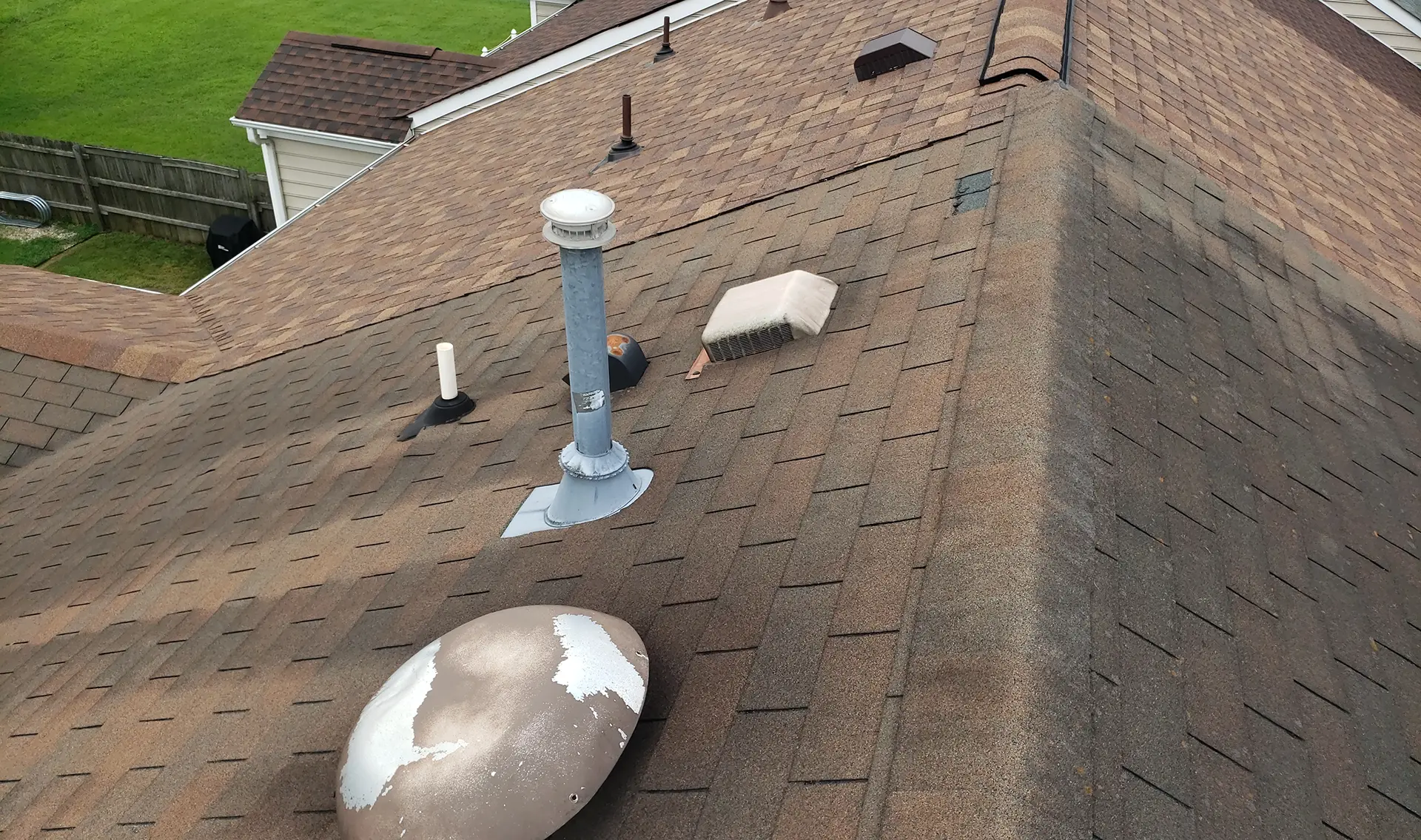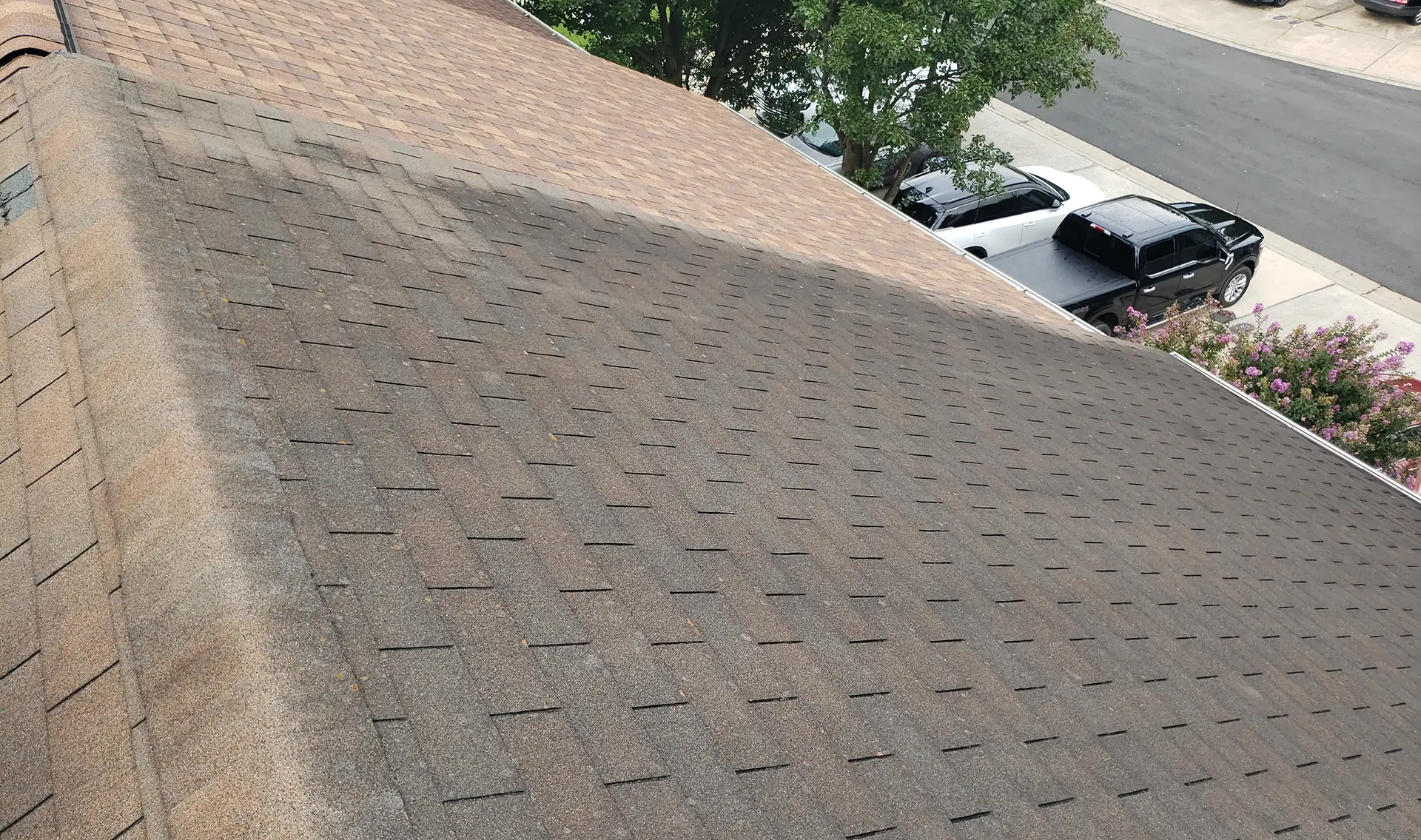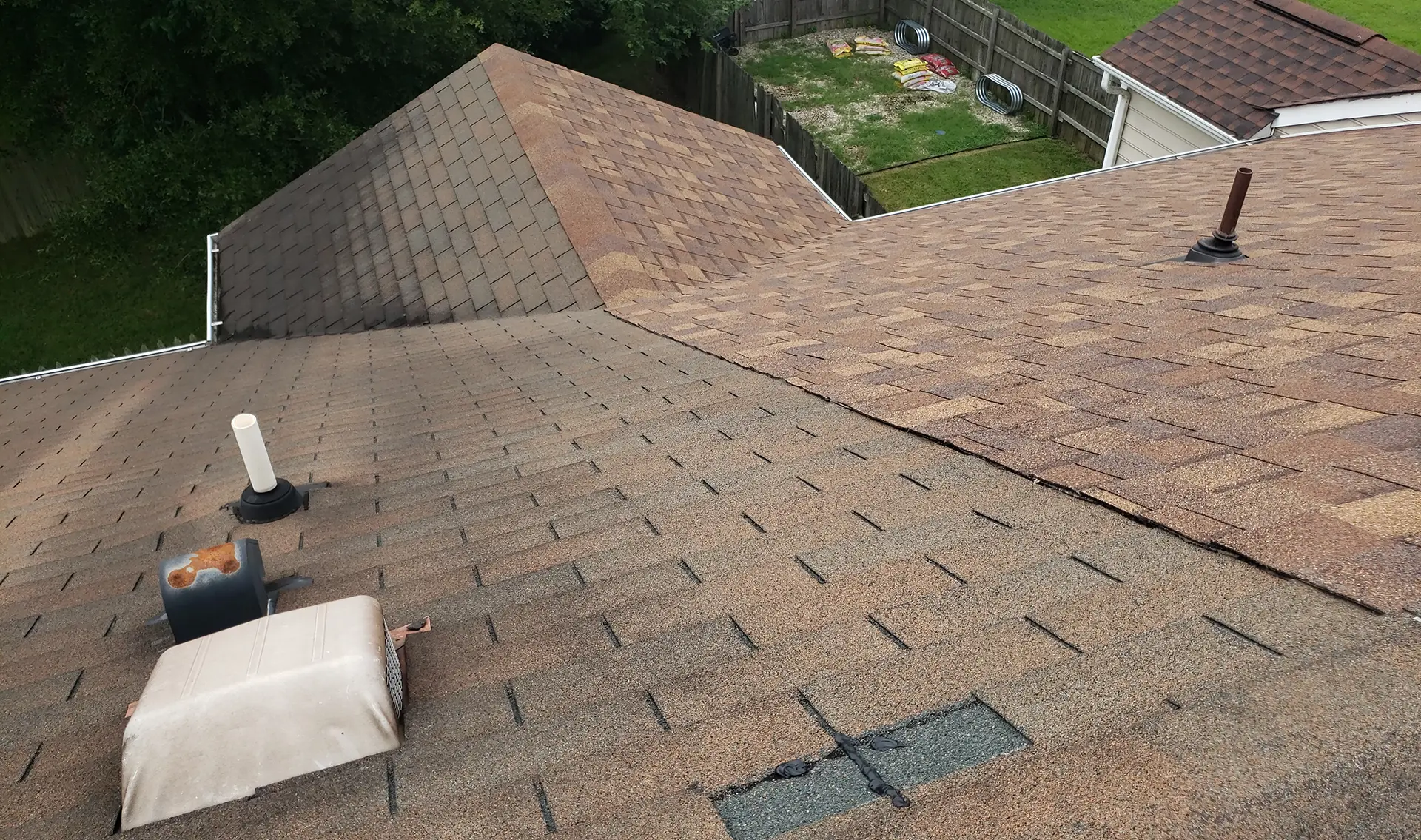


If you’ve ever added on to your home or shared a roofline with a neighbor, you may have run into a common roofing challenge: the tie-in. A tie-in is any spot where one section of roofing connects into another, whether that’s where two sections of the same material meet (hopefully without a visible seam), or where two completely different materials join together at a transition point. These connection points are not simple carpentry, and getting it right takes skill and experience to avoid leaks, drainage problems, and repairs down the road. In Hampton Roads, humidity, heavy rain, hurricanes and nor’easters are constantly putting homeowners’ roofs to the test, so something like a poorly executed tie-in can become a major issue quickly and dramatically.
Home Additions
One of the most common place homeowners run into a tie-in is when they add on to their house. A new front porch, a rear sunroom, a bedroom expansion, all of these need their roofing connected to the existing roof, and that connection point is critical.
Sometimes the approach is straightforward if the addition is roofed in the same shingle style as the main house. A skilled crew can blend the new material into the old with a clean, watertight transition. But an addition might call for a different material altogether, like metal or a membrane roof on a flatter section, in which case, the tie-in will require a different approach.
Flat roof additions using TPO or metal have their own manufacturer specs for how that material should be flashed and sealed where it meets shingle roofing, and skipping those specs is a common source of future leaks.
Because matching old and new materials (or even old and new shingles that may have weathered differently) can be such a challenge, many homeowners choose to reroof the entire house, addition included, at the same time. If the main roof is nearing the end of its lifespan, it may be worth considering a new, uniform roof that works together from day one and isn’t aging at different paces.
Shared Rooflines
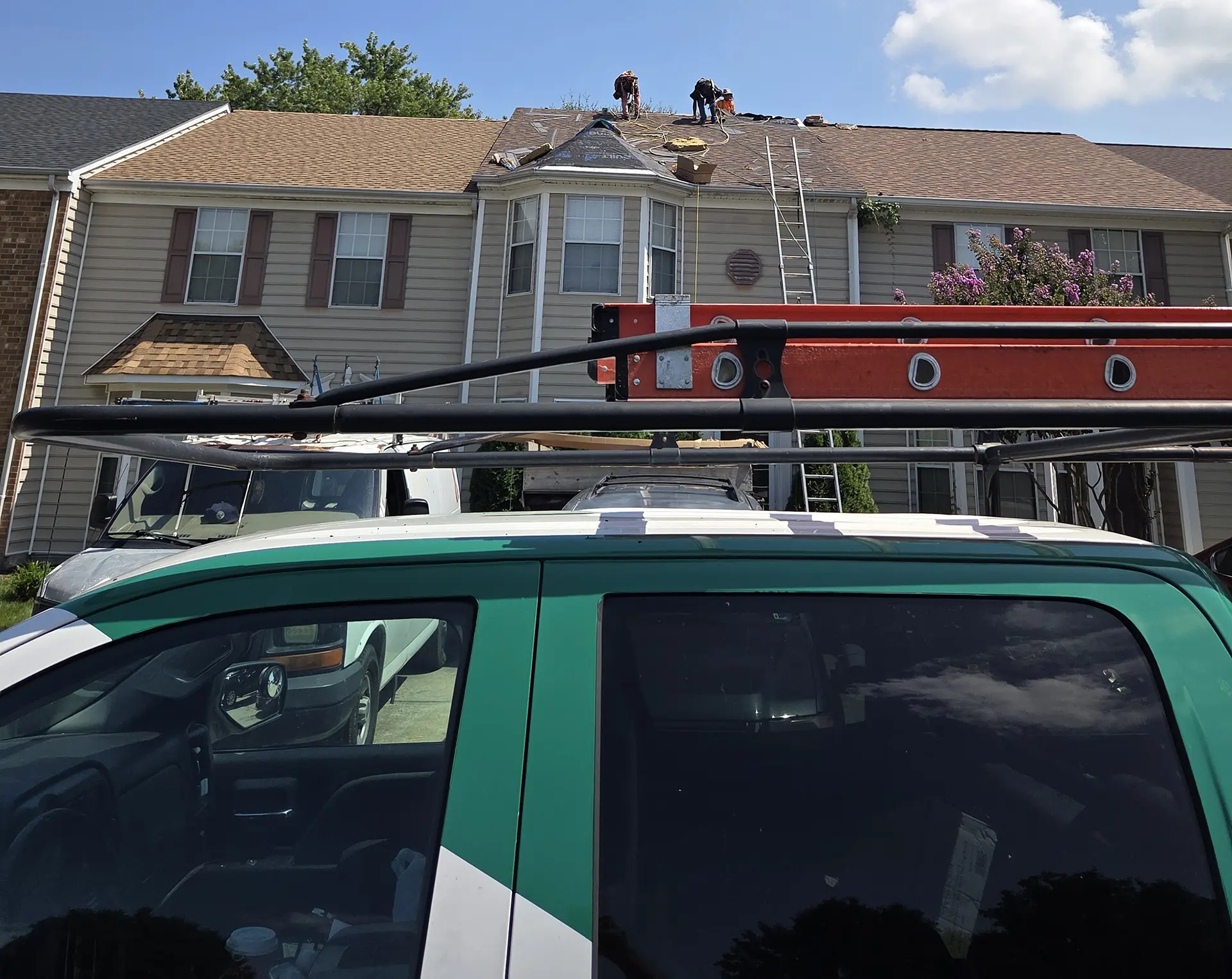
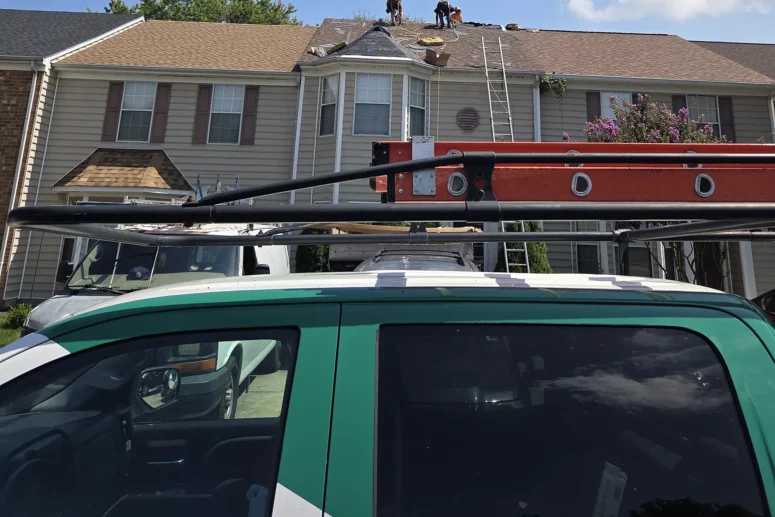
Tie-ins get even more complicated when two separate homeowners share the same roof structure, which is common with townhomes in Virginia Beach and Chesapeake or even older and historic rowhouses in Norfolk and Portsmouth. In these cases, the roofing may run continuously across both or several units with no visible line where one owner’s roof ends and the neighbor’s begins.
This shared structure creates a unique problem when something goes wrong. A leak you’re seeing in your ceiling or walls may actually be originating somewhere on the neighbor’s side of the roof and traveling across the shared line. This can obviously create some cooperation problems. If the leak’s source sits on the neighbor’s portion of the roof, that neighbor needs to be involved in the repair, and not everyone is equally willing or able to pitch in for a repair right away (especially if they’re not experiencing the downsides of it). A homeowner who’s ready to move forward can find themselves stuck waiting on someone else’s schedule, budget, or willingness to cooperate, even though the water damage is happening on their side.
Commercial Material Tie-Ins
Tie-ins aren’t just a residential issue. Commercial buildings, particularly those with membrane roofing, run into them too, usually when only a portion of the roof needs replacing rather than the whole system. Manufacturers publish specific installation guidelines for exactly how a membrane roof section should be removed and how the new material should be reinstalled and sealed where it meets the existing roof. Following those specs closely is what keeps the whole system watertight.
How To Do Tie-Ins Right
Whether it’s residential or commercial, metal, asphalt shingle or any other material, the tie-in is an important detail that you probably haven’t thought much about. While it’s common in construction to transition from one roofing material to another, or to work new roofing into a previous install, it still takes careful attention to manufacturer specs, an understanding of how water moves across a roofline, and experience with the specific materials involved.
It’s not uncommon for us to get service calls that trace back to a tie-in that wasn’t handled quite right, especially after a home addition. A tie-in that’s properly flashed, sealed, and integrated will protect the new section of roof and the entire roofing system it’s connected to. If you’re planning an addition, dealing with a shared roofline situation, or noticing a leak near where two roof sections meet, give us a call. We have decades of experience in Hampton Roads homes, and can provide the best solutions for your budget and situation. Contact Andrews Roofing today.