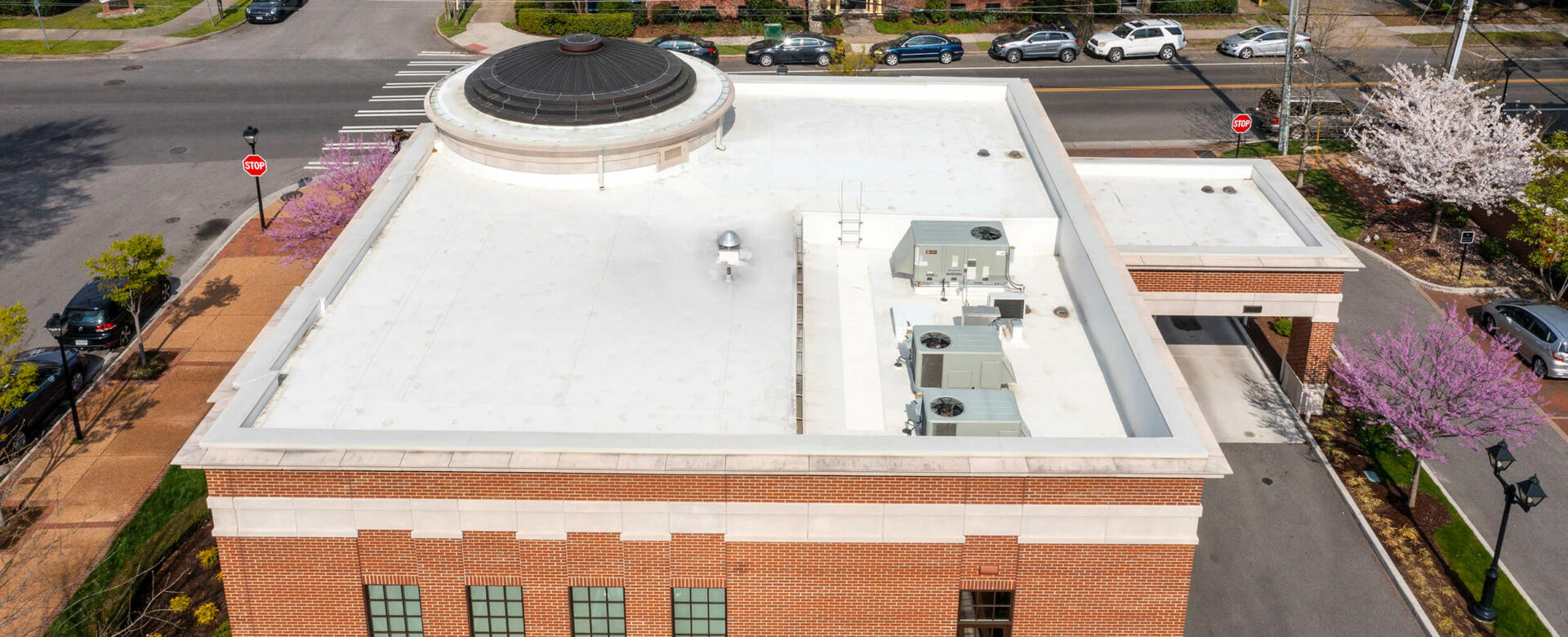



Spring is almost here, and if you’re like most Hampton Roads homeowners, you’re probably already thinking about how to start shifting life more outdoors.
Maybe you’re planning to freshen up the patio furniture, fire up the grill, or finally tackle that landscaping project you’ve been putting off since fall. Outdoor living is one of the biggest perks of life in this region thanks to our mild temperatures, fresh coastal air and gorgeous spring weather.
 But when you think about making the most of your outdoor space, are you only thinking horizontally? Most people default to ground-level thinking when it comes to outdoor living: the backyard, a patio, maybe a raised deck off the back door, which makes sense for most properties. But for a significant number of homes across Hampton Roads, the most valuable and underutilized outdoor space isn’t on the ground – it’s above your head.
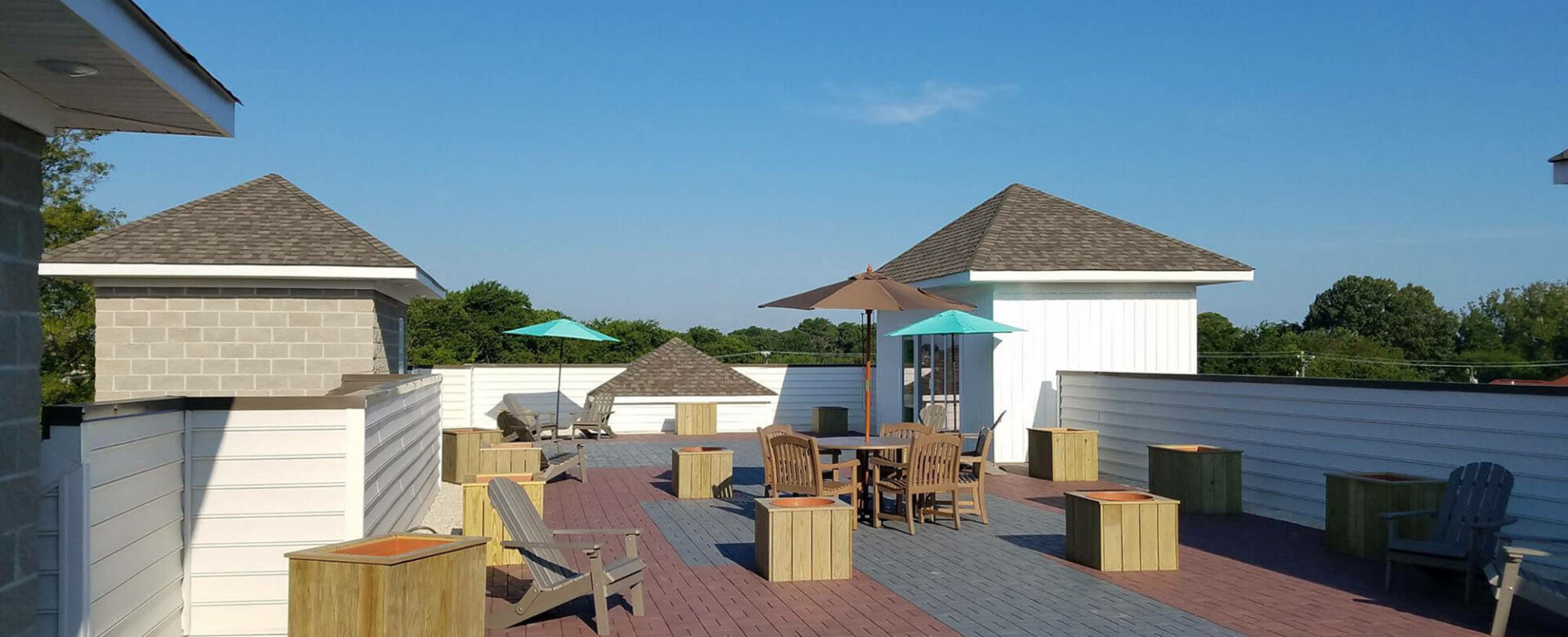
With walkable roofing pavers, almost any flat roof surface can be transformed into functional, attractive outdoor living space. And in a region with as many potential water views as ours, the payoff can be big. To learn more about exactly what walkable pavers are, read our earlier blog on the material, but read on here to see how they can create possibilities in your own property that you may not have ever considered.
A Region Primed for Rooftop Life
Hampton Roads sits at the intersection of the Chesapeake Bay, the Atlantic Ocean, the Elizabeth River, the Lafayette River, the Lynnhaven, and dozens of creeks, inlets, and waterways threading through Virginia Beach, Norfolk, Portsmouth, Chesapeake, and beyond. We are, by almost any measure, one of the most water-rich metropolitan areas on the entire East Coast.
Water views in this region aren’t just nice to have – they’re a premium asset. Properties with water views command significantly higher prices, and for good reason. We all know that there’s something special about an unobstructed view of any one of these beautiful waterways.
The problem is that while a lot of Hampton Roads homeowners technically live near the water – even a stone’s throw distance – they miss the view completely because they’re experiencing it from the wrong elevation. Neighboring structures, fences, mature trees, and the general density of coastal neighborhoods can block what would otherwise be a stunning sight line. But go up one or two stories, and the picture changes completely. Here are a few neighborhood-specific examples.
Chic’s Beach
If you’ve spent any time in the Chic’s Beach neighborhood of Virginia Beach along the Chesapeake Bay, then you know that many of the properties there are three-story townhomes packed closely together, many of them sitting within a short walk of the Bay. From the street or the backyard (if there is a backyard), the views are often modest at best, blocked by the neighbor’s fence, the next row of townhomes, or a screen of vegetation. But from the rooftop of many of these homes, suddenly the Bay is right there.
A walkable rooftop terrace on a home in Chic’s Beach doesn’t just add outdoor square footage, it adds a premium view that expands the way you can live in your home and how much there is to enjoy. Morning coffee with the sunrise over the water, or evening breezes watching the boats come into the inlet – those are now realistic visions for the right property with the right walkable rooftop paver installation.
The North End
The north end of the Virginia Beach Oceanfront is one of the most coveted and valuable stretches of real estate in the region. Oceanfront and ocean-block cottages and homes, many of them multi-story, sit along some of the most beautiful Atlantic coastline on the East Coast.
 For true oceanfront homes, a rooftop deck is an obvious enhancement: more square footage, higher elevation, more expansive views that can even include sunset views from the right spot. But perhaps the more compelling case in this area is actually for the ocean-block properties – those sitting just one street back from the oceanfront. At ground level, an ocean-block home may have limited water views. Add a rooftop terrace, and a home that was a short walk from the ocean suddenly feels oceanfront from the right vantage point. That’s a meaningful difference, both for everyday enjoyment and for the property’s value and marketability.
Inland Views and Little Yards
Water views make for a compelling story, but a rooftop deck doesn’t require an ocean backdrop to be worth pursuing. For many Hampton Roads homeowners the issue is simply that they don’t have a large enough back yard to truly enjoy their outdoor space. It may also be too exposed, too shaded, too uneven or often – too soggy.
Older neighborhoods across Norfolk and Portsmouth were often developed with modest lot sizes. Backyards can be small, awkwardly shaped, hemmed in by utilities or HVAC equipment, or simply too shaded and enclosed to feel like a real outdoor retreat. Ground-level patios in dense neighborhoods often feel exposed to neighbors visible on all sides, without any privacy or separation.
A rooftop terrace solves several of these problems at once. It creates usable outdoor space without expanding the home’s footprint. It often feels considerably more private than a ground-level patio level, you’re above the fence lines, above the neighboring yards, with a sense of openness and seclusion that’s hard to achieve at the ground. A flat roof over a garage, a first-floor addition, or even a main structure that’s currently just sitting there collecting leaves and weathering quietly may represent more functional outdoor square footage than anything available at ground level.
Keeping in Mind: Building Codes, Zoning, and Feasibility
Of course, a rooftop deck is not a possibility in every home or in every neighborhood. The feasibility of a project like this depends on a number of factors that need to be evaluated before getting too far down the road.
Structural capacity is the most fundamental consideration. A flat roof intended to become a walkable terrace needs to be assessed by a qualified contractor to confirm it can safely bear the additional load which includes not just the pavers themselves, but furniture, people, and anything else you plan to put up there. Walkable roofing pavers like Elevate SkyPavers are significantly lighter than concrete alternatives, but structural review is still essential.
Local building codes and zoning regulations also come into play. For most cities in our region, a rooftop deck will require a permit, and there are often requirements around railings or parapet walls for safety that must meet specific height and load standards. Neighborhoods governed by homeowners associations may have restrictions on rooftop modifications or additions. HOA documents are worth reviewing early in the process.
The right first step is a conversation with an experienced roofing contractor who can give you an honest assessment of what’s possible on your specific property. Many projects that seem complicated on the surface turn out to be very achievable once someone with the right expertise takes a look. And for properties where a rooftop terrace genuinely isn’t feasible, there are often other flat roof surfaces — over garages, additions, or lower-level sections of the home — that may present a workable alternative.
How Walkable Pavers Work
A walkable roof surface is created by starting with a TPO (thermoplastic polyolefin) white flat roof membrane, which reflects heat and protects the structure below. On top of that a drainage mat is installed, with the composite roofing pavers placed on top. The pavers sit on the drainage mat without being permanently adhered, which means the roof below remains accessible and the system can be adjusted or removed if needed.
We work primarily with Elevate SkyPavers, which are made from 95% recycled rubber tires, weigh roughly 35% of what comparable concrete pavers would, and carry a 20-year warranty with a lifespan that can reach 50 years. They come in multiple colors, they reflect heat rather than absorbing it, and they’re comfortable underfoot.
Done correctly by a contractor experienced with this system, the installation protects the roof below while creating an attractive, durable surface above. For the full breakdown of materials, installation, and eco-friendly benefits, take a look at our earlier post on walkable roofing pavers.
Spring Is the Right Time to Start the Conversation
Walkable rooftop paver projects involve assessment by a roofing contractor and often a general contractor as well as permitting, scheduling and of course – construction. They do not happen overnight, so if your goal is to have a new outdoor space ready to enjoy by late summer or fall, spring is the time to start planning.
Andrews Roofing has extensive experience with walkable roof surfaces throughout Hampton Roads, including demanding coastal environments where the right materials and installation approach really matter. If you’re curious about what might be possible on your property, we’d be happy to answer your questions. Contact us today and we’ll give you an honest picture of what your rooftop could become.